🥩 GLP-1 Protein Intake Calculator
Optimize your daily protein goals while on GLP-1 medications to preserve muscle and support fat loss
Results are personalized estimates based on your inputs and evidence-based GLP-1 protein guidelines.
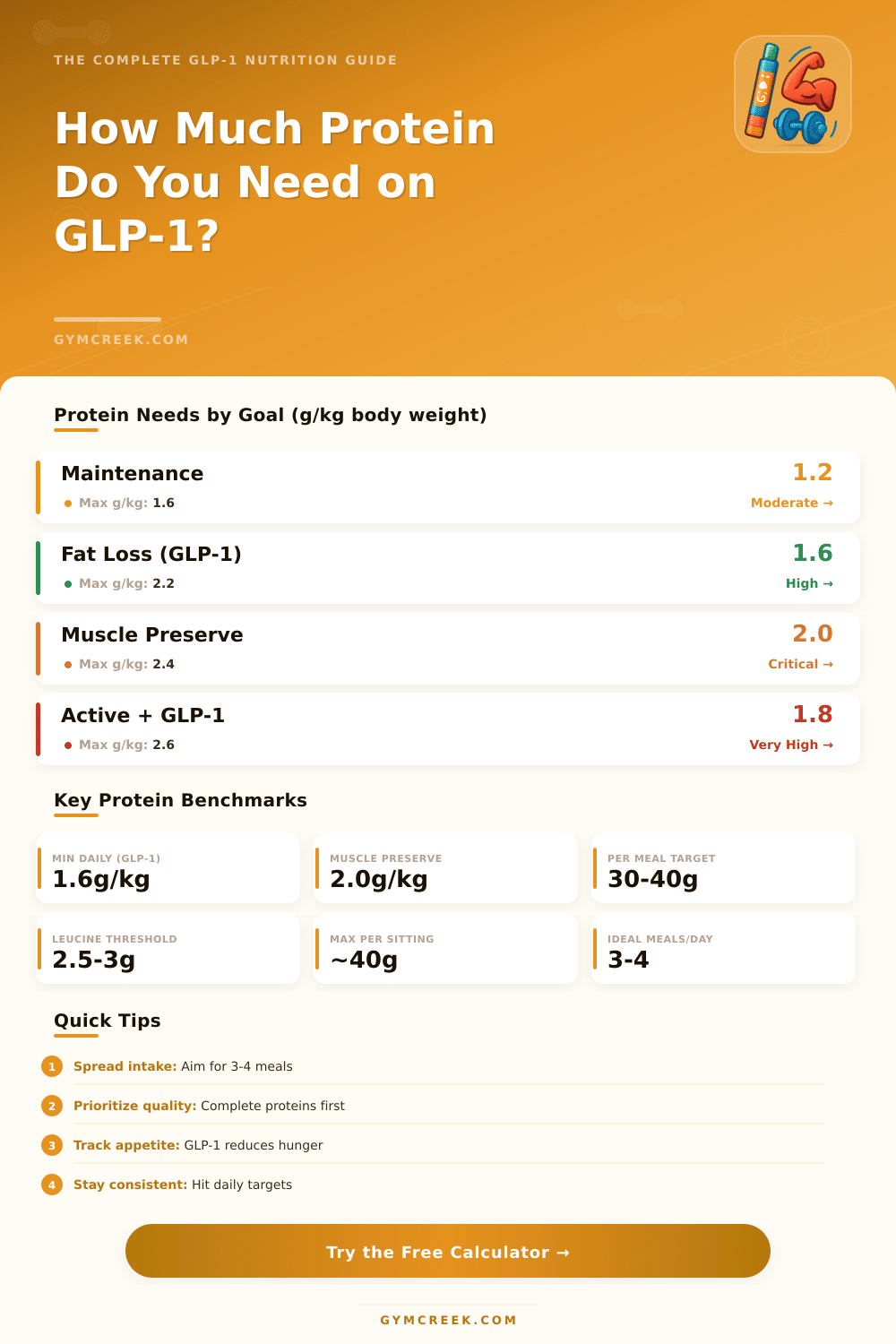
| Goal | g/kg Body Weight | g/lb Body Weight | Priority Level |
|---|---|---|---|
| General Maintenance | 1.2 – 1.6 | 0.55 – 0.73 | Moderate |
| Fat Loss on GLP-1 | 1.6 – 2.2 | 0.73 – 1.0 | High |
| Muscle Preservation | 2.0 – 2.4 | 0.91 – 1.09 | Critical |
| Lean Muscle Gain | 1.8 – 2.6 | 0.82 – 1.18 | Very High |
| Older Adults (65+) | 1.6 – 2.0 | 0.73 – 0.91 | High |
| Very Active Athletes | 2.0 – 3.1 | 0.91 – 1.41 | Very High |
| Food Source | Protein per 100g | Serving Size | Protein per Serving |
|---|---|---|---|
| Chicken Breast (cooked) | 31g | 4 oz (113g) | 35g |
| Canned Tuna | 26g | 5 oz can (142g) | 37g |
| Eggs (whole) | 13g | 2 large eggs | 12g |
| Greek Yogurt (plain, 0%) | 10g | 200g cup | 20g |
| Cottage Cheese (2%) | 11g | 1 cup (226g) | 25g |
| Salmon (cooked) | 25g | 4 oz (113g) | 28g |
| Lean Ground Beef (93%) | 26g | 4 oz (113g) | 29g |
| Edamame | 11g | 1 cup (155g) | 17g |
| Whey Protein Powder | 80g | 1 scoop (30g) | 24g |
| Lentils (cooked) | 9g | 1 cup (198g) | 18g |
| Weight Loss Rate | Muscle Loss Risk | Protein Multiplier | Recommendation |
|---|---|---|---|
| < 0.5 lbs/week | Low | 1.2–1.6 g/kg | Maintain current intake |
| 0.5 – 1.0 lbs/week | Moderate | 1.6–2.0 g/kg | Increase protein focus |
| 1.0 – 2.0 lbs/week | High | 2.0–2.4 g/kg | Prioritize protein + resistance training |
| > 2.0 lbs/week | Very High | 2.2–2.6 g/kg | Consult dietitian immediately |
GLP-1, or glucagon-like peptide-1, is a hormone that the body makes on its own. It is made and released from special cells in the gut called enteroendocrine L-cells. The hormone kicks in after a meal.
GLP-1 helps control blood sugar by pushing insulin release from the pancreas depending on sugar levels. It also helps folks feel full after a meal, which naturally limits the amount of food that one eats.
Protein and Strength Exercise for People on GLP-1 Medicines
Some foods really help push the body to release more GLP-1 naturally. Foods rich in protein, fiber, and healthy fats all help with that. Especially protein boosts the release of GLP-1 and creates a feeling of fullness.
Eating protein together with calcium can even more boost the releaes of GLP-1, which is a useful and simple method compared to medicines. Studies show that meals with a lot of protein raise levels of GLP-1 and another gut hormone called PYY.
Medicines based on GLP-1, like Ozempic, Wegovy, Mounjaro and Zepbound, are more and more popular for losing weight and controlling blood sugar. They work by cutting hunger and slowing the emptying of the stomach. This weigh they can cause big weight loss.
Even so, limits exist.
When hunger drops, folks eat much less. So much fewer calories can quietly attack the muscles, slow the metabolism and leave the body lacking important nutrients. At a cell level, when fewer calories and amino acids arrive, the body slows the steps of muscle building and keeping.
So protein intake is really key for those that use these medicines. The ideal goal is at least 60 grams of protein daily, to help guard against muscle loss.
Resistance exercise is also important. Combining GLP-1 treatments with strength training and enough protein can help keep the muscles during fat decline. Without movement the medicines alone do not shape or tone the body.
Staying active helps the body burn fat instead of breaking down muscle.
Chicken breasts offer one of the best proteins, with 32 grams per 3.5-ounce servings, while staying low in fat. Some restaurants already launched menus for users of GLP-1, with shakes rich in protein and fiber without added sugar. For many folks on those treatments, protein snacks now replace thesweet ones.
GLP-1 medicines commonly cause stomach problems, so smaller meals and soft foods or drinks with protein can ease that. Using apps to track nutrients also helps the goals of protein and fiber during the whole process.