Fluid Intake During Exercise Calculator
Estimate a practical drinking plan from session duration, body weight, sweat rate, temperature, humidity, sodium needs, bottle size, aid station spacing, and gut tolerance.
💧Fluid-Intake Presets
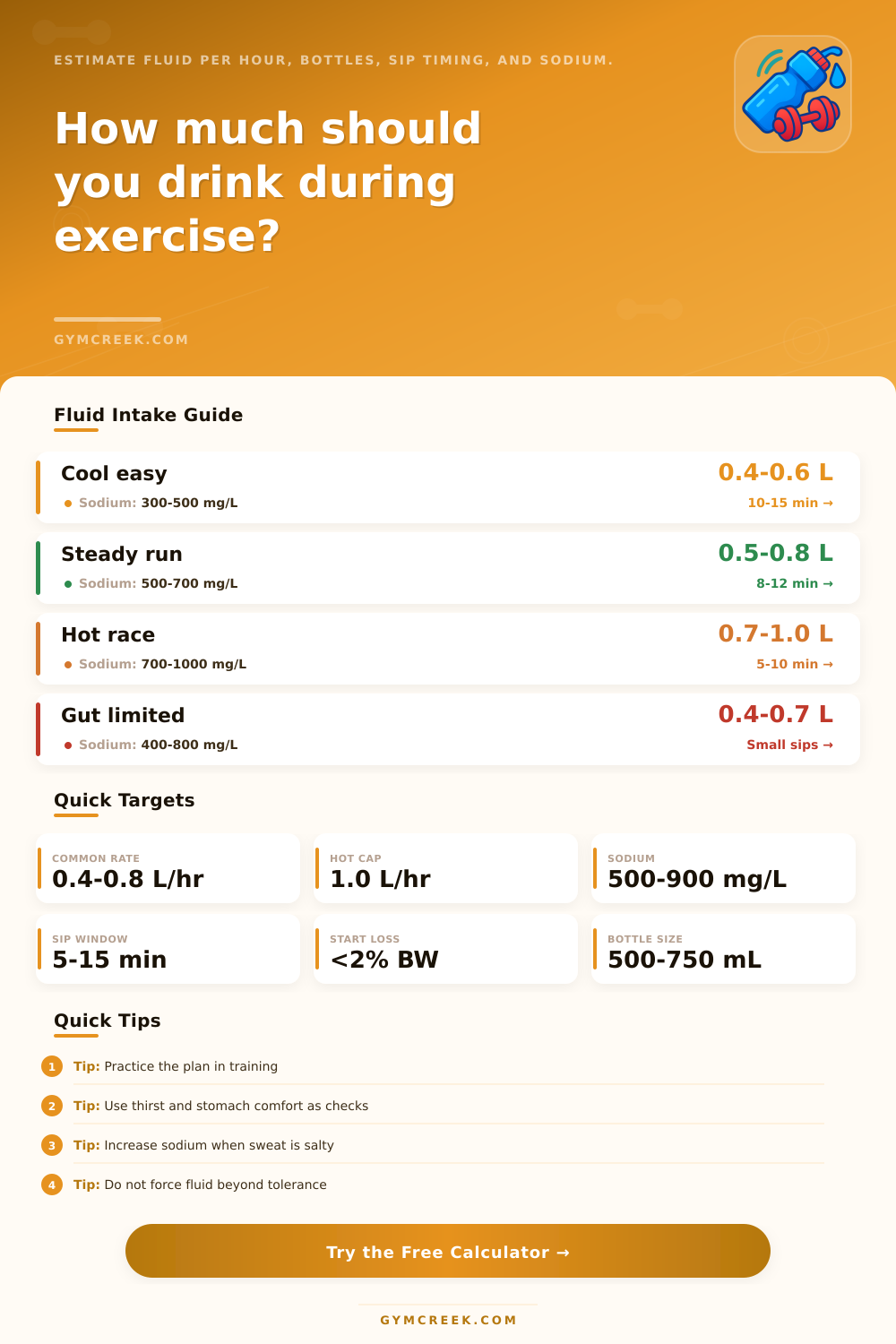
Presets load common training and racing situations. Adjust values after a sweat test and practice the plan before important events.
⚙Calculator Inputs
Fluid intake snapshot
Your hourly fluid, total volume, bottles, sip interval, and sodium concentration update as inputs change.
📊Metrics Grid
📑Fluid Rules and Reference Tables
| Plan band | Fluid per hour | Best fit | Watch point |
|---|---|---|---|
| Light | 0.25-0.45 L/hr | Cool short sessions, low sweat rate | May under-replace in heat |
| Moderate | 0.45-0.75 L/hr | Most steady endurance sessions | Practice with fuel and pace |
| High | 0.75-1.00 L/hr | Hot, humid, or heavy sweaters | Needs trained gut tolerance |
| Very high | Over 1.00 L/hr | Rare race-specific plans | Hyponatremia and gut risk if forced |
| Sodium need | Hourly target | Drink concentration | Practical cue |
|---|---|---|---|
| Low | 300 mg/hr | 300-500 mg/L | Cool weather or light salt marks |
| Moderate | 600 mg/hr | 500-800 mg/L | Typical sports drink planning |
| High | 900 mg/hr | 700-1100 mg/L | Salty sweat, long heat exposure |
| Custom | User entered | Sodium mg/hr divided by L/hr | Use a tested race-day plan |
| Check | Formula | Good sign | Problem sign |
|---|---|---|---|
| Time between aid | Spacing / speed x 60 | Less than bottle duration | Bottle empties before aid |
| Bottle duration | Bottle size / fluid per hour | Covers the refill gap | Need larger bottle or extra flask |
| Total bottles | Total fluid / bottle size | Matches carry and refill plan | Too many bottles without refill |
| Sip interval | 15 sips per hour baseline | Small repeatable sips | Large boluses upset stomach |
| Step | Rule | Inputs used | Output |
|---|---|---|---|
| Unit conversion | Imperial lb, fl oz, mi, mph convert to kg, L, km, km/hr | Unit toggle | Metric calculation base |
| Replacement fraction | Base sweat replacement rises with heat, humidity, duration, intensity, and gut tolerance | Sweat rate, weather, duration, demand | Percent of sweat replaced |
| Fluid per hour | Sweat rate x replacement fraction, capped by gut tolerance | Sweat rate, gut tolerance | L/hour target |
| Total fluid | Fluid per hour x duration hours | Duration, hourly fluid | Total session volume |
| Bottles needed | Total fluid / bottle volume, rounded up | Total volume, bottle size | Whole bottles |
| Sip interval | 60 minutes / recommended sips per hour | Hourly fluid, gut tolerance | Minutes between sips |
| Sodium concentration | Sodium mg/hour divided by fluid L/hour | Sodium need, fluid rate | mg sodium per liter |
| Body-mass loss | Unreplaced sweat liters / body weight kg x 100 | Sweat rate, fluid, weight | Estimated percent loss |
💡Tips
To maintain proper hydration during exercises, you must find a way to match the amount of fluids that your body can absorbs to the amount of fluid that you lose during exercise. You need to find a way to balance the fluids that you consume with the fluid that you lose during exercise to avoid creating new health problems for your body. The amount of fluid that you need to consume will change with the environmental factors of heat and humidity that will influences the amount of fluid that you sweat, as well as with the intensity of the exercises that you perform.
The amount of heat and humidity that your body experiences will slows the bodys ability to naturaly cool itself. As a result, the higher the level of heat and humidity that you experience during exercise, the more likely your body is to becomes dehydrated. A single hydration plan will not be effective for every exercise that you perform due to the different environmental factor for each exercise.
How to Plan Your Hydration for Exercise
Your body lose fluid through the act of sweating, and the rate at which you lose fluid is referred to as your sweat rate. To determine the amount of fluid that you should consume during exercise, you can use your sweat rate to calculate the amount of fluid that you should consume to replace the amount that you lose. Due to the physical nature of endurance exercises, many individual are unable to completely replace the amount of fluid that they lose during these exercises.
To avoid overhydrating your body, you should replace only a fraction of the fluid that your body loses during exercise. The fraction of fluid that you should consume will change based on the temperature and humidity of the environment in which you exercises. The hydration calculator use the fluid that you lose during exercise, the fraction of that fluid that you should replace, and other variables to calculate the total amount of fluids that you need to consume during your exercise session.
The hydration calculator calculates the amount of fluid that you need to consume by using a fraction to calculate the amount of fluid that you should replace, the level of heat and humidity that you experience while exercising, and the amount of fluid that your body can absorb through your gut per hour. Based on this calculation, the hydration calculator provides you with the total amount of fluid that you need to consume for the exercise session. Additionally, the calculator also calculates for you how many bottles of fluid you will need and how frequent to consume those sips of fluid to avoid overwhelming your bodys system of absorbing fluid.
The sodium section of the calculator works in a similar fashion to the fluid calculation of the hydration calculator. Instead, however, the sodium section of the calculator ask you for the level of sodium that you need and the rate at which you consume the fluid that you calculate with the calculator. Based on these variable, the sodium calculator calculates the proper amount of sodium that should be provided to each bottle of fluid that you consume during your exercise session.
Monitoring your sodium concentration in your fluid that you consume is important to your bodys comfort during exercise. If the concentration of sodium in the fluid that you consume is too low, you may feel flat or weakly during your exercise session. If the concentration of sodium that you consume is too high, however, you may experience stomach trouble during exercise.
The hydration calculator will also provide you with an estimation of how much body mass that you may lose during your exercise session even with the implementation of the hydration plan that you create. This estimation will help you determine whether or not your hydration plan is realistic to achieve. High caution flag with the calculator indicate that it is difficult to follow the hydration plan that is suggested to you.
Despite the advanced nature of the hydration calculator, there will likely be difference between your exercise session and what the calculator calculates. The fluid that you lose during exercise may change based on the weather conditions that exists during your exercise session, the amount of wind that exists, whether you exercise in the shade or the sun, and your choice of clothing. Additionally, the spacing of aid stations may alter the amount of fluid that you can carry with you so that you can reach the next aid station.
The hydration calculator determines the amount of fluid that you need to consume based on your average exercise speed and the size of each fluid bottle that you consume during your exercise session. Common mistake with fluid consumption include adhering to a schedule for drinking fluid regardless of whether you are thirsty, or waiting until you feel thirsty before you begin to consume fluid. Your bodys gut can only absorb a certain volume of fluid per hour.
As you increase the amount of fluid that you drink without regard for your bodys ability to absorb that amount of fluid, you place your body at risk of feeling sloshed or having stomach trouble. It is always better to take small sips of fluid during exercise rather than drinking large gulp of fluid. The reference table next to the calculator provide different hydration levels for those who wish to hydrate themselves with less or more fluid than the calculation of the calculator.
These tables provide the fluid concentration that should be provided in your drink based on your hydration plan levels, the amount of sodium targets that you can provide to your fluid, and how often aid stations provide fluid so that you can plan your bottles accordingly. These tables is not medical prescriptions for your hydration plan, but they are reference points for adjusting the fluid that you consume during exercise. To test the effectiveness of your hydration plan, you should use your training to test your hydration plan.
To do this, you should weigh yourself before you begin your training session, and you should weigh yourself after training has occurred. By weighing yourself before and after your training session, you can calculate the amount of body mass that you lose during training. Additionally, you should also note the amount of fluid that you consumed during training to determine whether or not the amount of fluid that you consumed replaces the amount of fluid loss that the hydration calculator calculated.
If the amount of body mass lost is similar to the amount of body mass loss that the calculator calculates, and if your body feel comfortable while consuming the amount of fluid that you calculated, then your hydration plan is successful. Should you find that you lose more body mass during your training than the amount that the calculator calculates, or if your body feels sloshed when consuming the amount of fluid that you calculated, you will have to adjust the fraction of fluid that you replace. By keeping track of the amount of fluid that you consume and the how your body feels, you will be able to build a better understanding of your body and its need during exercise.