Electrolyte Replacement Calculator
Estimate fluid, sodium, potassium, magnesium, carbohydrate compatibility, and post-session rehydration targets from sweat rate, body weight, duration, climate, and training goal.
📌Electrolyte Presets
Choose a preset, then edit the fields. A lab sweat sodium test is best; without one, use clothing salt marks, sweat rate, heat, and history as planning clues.
⚙Replacement Inputs
Electrolyte plan
Enter session details to estimate fluid and electrolyte targets.
| Target | Total | Per Hour | Use |
|---|---|---|---|
| Fluid | --- | --- | --- |
📊Electrolyte Metrics Grid
📑Electrolyte Reference Tables
| Sweat rate | L/hr | Fluid strategy | Watch |
|---|---|---|---|
| Light | 0.3-0.7 | Small sips | Thirst |
| Moderate | 0.7-1.2 | Regular drinking | Stomach |
| Heavy | 1.2-1.8 | Planned bottles | Heat |
| Very heavy | 1.8+ | Practice plan | Medical risk |
| Sweat sodium | mg/L | Common clue | Plan note |
|---|---|---|---|
| Low | 300-600 | Few marks | Light sodium |
| Average | 600-900 | Some marks | Moderate |
| High | 900-1300 | Salt crust | Higher target |
| Very high | 1300+ | Heavy crust | Test advised |
| Output | Formula | Inputs | Use |
|---|---|---|---|
| Sweat volume | rate x hours | L/hr, time | Total loss |
| Sodium loss | sweat x mg/L | L, sodium | Electrolytes |
| Drink target | sweat x goal | rate, goal | During plan |
| Post fluid | deficit x factor | mass loss | Recovery |
| BMR | Mifflin | body size | Context |
| Measure | Total | Hourly | Signal |
|---|---|---|---|
| Sweat | --- | --- | --- |
💡Electrolyte Planning Tips
By the third mile, your head feel like a sock and your legs are lead. It is not because you’re unfit. Usually it’s because your body missing something (fuel!) or out of electrolytes (sodium) to fire the right nerves. Electrolyte replacement mean replacing what we lose while running, mainly replacing fluids and sodium.
Don’t drink till you think you’ll pop. Once you know your sweat rate and conditions, plug them into calculator above and let the math happen. No more guesswork about which pill to take or how much salt to dump in a bottle.
Why You Should Use an Electrolyte Calculator
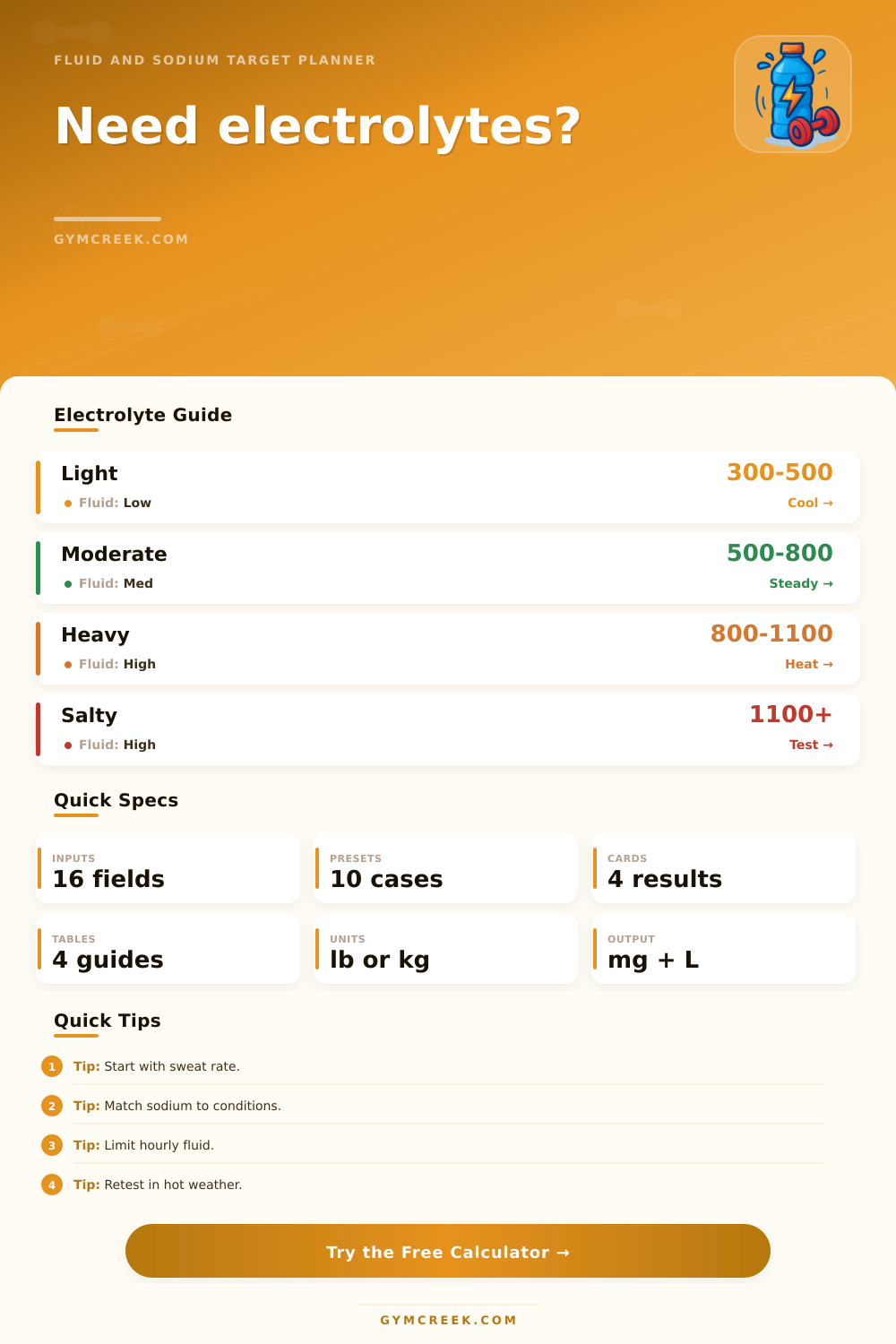
The big thing that people misses about sweating is they lump it all together. Sweating at the gym on an AC day is very different than going for a long run in humid ninety degree weather. The heat score use your inputs of humidity and ambient temperature which then dictate how aggressively you have to replace your fluids. In high humidity, sweat can’t really evaporate but your body doesn’t know this and continues to produce sweat to try and cool down. This means you lose significantly more sodium and fluid than you think because the air doesn’t help you dry off. These levels are laid out clearly in the reference table on the page.
If you’re someone who sweats a lot, you need to plan out bottle management, not drink based off solely on thirst. The key to all of it is sodium. A salty sweater sweat out more than 1,000 milligrams of sodium per liter. And most sports drinks does not contain enough sodium (by comparison). Crampers and those who notice white salt rings on their shirts will know what I mean.
That’s why the tool saves you from guessing. Then it multiplies by the % of loss you wish to replace. So say you’re racing and trying to finish? Maybe you want to replace 70% of the loss. Or maybe you’re training for health, so 50% is good enough?
That is the difference between overloading your system with fluid without replacing crucial salts which causes stomach distress. Other minerals like potassium and magnesium matter too. They’re excreted through sweat; and you’d think, “Oh man I need to get all my milligrams of that back!” But over-fortifying with potassium or magnesium mid-workout? That’s gonna send your stomach spinning. This time around, the calculator errs on the side of caution; better to top off those nutrients post-workout, when your digestive system isn’t running for cover.
You should of checked your salt levels actualy before you start training so hard and it’ll help with how your body feels.