Electrolyte Ratio Calculator
Estimate a practical electrolyte replacement ratio from body size, session duration, sweat rate, sweat sodium, fluid target, heat, humidity, effort, and stomach comfort.
◎Electrolyte Presets
Presets load realistic athlete and session examples. Change any field to personalize the sodium:potassium:magnesium ratio and hourly fluid concentration.
⚙Calculator Inputs
Electrolyte ratio snapshot
Enter your sweat and session data to estimate a practical replacement ratio.
▦Electrolyte Metrics
▣Reference Tables
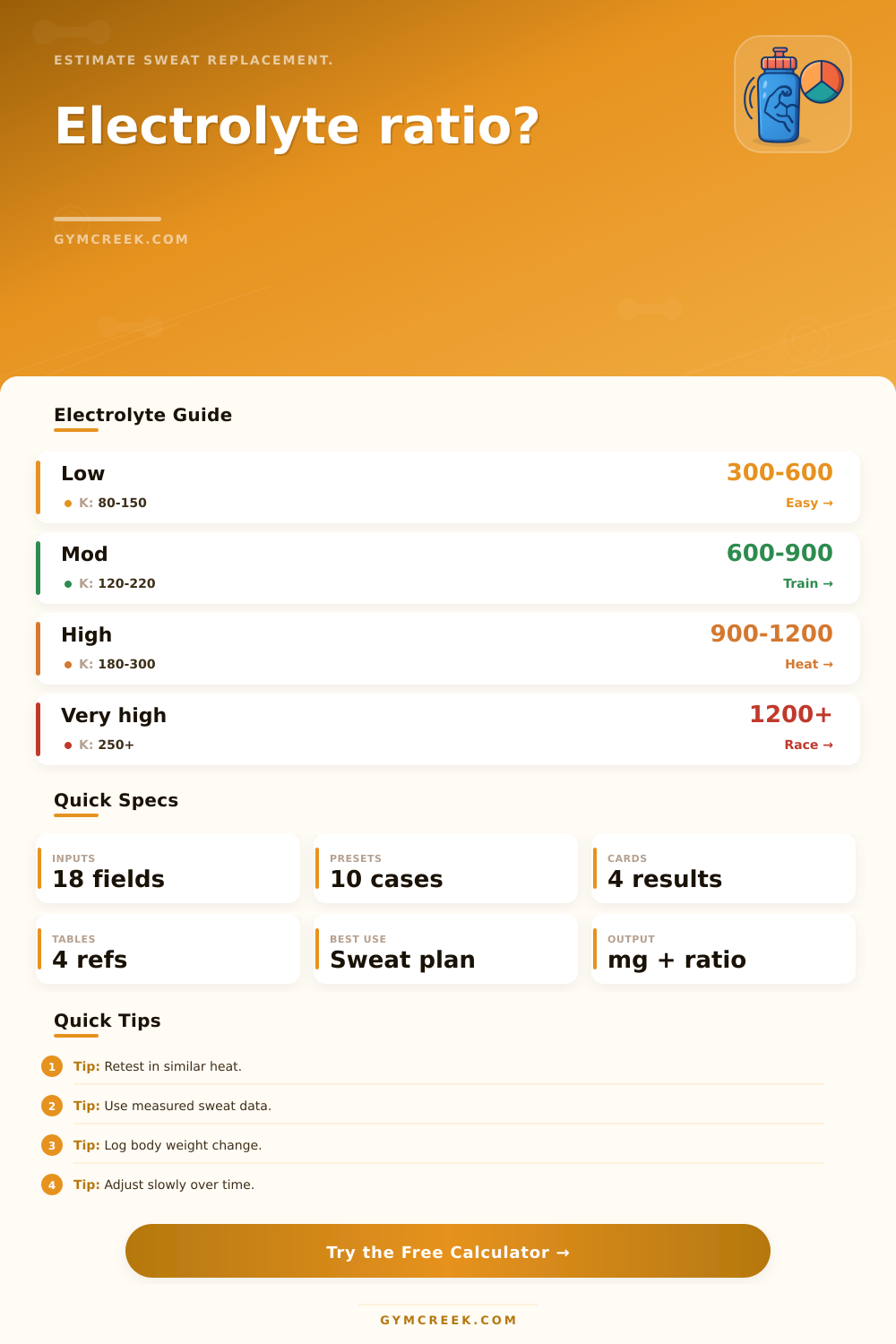
| Range | mg/L | Signal | Use |
|---|---|---|---|
| Low | 300-600 | Light sodium | Cool sessions |
| Moderate | 600-900 | Common range | Training |
| High | 900-1200 | Salty sweater | Long heat |
| Very high | 1200+ | Heavy sodium | Measured plan |
| Component | Common basis | This calculator | Review |
|---|---|---|---|
| Sodium | Sweat mg/L | Main anchor | Use test data |
| Potassium | 10%-25% of Na | User target | Keep modest |
| Magnesium | 1%-5% of Na | User target | Small amount |
| Chloride | Na x 1.54 | Estimate | Salt context |
| Drink sodium | mg/L | Fit | Watch |
|---|---|---|---|
| Light | 300-500 | Short easy | Low sweat |
| Moderate | 500-800 | Most training | Heat drift |
| Strong | 800-1100 | Heavy sweat | Taste |
| Very strong | 1100+ | Specific use | Gut comfort |
| Output | Formula | Inputs | Purpose |
|---|---|---|---|
| Sodium/hr | Sweat L/hr x mg/L | Sweat, Na | Main target |
| Fluid/hr | Sweat x replacement | L/hr, % | Drink plan |
| Ratio | Na:K:Mg | User % | Balance |
| BMR | Mifflin-St Jeor | kg, cm, age | Context |
▤Calculated Scenario Table
| Measure | Session Total | Per Hour | Planning Use |
|---|---|---|---|
| Sodium | --- | --- | Enter values above. |
💡Electrolyte Planning Tips
While electrolyte is commonly thought off as just salt, it’s much more complex than that. Electrolytes includes sodium, potassium, magnesium, all vital minerals to ensure muscle contractions and nerve firings is functioning properly. Throw off the balance, and performance starts tanking fast.
Once you input your sweat data into the calculator (above), it do all the math for you so you don’t have to figure out coefficients or make conversions. Hydration isn’t one-size-fits-all for athletes: Your hydration needs changes during exercise depending on conditions (e.g., hot afternoon versus a cool morning run). To create a good plan, you need to know how much you’re sweating and how much salt is in your sweat. Guessing here is not an option.
Why You Should Use This Calculator
You’ll never learn unless you measure. That’s why the tool ask for those numbers. They become foundation of all recommendations. If you input the wrong data, the electrolyte ratio advice won’t be useful to you.
To improve recommendations, the calculator takes into account not just how long you’re riding but also intensity level. A gentle half hour jaunt is very different than a three-hour hammerfest. Session length and intensity mean not just the amount of water and other fluids you sweat off but also volume of electrolytes. Your gut and thermoregulatory system takes on more work depending on your effort. The harder you pedal, the greater the stress on both those system. More stress means greater respiratory water loss and increased heat strain. These are all things the tool consider when calculating an hourly recommendation that’s right for the level of effort.
Thirst is caused by sodium so there’s a lot of focus on sodium. But don’t forget that magnesium and potassium is important partners here too. Yes, you need fewer of those minerals but they must work alongside sodium. Sodium can’t really do its job without them. To reflect that fact, the calculator lets you specify how much of each mineral will come from the drink as a fraction of your total sodium input. That way, if you choose to use a commercially available sports beverage, you can adjust the potassium and magnesium targets as a percentage of your sodium intake to match your body instead of blindly following someone else’s marketing label.
It accounts for environmental factors which make you more or less thirsty. It’ll ask what humidity is like, because higher humidity means sweat won’t evaporate as well and will leave your skin hotter. It will also ask what altitude you’re at, because you lose more fluids when breathing at higher altitudes. Knowing this, it will adjust its assessment of how hard you need to cool yourself down. And it will alert you if your intended drink dilution could trigger stomach discomfort in those conditions.
Your sodium target, the final Na:K:Mg ratio, and strength of the drink (in milligrams per liter) are displayed on the output cards. Strength matter for performance. A drink that is too strong can feel heavy in the stomach, while one that is too weak may not replace enough salt. To understand what’s appropriate, there are reference tables on the page indicating safe levels for races versus easy training days. Striking the right balance between absorption vs comfort.
This strategy must be practiced and not implemented overnight. Testing is necessary and could of wait until race-day, when you have something big on the line. So practice with the suggested mixture and note your stomach sensations after 90 minutes. If you’re feeling some cramps or bloating, adjust amount up or down to match.
Remember: This isn’t the answer but the beginning of one. In the end it’s your body that will test it. Let the information guide you to create a routine that keeps you steady. Clarity comes from understanding the details beforehand so they don’t become issues.