Egg Protein Calculator
Total whole eggs, whites, yolks, cooking state, egg size, calories, fats, leucine, and how much of your protein goal the serving covers.
📌Presets
Each preset changes size, counts, prep state, goal, and oil so the result reflects a real egg serving instead of a generic macro estimate.
⚙Calculator
Egg protein snapshot
Adjust the size and counts to estimate the serving.
📊Egg Macro Snapshot
📑Reference Tables
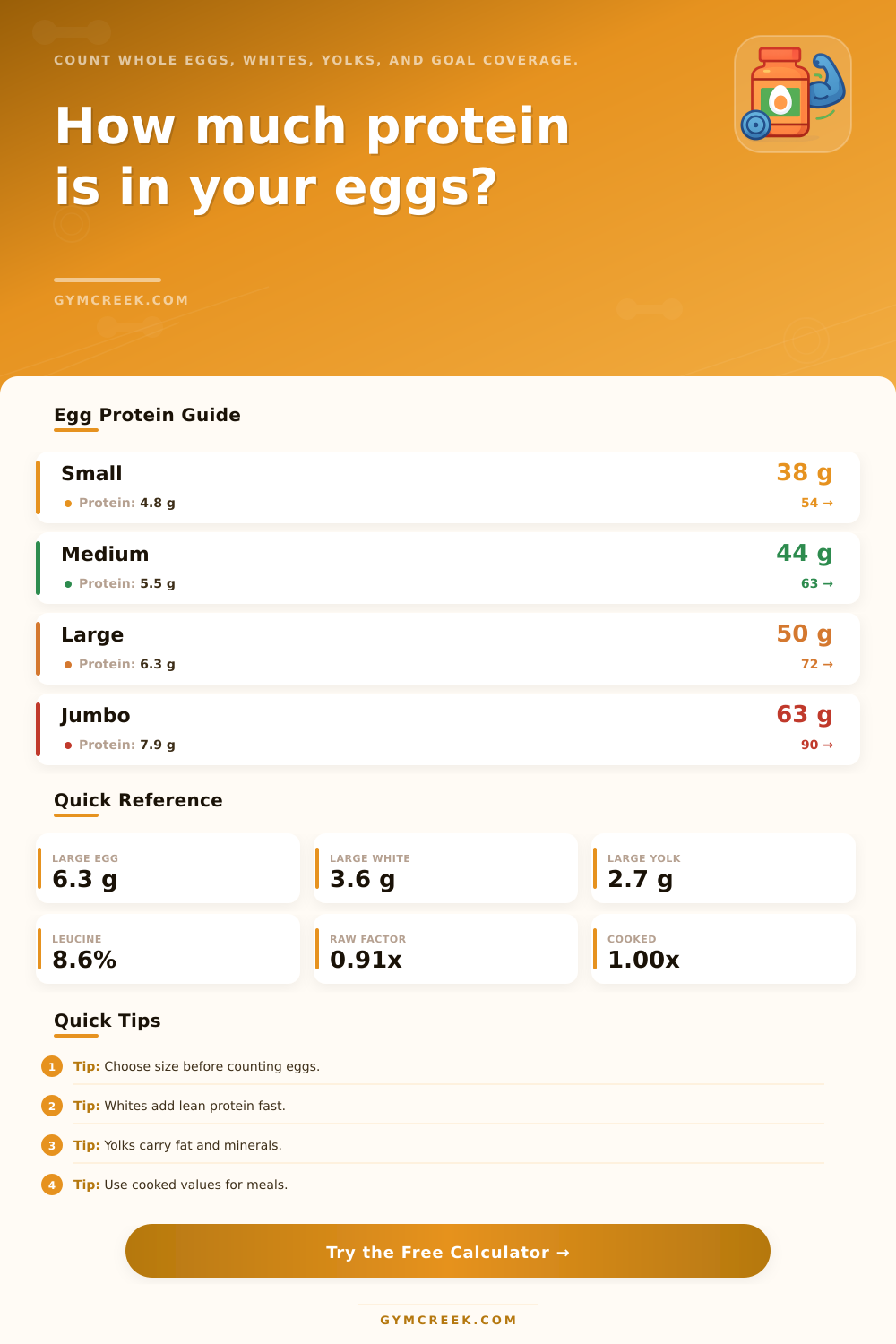
| Egg size | Shell-free weight | Protein | Calories |
|---|---|---|---|
| Small | 38 g | 4.8 g | 54 kcal |
| Medium | 44 g | 5.5 g | 63 kcal |
| Large | 50 g | 6.3 g | 72 kcal |
| Extra large | 56 g | 7.1 g | 80 kcal |
| Jumbo | 63 g | 7.9 g | 90 kcal |
| Component | Large equivalent | Protein | Best use |
|---|---|---|---|
| Whole egg | 50 g | 6.3 g | Balanced macros |
| White only | 33 g | 3.6 g | Lean protein |
| Yolk only | 17 g | 2.7 g | Flavor and fats |
| Two whites | 66 g | 7.2 g | Low fat boost |
| Prep state | Protein factor | Calorie change | Notes |
|---|---|---|---|
| Cooked | 1.00x | Base | Best estimate |
| Raw | 0.91x | Base | Lower digestibility |
| Fried | 1.00x | Add fat | Count oil used |
| Baked | 1.00x | Recipe based | Split servings |
| Meal goal | Common target | Egg example | Planning note |
|---|---|---|---|
| Light meal | 15-20 g | 2 eggs + 1 white | Easy breakfast |
| High protein | 25-35 g | 3 eggs + 3 whites | Training meal |
| Lean cut | 25-40 g | 1 egg + 6 whites | Lower fat |
| Batch recipe | Any target | Split servings | Use serving count |
💡Tips
There you are, standing before the fridge with a carton of eggs in hand. You are contemplating whether it will be three eggs, or maybe a scoop of egg whites added into the mix, that will get you to your protein goal this morning. Why? Eggs is special. They contain a concentrated form of high-quality protein packed with all essential amino acids. At the same time, they also contains plenty calories and fat (yolks). That’s a tough combination when your goal is staying lean while still getting enough muscle-maintaining protein.
This calculator take away the complicated equations by letting you input the precise combination of egg parts, yolks, whites, and/or whole eggs, allowing you to see exactly how close you are to your goal, so there’s no guesswork.
How to Count Eggs for Your Protein Goals
When it comes to macros, the first thing most people do wrong is assume that all eggs is made equal. In reality, size does matter. A jumbo egg has way more calories and protein than a large egg. So if you’re being super precise with your grams, eating 5 large eggs vs. 5 jumbo eggs adds up quickly and makes a noticeable difference for your daily intake. This is easily laid out in the reference table on page which shows direct link between weight and nutritional content. Make sure to always choose the size that corresponds to what size you actualy purchased prior to typing in the quantity or else your whole estimate will be skewed.
Finally, there is preparation and digestion. When eaten raw, the protein inside the egg isn’t as easy to absorb; your body can only absorbs so much. If you cook an egg, however, your body will be able to absorb more of the protein within it. To account for this, the tool adjust the amount of raw input based off digestibility. This considers the biological fact that human bodies has a hard time breaking down all the albumin in a raw egg. This difference becomes important if you’re eating raw egg-based recipes, and it’s also useful if you’re trying to compare meals where one contains raw eggs versus another containing cooked ones. It means the protein credit you’ll give to your meal is reasonable, not just the theoretical max according to laboratory analysis of dry matter.
The typical play here if you want more protein but don’t need the added fat is to add more egg whites. This will alter the taste and consistency of the dish, though. If you’re trying to bulk out an omelet or scramble, whites are near-perfect protein with very little calories: they’ll fill in nutritionally. But you lose some of the satisfaction of eating a dish made of just whites, because yolk delivers a richer texture and a flavor that most people like better then straight-up whites. With this calculator, you can split the difference by separating these parts into their own pieces, letting you adjust how much protein you eat relative to how good the meal tastes. Add whites till you reach desired levels; hold back a bit on the yolks for some flavor (and for choline and other nutrients).
Another thing to consider is leucine, the main amino acid that triggers muscle protein synthesis. Because eggs are inherently rich in leucine, they’re also a good option for recovery food. If you want to know if the amount of leucine you’re eating will help stimulate muscle repair or just provide fuel, then estimating that amount helps. This estimate can help clue you into how potent your serving size of eggs is when considering using them as a main protein for recovery.
Precision doesn’t equal obsessive, either. You want to have an idea of where your food fits into your macro goals so you can adjust accordingly during the week. Knowing the breakdown allows you to bulk with larger eggs if you’re trying to gain weight or cut back on yolks to save some calories. These numbers serve as guidance and not a strict law, because you’ll find that it’s way more important to be consistent with your diet overall than being precise with each individual meal.
When you know exactly what’s inside those shells, standing in front of the fridge won’t feel like such a shot-in-the-dark, more like a planned choice.