Egg Carb Calculator
Estimate trace carbs, net carbs, calories, protein, fat, sugar, sodium, and meal-context fit from egg type, count, yolk mix, edible weight, and added ingredients.
📌Egg Carb Presets
Presets focus on egg-only carbs plus simple trace additions. Use custom added carbs for sauces, vegetables, dairy, or other foods served with the eggs.
⚙Calculator Inputs
Egg carb snapshot
Enter egg type, count, yolk mix, added carbs, fiber, and meal context to estimate the serving.
📊Egg Carb Metrics Grid
📑Reference Tables
| Egg Type | Typical Weight | Total Carbs | Protein |
|---|---|---|---|
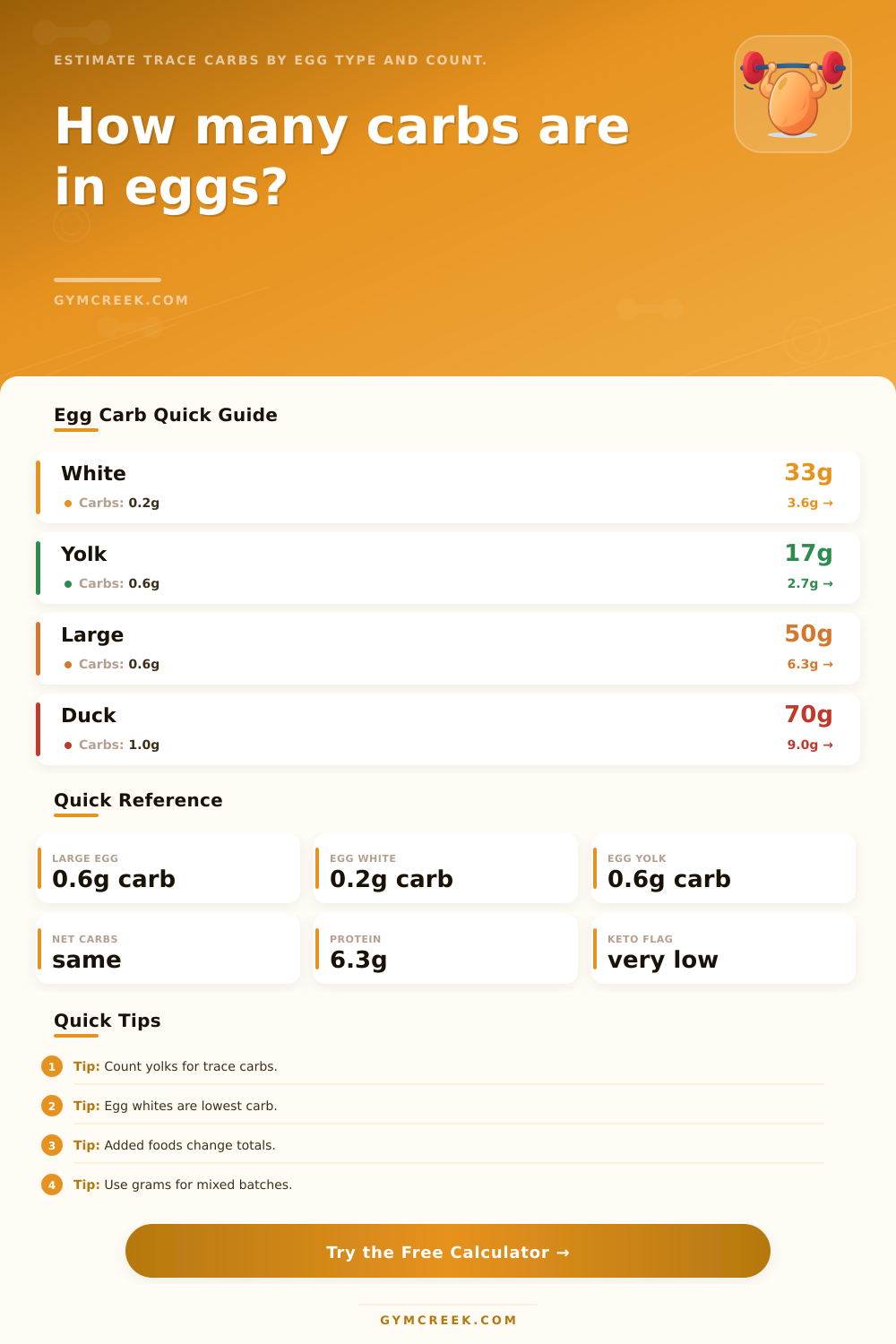
| Chicken white | 33 g | 0.2 g | 3.6 g |
| Chicken yolk | 17 g | 0.6 g | 2.7 g |
| Medium chicken | 44 g | 0.5 g | 5.5 g |
| Large chicken | 50 g | 0.6 g | 6.3 g |
| Extra large chicken | 56 g | 0.6 g | 7.0 g |
| Duck egg | 70 g | 1.0 g | 9.0 g |
| Quail egg | 9 g | 0.0 g | 1.2 g |
| Goose egg | 144 g | 1.9 g | 19.9 g |
| Yolk Pattern | Carb Effect | Macro Effect | Best Use |
|---|---|---|---|
| Whole eggs | Standard trace | Protein and fat | General meals |
| Whites only | Lowest trace | Lean protein | Cutting macros |
| Yolks only | More dense | Higher fat | Recipe tracking |
| Half yolks | Moderate | Lower fat | Low-carb plates |
| One per three | Protein heavy | Lean mixed | Meal prep |
| Extra whites | Small add | Protein boost | Post-workout |
| Meal Context | Typical Carb Cap | Egg Fit | Watch Item |
|---|---|---|---|
| Keto | 20 to 30 g/day | Very low | Sauces |
| Low carb | 50 to 130 g/day | Easy fit | Toast sides |
| Balanced | Varies | Trace carb | Plate total |
| Pre-workout | Goal based | Low fuel | Add carbs |
| Post-workout | Goal based | Protein focus | Meal carbs |
| Diabetes-aware | Plan based | Track trace | Add-ins |
| Formula Item | How It Is Used | Output | Note |
|---|---|---|---|
| Total carbs | Egg carbs plus add-ins | Batch grams | Trace estimate |
| Net carbs | Total carbs minus fiber | Serving grams | Floor at zero |
| Protein ratio | Protein divided by net carbs | Ratio | Higher is leaner |
| Carb share | Net serving over target | Percent | Context check |
| Weight scaling | Custom grams over 50 g base | Adjusted macros | For weighed eggs |
💡Tips
Two eggs is staring up at you from inside the fridge. You’re going to have some kind of healthy breakfast, or something. Eggs has protein right? But how many carbs? Maybe yolk have sugar in them? You could flip through contradictory nutrition labels and try to guess at a sort of number to use on that equation, but by clicking your egg type and entering your egg count, the calculator do it for you.
Turns out, there aren’t any hard lines here. There is always trace amounts, and those count when you’re counting macros down to the gram. You see, it’s all in knowing what you’re actualy measuring (it’s kind of the trick). A large chicken egg has an average of 0.6 grams of carbohydrate. This figure are averaged over a whole egg, which includes both the yolk and the white. Almost all of these trace carbs comes from the yolk, the white contains nearly nothing.
How Many Carbs Are in Eggs?
Eggs aren’t completely devoid of carbs. Most people think of eggs as nutritional blank slate. However, that small amount of carbs in the yolk come from glycogen stored by hen, and cooking doesn’t erase that. If you’re keeping tabs, it remains sitting there ready to be tallied up.
Preparation also alter the math, even more different than the type of egg. Are you scrambling eggs with milk? You might add vegetables like peppers and onions. The latter would be carb-y additions that has nothing to do with poultry product. This is why the tool lets you input extra added carbohydrates apart from egg base so as to keep the estimate honest. A teaspoon of milk may seem small, but times ten eggs in a meal prep tray, it add up.
That’s what people get wrong. They zero in on main ingredient while overlooking the invisible variables in the pan. The other lever that makes a huge difference is yolk pattern. A mix of egg whites (just whites) deliver nearly no carbohydrates, but also skyrockets your protein ratio. Half-yolks keep you somewhere in the middle, offering less carbs then full eggs and still some fat.
The graph below from the page spells it out nicely. How each mixture impact your overall intake. If you get a handle on these tools, you won’t be forced into either the standard “eat whatever” or super-low-carb diet. Small tweaks to yolk ratio let you dial in little changes that make a huge difference in your end product.
Calorie calculations aside, context is everything. A 20-gram daily carb limit work well with a typical keto egg serving, but you would of needed to adjust that if you are using sugary sauces or starchy sides. To help give you an idea about the big picture instead of getting tunnel-visioned by a single plate, the calculator request your daily target and tells you how much of your budget you’ve allotted for breakfast.
For example, if you’re eating this after a workout, you may want less fat and more protein… In which case, go for whites. Or maybe you’re considering a well-balanced lunch; in this instance, the trace carbs don’t matter compared with rest of your meal selections.
Truth be told, measuring out different batches offer the best accuracy. No two eggs is the same. The size of your eggs depends on breed and what they eat. For example, one duck egg has almost twice as many carbs as one small quail egg. While both may just be called eggs, their macros differs greatly.
Presets for certain situations (i.e. Snack portion vs. Full meal) helps make the leap from theory to practice and don’t need you to weigh out each time you eat. This isn’t perfect, it’s about consistency with tracking.
Also note: Any additional fiber is not going to decrease net carbs if the source of that extra fiber is within the ingredient. For example, a veggie burger patty made with whole wheat breadcrumbs would decrease net carbs because the vegetable portion provides fiber, but the breadcrumb (made of wheat) does not. There’s no fiber in an egg, however so any reduction from this source has to be due to side item(s).
To avoid mistakes and throwing off your daily numbers by double counting certain items, keep your input sources clean so your estimates matches. Carb counting eggs at the end of the day comes down to clarity of purpose with your eating approach, rather than any fear of carbs. Knowing every last gram where it came from whether you’re trying to cut weight or maintain energy levels empower you to manage what’s going into your body. If you don’t pay attention to small details or if you stack things incorrectly, those small errors will add up.
Start by tracking accurately, then watch the additions. Use the data to help guide your decisions, but do not let it make them for you. After all you have a fork in your hand, not a spreadsheet.