Egg Calorie Calculator
Total calories and macros from whole eggs, whites, yolks, egg size, cooking method, added fat, add-ins, and servings.
📌Presets
Presets load realistic egg combinations, including whites, yolks, cooking fat, add-ins, and serving splits.
⚙Calculator
Egg calorie snapshot
Enter your eggs, cooking fat, add-ins, and servings to calculate the plate.
📊Egg Metrics
📑Reference Tables
| Egg Size | Weight | Calories | Use |
|---|---|---|---|
| Peewee | 35 g | 50 | Small recipes |
| Small | 38 g | 54 | Light meals |
| Medium | 44 g | 63 | Older recipes |
| Large | 50 g | 72 | Standard logs |
| Extra large | 56 g | 80 | Bigger eggs |
| Jumbo | 63 g | 90 | Large plates |
| Egg Part | Calories | Protein | Fat |
|---|---|---|---|
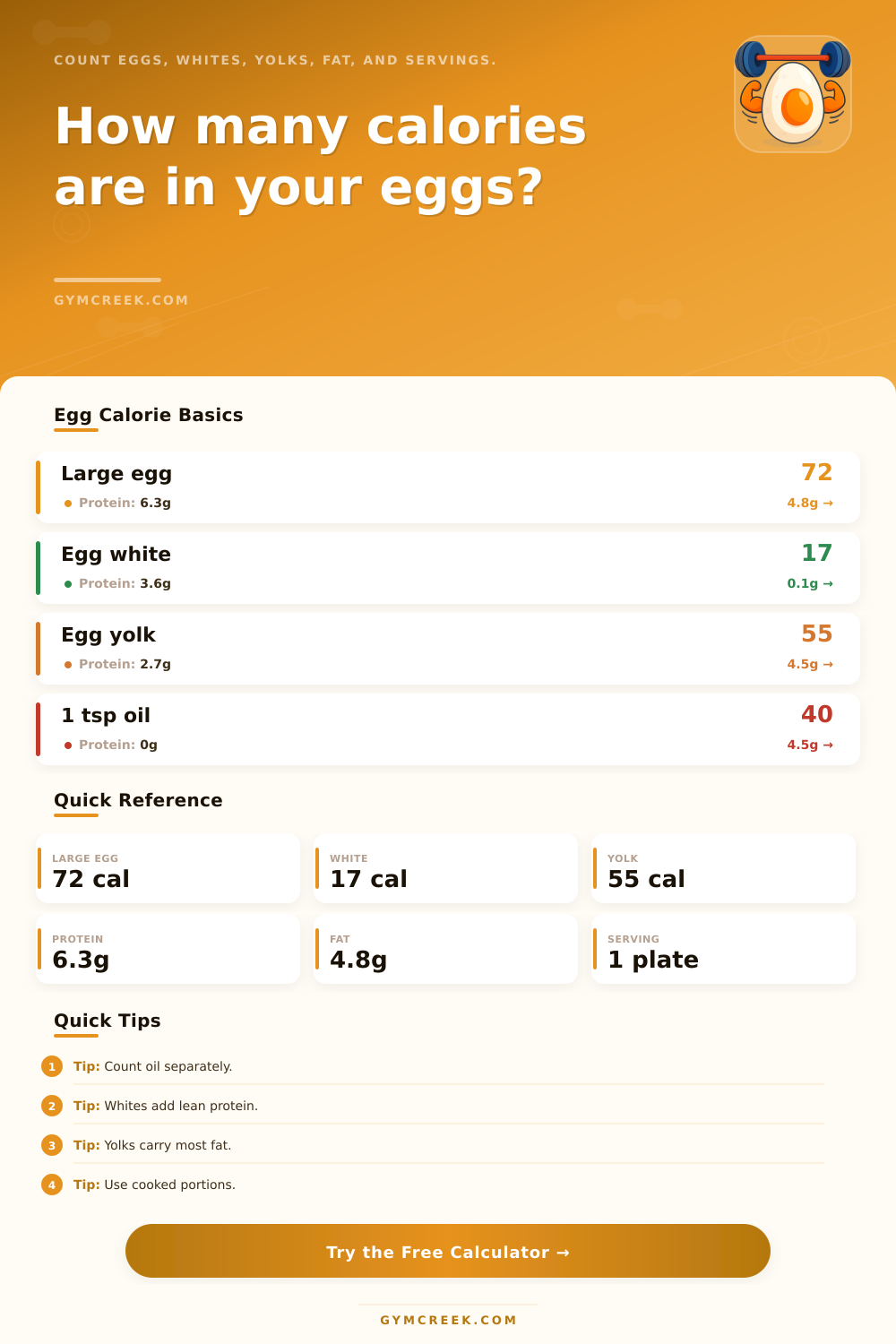
| Large whole egg | 72 | 6.3 g | 4.8 g |
| Large white | 17 | 3.6 g | 0.1 g |
| Large yolk | 55 | 2.7 g | 4.5 g |
| Duck egg | 130 | 9.0 g | 9.6 g |
| Quail egg | 14 | 1.2 g | 1.0 g |
| Cooking Fat | 1 tsp | 1 tbsp | Notes |
|---|---|---|---|
| Butter | 34 cal | 102 cal | Includes milk solids |
| Olive oil | 40 cal | 119 cal | Measure pan oil |
| Avocado oil | 40 cal | 124 cal | Similar to oil |
| Cooking spray | 2 cal/sec | Varies | Use seconds |
| Bacon grease | 39 cal | 115 cal | Count pooled fat |
| Meal Style | Egg Setup | Fat | Typical Calories |
|---|---|---|---|
| Lean plate | 1 egg + 3 whites | None | 120-140 |
| Classic breakfast | 2 large eggs | 1 tsp butter | 175-190 |
| High protein | 2 eggs + 4 whites | Spray | 210-240 |
| Brunch omelet | 3 eggs + add-ins | 1 tbsp oil | 430-550 |
💡Tips
There’s nothing better in the kitchen then an egg. But it can also be tricky to track the nutritional value of one egg versus another. A light breakfast of poached eggs may seem like the same meal as a big brunch of scrambled egg, but those numbers will vary greatly. Often, it has little to do with eggs at all. Instead, it has everything to do with what you place on top and how you portion out your finished product. In this instance, guesswork isn’t going to cut it.
An egg is realy two parts: a protein-rich white that has very little fat, and a fatty yolk that contains all the calories, fat, and other important nutrients like choline. Thinking of the two elements separately make tracking easier. Need to up your protein without adding fat? Add more whites. Want some flavor and satiety? Stick to the yolks. Once you establish what the ratio is, let the calculator do the number-crunching for you. You don’t need to do any mental math, at least not while standing over the hot pan.
How to Count Egg Calories Correctly
There’s a second wrinkle: cooking method. It’s not about how hot the pan is, it’s about what touches the egg. Cooking methods like boiling and poaching doesn’t increase calories beyond the egg itself. Scrambling and frying tend to involves some sort of oil or other fat (be it butter, bacon grease, etc.). One tablespoon of olive oil will tack on over a hundred calories. That’s sufficient to double the energy value in a two-egg dish. To account for this variable, the tool allow users to enter the quantity and type of fat separately from the number of eggs.
This is important, since most people significantly underestimate the volume of cooking fat they use. They think it is just a spritz, but it is actualy a hearty pour. In real life, nearly everyone screws up in this area: portion control. You make a big batch of something, a casserole or some egg muffins, for example; and plan to split it into meals throughout the week. Log that big recipe as one meal, and you’re not going to get accurate numbers. When prompted for “servings,” the calculator assume those calories/macros should be divided by how you split the batch of food. That way, the per-meal estimate reflect how much you’re actualy eating. And it lets you compare your meals to your overall day. How far off is your breakfast? Immediately see if you want to cut back at dinner, or maybe skip an afternoon snack.
Weight is everything. The difference between a jumbo egg and a peewee egg is almost half. In fact, logging the wrong size will vastly underestimate your intake based off what you ate. For example, you might log a jumbo when you actualy ate a large. These reference tables makes it clear how caloric content scales with egg size. And using the right baseline makes minor inaccuracies compound into large ones. It is a tiny detail but it has a huge impact on accuracy.
For the price (per nutrient), eggs pack a lot of bang for your buck. Almost any diet plan includes eggs, from weight loss to clean eating. If you’re an athlete, they also plays a role in macro-counting. Knowing exactly what you pay for on your breakfast plate lets you make better decisions. Obsessive tracking of all grams of everything isn’t necessary; just clear numbers that point out patterns so you can shift habits without guessing.
Eggs are easy to make but hard to log. When you break it down into its parts and factor in the unseen fat, it all would of made sense.