
When you walk into most gym, you’ll see someone go straight for the squat rack. They’re going to pick up some heavy weight because they want to show themselves how strong they are. There’s nothing wrong with wanting to do this, heavy compound lift form a base of strength.
In addition to adding size, these type of lifts increase your confidence far more then small exercises can. But if all you use are barbells, you will leave gaps in physique and muscular balance. Neglecting dumbbells could prevents you from getting as strong or as big.
Build Strength and Size With Dumbbells
The Advantage of Dumbbells Over Barbell Training
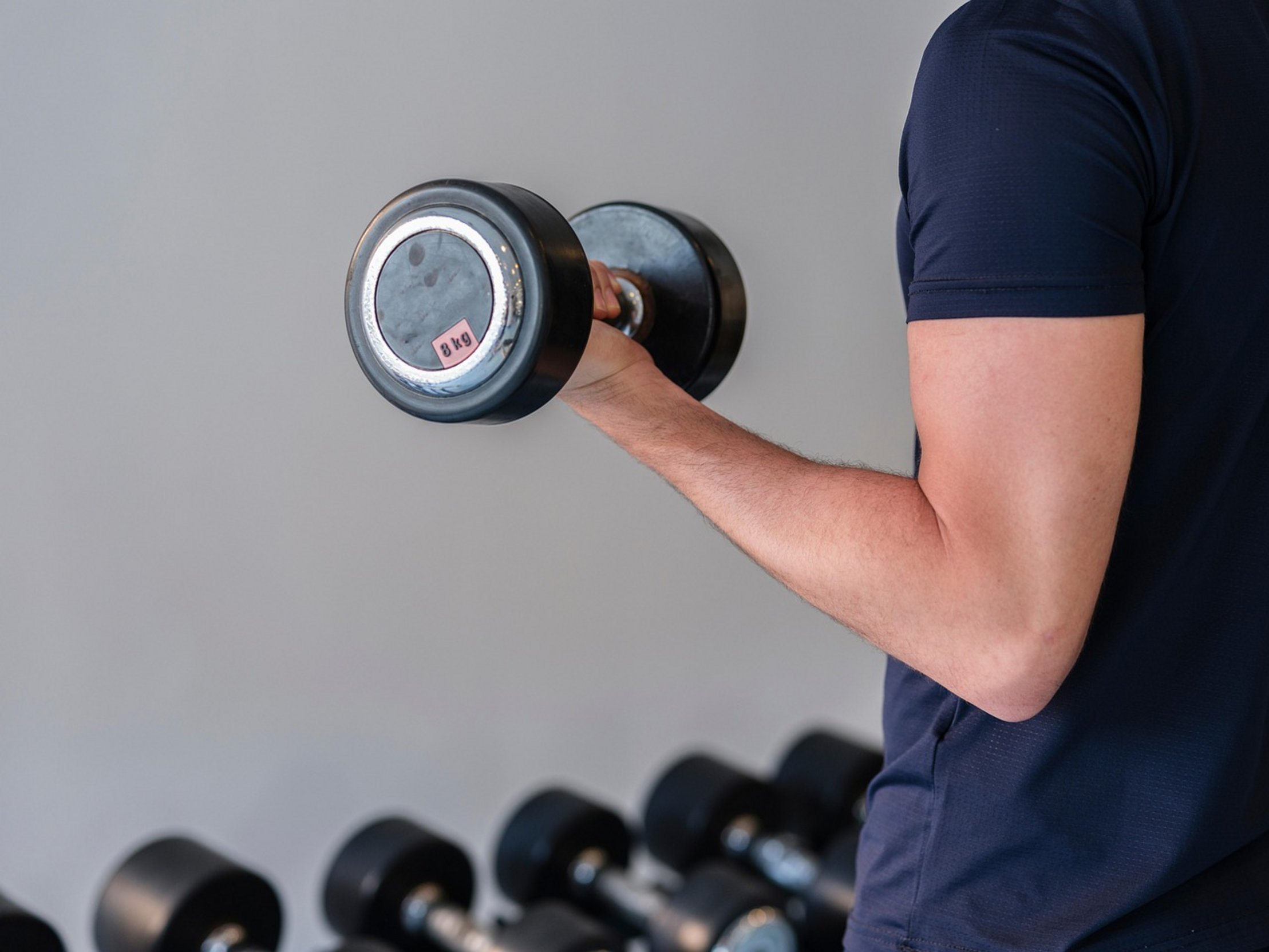
Dumbbells offer a unique advantage that barbell simply cannot match. To keep them still requires you to stabilize them on all sides of your body. As you lift the weight, your main muscles does their job, but so do your stabilizer muscle.
The result is functional strength that transfers to everyday movement. It also develops a better way to feel your muscles working, aiding in muscle growth. Rather than simply moving a weight, you feel it happening in the right muscles.
To choose dumbbell exercises, you use this instability to help you. You want exercises that test your balance but do not compromise form. You want an exercise that build power and stimulates growth at the same time.
It’s not about picking the heaviest weight you can manage. Instead choose the exercises that force your muscles to work hardest per rep. This routine deliver maximum impact.
Standing Dumbbell Overhead Press Technique
The standing dumbbell overhead press activates your core for stability and develops wide, sculpted shoulders. Unlike barbell variation, each arm operate independently. There’s no compensation from a strong to a weak side.
It aligns any imbalances… Before injury can result. Palms facing forward, hold the weights by your sides and press them upward, locking your arms at the top.
Lower under control. Avoid swinging your hips (a major mistake). Engage your glutes and keep your ribs tucked in.
This tweak will prevent lower-back strain while focusing work on your shoulders.
Romanian Deadlift for Posterior Chain Strength
Add the Romanian deadlift. This is a posterior chain exercise (glute/hamstring) which will be key for preventing injuries and building power for athletics.
With a neutral grip, hold a dumbbell in each hand. Keeping a flat back, hinge at the hips. Lower the weight down to your shins as far as you can go without losing hamstring stretch.
Contract your glutes on the way up to stand again. Be sure to keep tension in hamstrings during the whole move. Don’t let this become a squat.
A small bend of the knees is acceptable. But don’t squat. Think of it as a hinge.
That is when you will know you are feeling the muscles working.
Incline Dumbbell Press for Upper Chest Growth
The incline dumbbell press is typically superior to the flat bench for building chest. It targets upper chest, giving body more fullness from the front.
Use a bench angled at about 30 degrees. Hold the dumbbells at shoulder level. Push the weights upwards and slightly inward until they meet at the top of the press.
Don’t bang the weights down. Slowly lower them controlling the eccentric phase. Continue the movement until there’s a slight stretch in the chest.
This is the amount of time the muscle stays tense that stimulates growth. With the dumbbells, you can go farther with a bigger range of motion than with a barbell. Going further matter when developing muscle.
Single-Arm Dumbbell Row for Back Development
Don’t overlook one-sided work. You have to deal with your imbalances head-on when doing one arm at a time. Perform a single-arm dumbbell row.
Rest one hand and knee on a bench. Position your back parallel to the ground. As you pull the dumbbell towards your hip (not your chest) you engage more back muscle and build a thicker upper back.
Your core will be engaged to keep you stable. Not only is it a back exercise but also a full-body challenge. Alternate sides so each side develop evenly.
Dumbbell Lunges for Leg Balance and Power
Then do dumbbell lunges, which strengthen the legs and also improve balance. With a dumbbell in each hand, take a step forward with one foot and drop your hips so both knees bend to 90-degrees. Hold your torso straight up.
Use the heel of your lead foot to push off and get back to standing position. Repeat on the opposite side. These are not easy and will demand concentration.
They shape the legs like nothing else; no squat can do that. Because you’re working on unstable ground, they makes all of your glute and quad muscles fire. These are all moves that comes together into a full workout.
Strength, size, and balance is all covered. You do not need any special equipment. You do not need a crowded gym.
You just need some dumbbells and a desire to get after it. Begin with light weight and learn proper form. Build up slowly, giving your body time to adjust.
Your gains in strength will be well-earned. Your increase in size will be no joke. Come back to those dumbbells to keep training.
