Deficit to Surplus Transition Calculator
Estimate maintenance calories, plan a controlled ramp out of a deficit, and set a lean surplus target without jumping straight from cut calories to aggressive bulk calories.
◎Presets
Presets load realistic post-deficit scenarios and recalculate the transition plan immediately.
⚙Calculator
Transition snapshot
Enter your current cut calories and goal to estimate a controlled path to surplus.
▦Fitness Metrics
▣Reference Tables
| Week | Phase | Calories | Change |
|---|---|---|---|
| Week 1 | Calculate | --- | --- |
| Experience | Surplus | Monthly gain | Best read |
|---|---|---|---|
| Beginner | 8-12% | 1.5-3.0% | Room to grow |
| Intermediate | 5-8% | 0.8-1.5% | Most common |
| Advanced | 3-6% | 0.3-0.8% | Slower lean gain |
| Post-diet | 0-5% | Hold first | Reduce rebound |
| Macro | Cut exit | Surplus phase | Calculator role |
|---|---|---|---|
| Protein | 0.8-1.2 g/lb | 0.7-1.0 g/lb | Held steady |
| Fat | 0.25-0.40 g/lb | 0.30-0.45 g/lb | Minimum floor |
| Carbs | Remainder | Remainder | Training fuel |
| Fiber | Consistent | Consistent | Tracking cue |
| Formula | Inputs | Use | Output |
|---|---|---|---|
| Mifflin-St Jeor | Age, size, sex | General BMR | Resting calories |
| Katch-McArdle | Lean mass | Body fat known | BMR cross-check |
| Activity factor | BMR, activity | TDEE estimate | Maintenance |
| Trend method | Weight change | Cut reality check | Observed gap |
◇Tips
This means no guessing as to how many calories below maintenance you may be. Maintenance is a dynamic concept. It isn’t a static number; it depends on your metabolism, your size, and how active you are. Because if you’ve been restricting food for some time now, you’ve probably adapted to a lower rest burn. So we ask you to input your current calorie intake and what your body weigh this week (and last week), and it calculates the answer from there: How far below does your body believe maintenance realy sits?
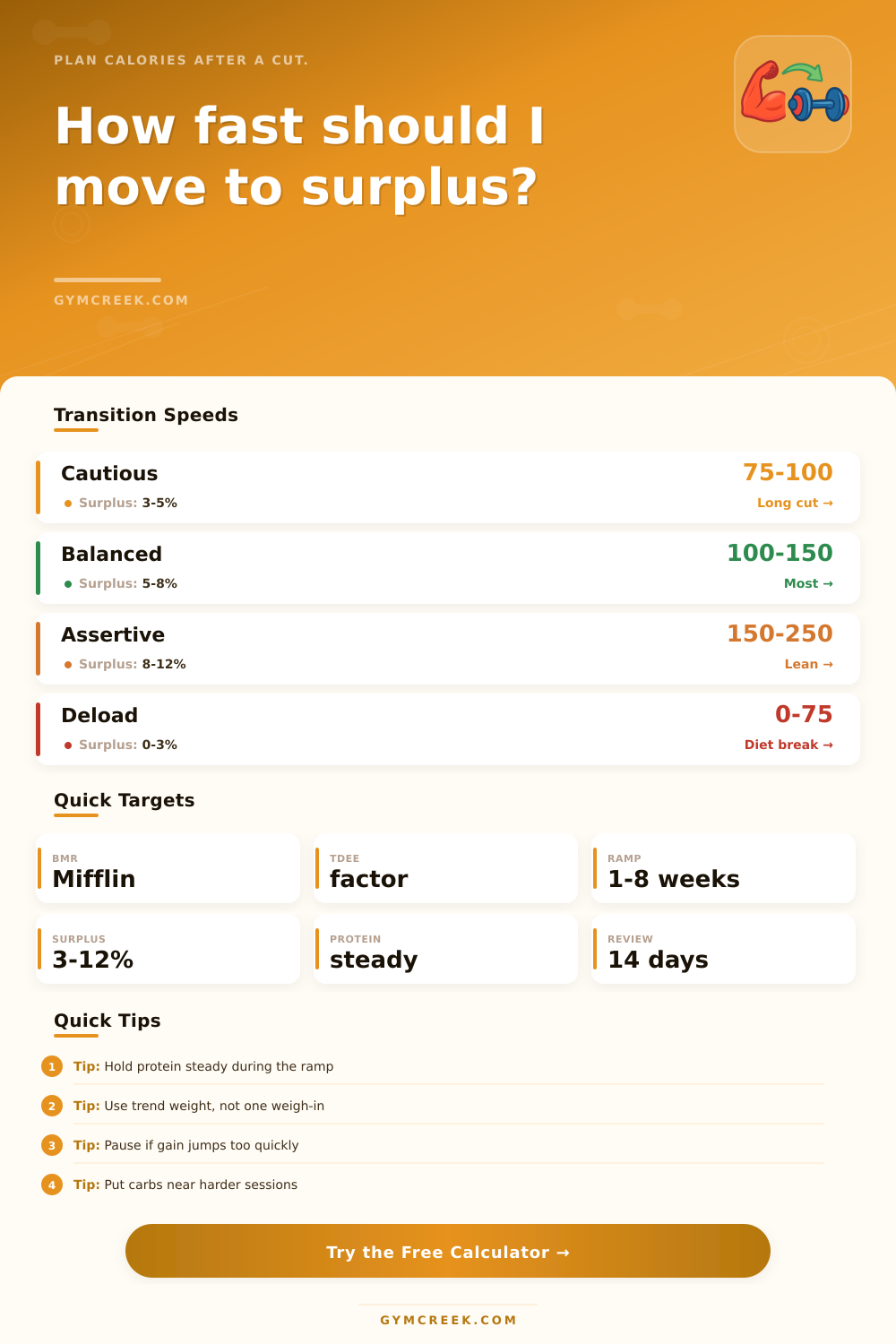
Most people goes from cutting calories directly to bulking calories. They tack on five hundred calories all at once and then complain about being bloated. Instead of going that route, go for a ramp. It should be a slow, gradual increase over time so your metabolism can adjusts to more calories as they come in. How long should you go? The calculator assumes you’ll do this over a few weeks, and that’s generally fine, but longer if you want to be extra-cautious. If you’ve been dieting for awhile, longer cuts tend to require more gradual ramps.
How to Add Calories Slowly
You’re attempting to avoid messing with your hormone balance while restocking on energy storage, not just losing weight. You have to be careful with your protein throughout this phase. A lot of guys reduces their protein when they are bulking up. Don’t do this. Depending on how much your weight change, your protein stays the same or increases slightly according to calculator. This is because as you add weight, you want to maintain muscle mass. When you decrease protein and just go all-out with the carbs, yes, you’ll put on weight, but it won’t make your numbers any stronger. Keep that intake solid and let the carbs take the force of excess.
Carbohydrates are the main variable I’d play with here. Once you meet minimum amounts for protein and fat, any extra calories should mostly comes from carbs (particularly on training days). Based off your preferences, you can direct the extras towards either fats or carbs within the calculator. If you’re running a bunch of morning session, try to front-load those carbs. It doesn’t matter quite as much when they arrive, but matching fuel to effort minimizes fat storage. Your goal is to tell your body there’s plenty of energy available and spare your muscle tissue.
This is laid out on the page with a reference table. For beginners they can get away with a bigger surplus (without getting too fat) since their body are still very responsive to training signals. More advanced lifter should use a smaller surplus, sometimes only 3% above maintenance. Anything more will cause them to gain fat slowly different than muscle.
You don’t want to just gain weight; you want a lean gain. That one takes months, it feels good. This one takes days. It makes you feel sluggish. Monitor your progress: Look at trends, not single weigh-ins. In the short-term, muscle gain (or fat loss) can be masked by water retention from extra carbs. When you ramp up, if you see your weight jump too quickly, take a week off at maintenance before adding more calories. You shouldn’t of overshoot your target. Patience here will save you weeks of cutting time later.
It is a small thing, but it matters. It’s also a shift in mindset from deprivation to recalibrating your relationship with food. It’s training yourself to believe fuel will be available. If you take it slow the number on the scale will go up without the bloat or the guilt. Rush it and find yourself right back where you began… Heavier and more frustrated. Use the ramp as a bridge between discipline and sustainability and finish out the cycle clean.