Calorie to Macro Converter Calculator
Convert a daily calorie target into protein, carbs, fat, fiber, meal targets, training-day macros, and rest-day macros using body size, goal, and nutrition preferences.
◎Presets
Presets load realistic calorie and macro targets, then recalculate instantly.
⚙Calculator
Macro conversion snapshot
Enter calories and body details to convert calories into macros.
▦Fitness Metrics Grid
▣Reference Tables
| Macro | Calories per gram | Common planning role | Converter note |
|---|---|---|---|
| Protein | 4 kcal/g | Lean mass and satiety target | Usually set first from body weight |
| Carbohydrate | 4 kcal/g | Training fuel and dietary flexibility | Often receives remaining calories |
| Fat | 9 kcal/g | Hormone, flavor, and adherence floor | Small gram changes move many calories |
| Fiber | Tracked inside carbs | Food quality and digestion cue | Use as a target, not a subtraction here |
| Goal | Protein range | Fat floor | Carb strategy |
|---|---|---|---|
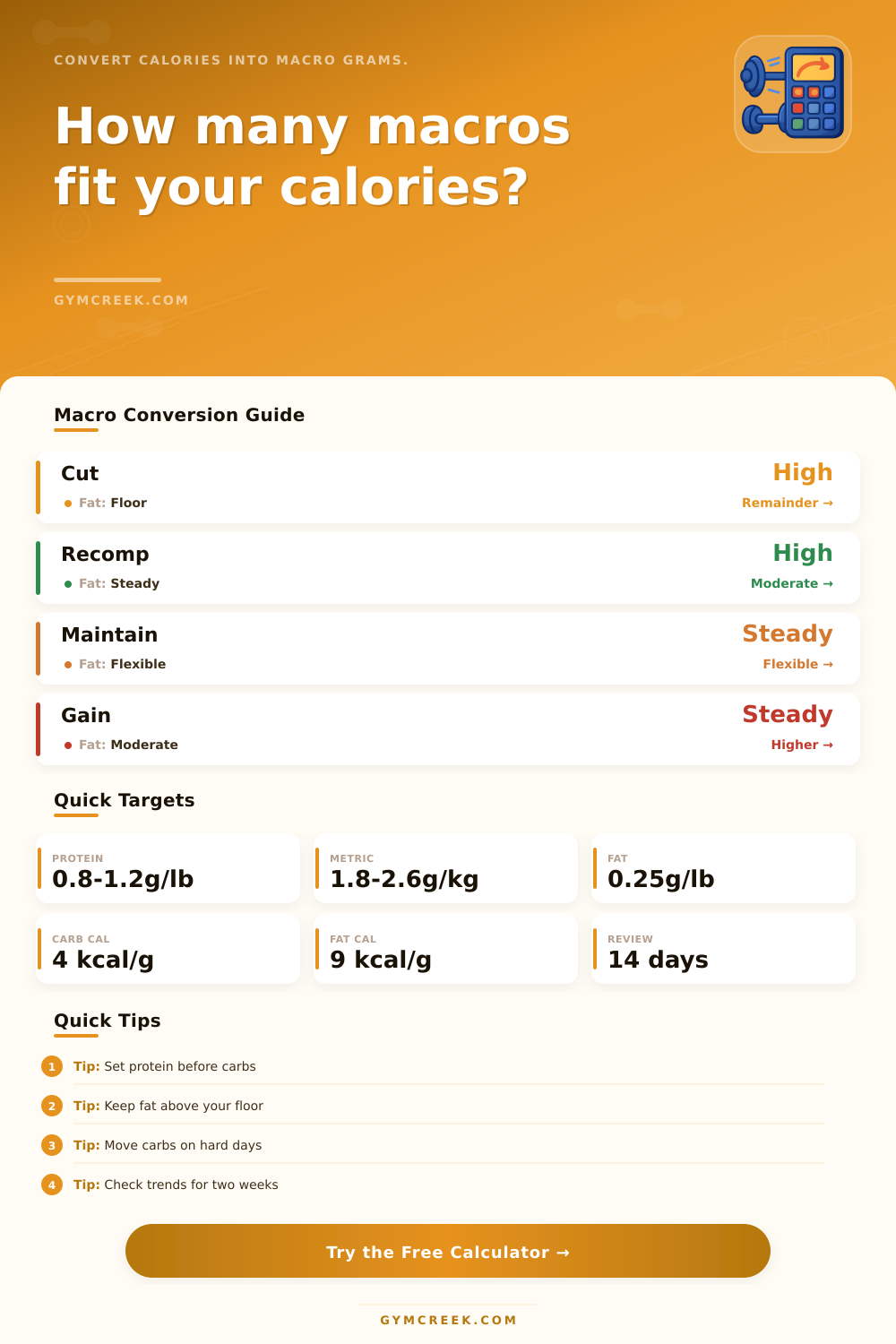
| Fat loss | 0.9-1.2 g/lb or 2.0-2.6 g/kg | 0.25-0.35 g/lb or 0.55-0.75 g/kg | Remainder after protein and fat |
| Recomposition | 0.8-1.1 g/lb or 1.8-2.4 g/kg | 0.28-0.40 g/lb or 0.60-0.90 g/kg | Moderate carbs around lifting |
| Maintenance | 0.7-1.0 g/lb or 1.6-2.2 g/kg | 0.30-0.45 g/lb or 0.65-1.00 g/kg | Flexible split based on preference |
| Lean gain | 0.8-1.0 g/lb or 1.8-2.2 g/kg | 0.30-0.45 g/lb or 0.65-1.00 g/kg | Higher carbs for training output |
| Training frequency | Calorie bump | Carb shift | Best use |
|---|---|---|---|
| 0-2 days/week | 0-8% | 0-10% | Low training volume or easy cardio |
| 3-4 days/week | 5-15% | 10-25% | Most lifting and hybrid weeks |
| 5-6 days/week | 8-20% | 15-35% | High volume sport or performance block |
| 7 days/week | 0-5% | 0-10% | Daily practice with fewer true rest days |
| Formula | Inputs | Used for | Why it matters |
|---|---|---|---|
| Mifflin-St Jeor | Age, sex, height, weight | BMR estimate | Baseline when calories are estimated |
| Katch-McArdle | Lean mass from body fat | BMR alternate | Useful when body fat is known |
| Macro calories | Protein 4, carbs 4, fat 9 | Gram conversion | Turns calorie targets into macro grams |
| Weekly average split | Training days and bump | Day cycling | Keeps weekly calories consistent |
◇Tips
Nutrition planning has become this complicated math problem for most. Set a caloric goal. It is easy enough on paper. Then find foods to meet that goal that taste good while maintaining energy level throughout the day. This is where it starts to get fuzzy… How many carbs? How many grams of protein can I has in my daily share?
The calorie goal isn’t everything. It’s about getting those calories from macro nutrients that matches your training and body composition goals. The macro nutrient breakdown are much more important then just the calorie goal. After entering in your body stats and daily calorie target, this calculates everything else (above) for you; so no need to guess at the conversions.
How to Plan Your Food Intake
Here’s the aha moment: Protein is rarely the first thing people prioritize correcty. Almost all advice is just pick a macro percentage split. But percentages are deceptive; they depend on overall calorie intake. Better to anchor your strategy with a minimum of fat and a precise protein number per pound of body weight. Let the carbs fill up whatever gap remains. That way, you’ll never risk slowing your metabolism or under-fueling workouts if calories decreases.
Protein establishes the baseline for satiety and muscle retention. If you’re attempting to shed some fat, the idea is that a deficit will cause your body to burn muscle for fuel, so higher the target, the better recommendation. A constant stream of amino acids can prevents this from occurring.
Fat affects both flavor and hormone regulation. Fat adds flavor, but it also regulates hormones, so you need to keep a certain amount of it to stick with diet long-term. Cuts your fat too much and you’ll likely see a downturn in both your hormones and mood. The diet becomes punishing instead of something you can sustain.
The variable is carbohydrate intake. It’s a quick source of energy for high-intensity exercise. It help with mental clarity. It is also what your body wants during recovery, especially after interval training or lifting heavy weights. On these days, your body needs increased levels of glucose to recover propery. Here’s where macro splitting between rest days and training days comes into play.
Instead of consuming an equal number of carbs each day, you can move some carbohydrates over to the days that you’re pushing hard. This make a lot of sense; your body uses different amounts of energy from day to day. Depending on your goal, your priorities will shift as seen in the reference table below. For example, if your goal is to lose weight (fat) while also adding muscle (recomposition), keep the protein target high. In this case, fat/carb split can be more flexible. Keep sufficient carbs for exercise but don’t increase calories too much overall.
A bit of trial and error goes into it, having a framework from which to start takes the guessing out of the first step. A lot of newbies view macros as inflexible rules instead of adaptive tools. This isn’t about hitting an exact gram count every single day like you are programming code. You’re aiming for a weekly average that aligns with your body. So if you have a particularly difficult workout and overeat a little bit on Sunday, no big deal. Just compensate during another day of the week. That’s why the calculator gives you training and rest day splits so you can see how it flexes.
The other thing people tend to overlook is fiber. As we consume more calories, we should of also aim for more grams of fiber, because fiber helps us eat enough plants while keeping our digestion running smoothly. It is an easy way to see if we are actualy eating healthy, rather than just eating processed, low-fat junk just to hit a certain protein goal.
To conclude, Planning out your nutrition shouldn’t be overwhelming. It should be manageable. You do not need to measure everything to the gram. That’s just not necessary. A framework that drive results without getting in the way of normal life is what you’re after. So, take calories and make them actionable macro targets, then adjust based off how often you train. Your numbers will fluctuate just like your body does. But the logic will stay constant.