
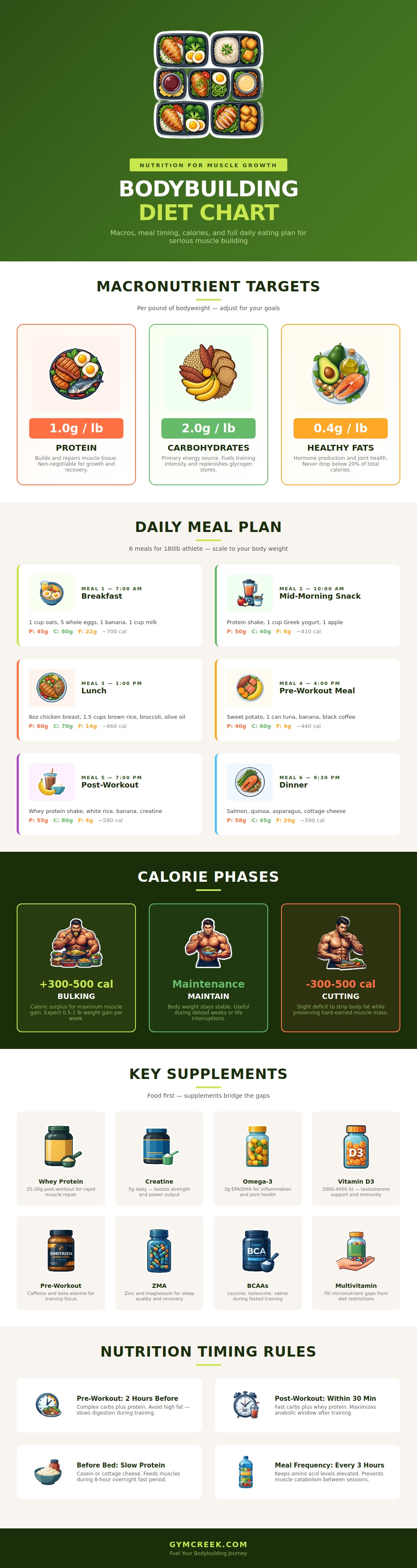
A bodybuilding diet chart is used to manages the food intake of the individual with the goal of encouraging muscle growth. A bodybuilding diet chart will remove the uncertainty from the diets of bodybuilding athletes by calculating an amount of protein, carbohydrates, and fats that the individual with that potential for muscle growth need to consume each day based on there weight. A bodybuilding diet chart will also create a schedule for the meal that the individual consumes throughout that day.
The most important nutrient for individuals with a bodybuilding diet chart is protein. Protein is required for the muscle of the individual to be able to utilize the amino acid necessary to build muscle. Individuals should consume one gram of protein for every pound of their weight.
How to Follow a Bodybuilding Diet Chart
This one gram of protein per pound of body weight are the baseline for building muscle. If the individual dont consume enough protein, they will not be able to effectively build muscle. The bodybuilding athlete should include foods high in protein in the diet, such as chicken, egg, fish, and dairy products.
The bodybuilding diet chart will ensure that each individual consume the necessary amount of protein each day, regardless of the source of that protein. Carbohydrates are the vital nutrient for bodybuilding athletes due to the energy requirement of training. Glycogen, the stored form of carbohydrates, fuel the muscles of the bodybuilding athlete during there workouts.
Each bodybuilding athlete should consume two grams of carbohydrates per pound of body weight due to the need for high glycogen levels to fuel their workouts effective. The bodybuilding athlete should consume foods high in carbohydrates, such as rice, oats, potato, and fruits to ensure that their glycogen stores are refilled. Carbohydrates is essential to the muscle building process of each athlete, so they should be avoided only if the bodybuilding athlete is attempting to lose fat.
Fats are an essential nutrient for bodybuilding athletes yet contain a lower percentage of calories within a bodybuilding diet chart. A bodybuilding athlete should consume approximately four-tenths of a gram of fat per pound of body weight. Fats are necessary for bodybuilding athletes to secreting hormones and to keep their joints healthy and strong.
Consuming too little fat can cause stalled progress with muscle building or even lead to injury during their workouts. The bodybuilding athletes diet should include fats such as avocados, nuts, olive oil, and fatty fish. The bodybuilding diet chart allocates time for six meal throughout the day.
Each meal should be eaten every three hours to ensure that the amino acids from protein are available in the system. This schedule also ensures that each bodybuilding athlete do not feel hungry during the middle of the day. Meals such as breakfast with oats and eggs provides energy for the bodybuilding athlete.
The bodybuilding athlete can consume yogurt or protein shake during the mid-morning meals to ensure that the bodybuilding athlete does not feel hungry prior to lunch. Lunch and the meals before the athlete’s workouts will contain high amount of carbohydrates to fuel them during their training. Post-workout meals should be consumed quickly as the muscles are receptive to the nutrients after lift weights.
The dinner meal should contain proteins that take longer to digest to provide nutrient to the bodybuilding athlete after they go to sleep. The portions that are allocated within the bodybuilding diet chart can be adjusted based off whether the bodybuilding athlete desires to gain, maintain, or lose weight. Individuals that wish to gain weight should consume three to five hundred extra calorie daily.
Individuals that wish to maintain their current weight should consume the number of calories calculated within the bodybuilding diet chart. Individual that desire to lose fat should consume fewer calories daily then those within the bodybuilding diet chart. While the bodybuilding diet chart provide the framework for the bodybuilding athlete’s diet, the athlete must decide the calorie level that best suit their goals.
Supplements are the last component to include in a bodybuilding diet chart. Supplements aid the diet yet are not an alternative to the food that is provided within the bodybuilding diet chart. One supplement that can be included is whey protein powder for meal that do not contain protein.
Creatine monohydrate is another supplement that can be used to increase the strength and power output of the bodybuilding athlete’s muscle. The bodybuilding athlete can also take other supplements such as omega-3 fats and vitamin D to aid the joints and hormone yet are not an alternative to the food in the bodybuilding diet chart. Following the bodybuilding diet chart is beneficial for those who follow it over a long period of time.
Each bodybuilding athlete will ensure that their training, sleep, and food intake is aligned with this diet chart. If the bodybuilding athlete’s training, sleep, and food intake are aligned, then the progress of the bodybuilding athlete will be more predictably.
