Blueberry Fiber Calculator
Estimate blueberry fiber, total carbs, net carbs, edible serving grams, antioxidant score, fiber-goal share, and carb-cap fit from berry type, form, and portion context.
📌Blueberry Fiber Presets
Presets use edible blueberry weight after sorting and draining. The calculator adjusts for berry type, fresh or frozen form, dried concentration, add-ins, fiber target, net-carb cap, and antioxidant priority.
⚙Calculator Inputs
Blueberry fiber snapshot
Enter serving weight, berry type, form, yield, fiber target, and net-carb cap to estimate your portion.
📊Blueberry Fiber Metrics
📑Reference Tables
| Serving | Edible Grams | Fiber | Net Carbs |
|---|---|---|---|
| 1/4 cup fresh | 37 g | 0.9 g | 4.5 g |
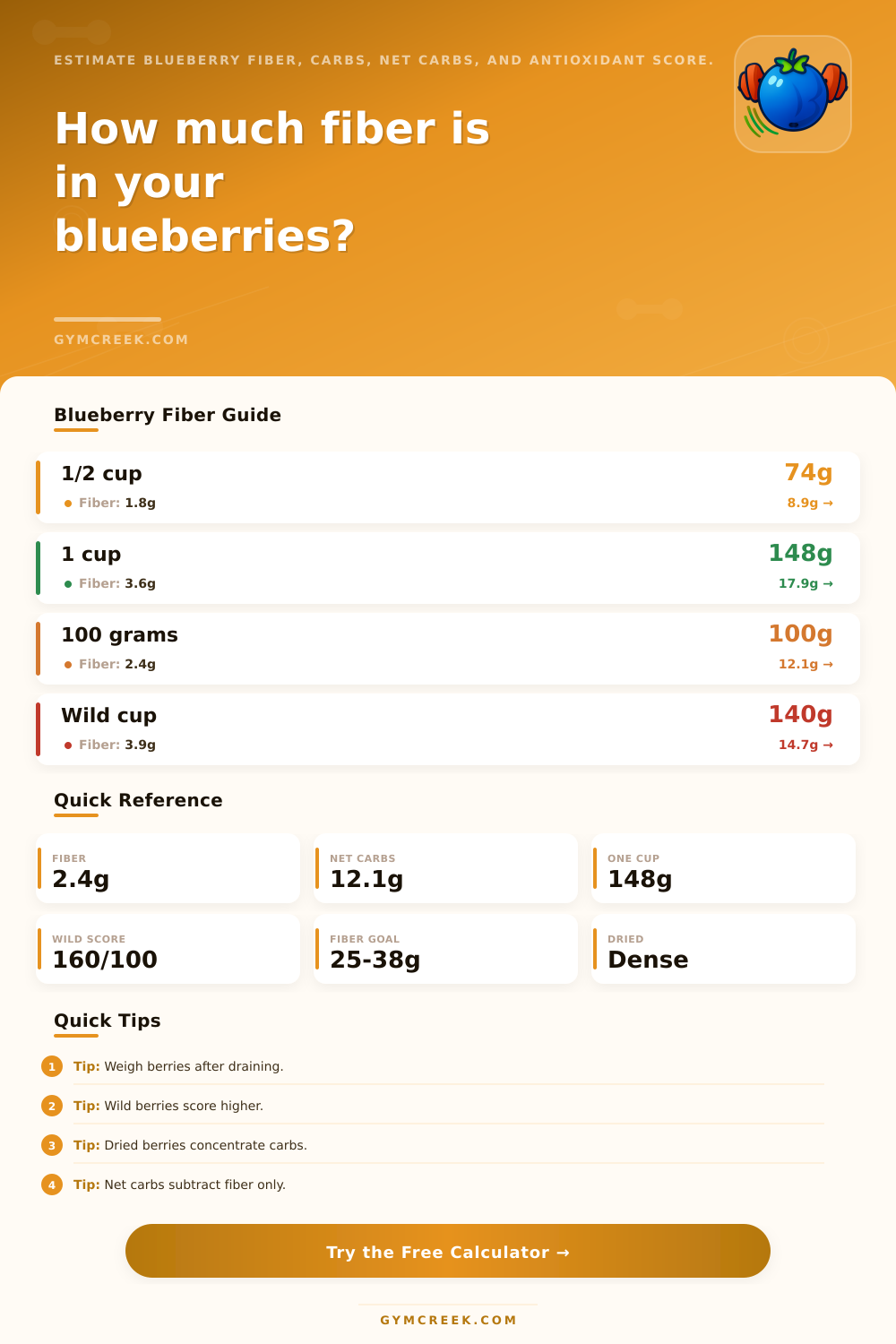
| 1/2 cup fresh | 74 g | 1.8 g | 8.9 g |
| 1 cup fresh | 148 g | 3.6 g | 17.9 g |
| 100 g weighed | 100 g | 2.4 g | 12.1 g |
| Pint container | 312 g | 7.5 g | 37.7 g |
| Berry Type | Fiber Factor | Antioxidant Factor | Best Use |
|---|---|---|---|
| Cultivated | 1.00 | 1.00 | Baseline serving |
| Wild | 1.15 | 1.60 | Antioxidant focus |
| Highbush | 1.02 | 1.08 | Fresh snack |
| Organic | 1.00 | 1.05 | General estimate |
| Mixed berries | 1.18 | 1.15 | Fiber blend |
| Berry Form | Carb Factor | Fiber Factor | Accuracy Note |
|---|---|---|---|
| Fresh raw | 1.00 | 1.00 | Baseline math |
| Frozen | 1.00 | 1.00 | Water included |
| Thawed drained | 1.05 | 1.02 | Some water lost |
| Dried unsweetened | 4.35 | 3.85 | Concentrated |
| Pureed | 1.00 | 0.98 | Same berries |
| Context | Typical Grams | Fiber Range | Net-Carb Cue |
|---|---|---|---|
| Snack side | 74-148 g | 2-4 g | Moderate |
| Yogurt bowl | 50-100 g | 1-3 g | Add-in matters |
| Smoothie | 75-150 g | 2-4 g | Blend total |
| Low net check | 35-75 g | 1-2 g | Small serving |
| Antioxidant focus | 100-150 g | 2-4 g | Wild helps |
💡Tips
There you are: standing in middle of produce aisle, clutching a pint container, with no idea what’s inside except for the blue skins. What’s in there? Everyone looks at the label, reads the word “fiber,” and then assume they’re eating a large chunk of their daily quota from just one small serving of that food.
But the truth is: Blueberries are actualy a carbohydrate source first, with fiber being a secondary addition. That changes everything about how you think about meal planning. If you’re tracking macros, or have certain health goals in mind, the math is much more important than the marketing.
Why You Should Weigh Your Blueberries
After selecting your type of berries and how much of them you want per serving, calculator on the page do all the math (so no more guessing at nutritional density!). For example, you may be surprised to see how much more of a difference switching from wild to cultivated blueberries makes in the antioxidant category versus the fiber category.
That’s an interesting detail: I think a lot of folks purchase wild berries because they’re hoping for a huge leap in their fiber consumption, but often end up mainly paying for those high-powered polyphenol compounds, not to mention that super-tart taste. Sure, there will be some increased fiber, typically about 15% (not double) so don’t expect too much…
But how was the fruit before it land in your blender (or bowl)? A cup of fresh berries contains more fiber than a cup of thawed ones, assuming they weren’t wrung out after defrosting. And frozen berries contains slightly more water by weight than fresh ones (which again, will change once thawed). More water = less nutrition-per-gram, which equals fewer nutrients in a cup of thawed-and-rinsed berries versus a cup of tightly packed, fresh ones. Adjusting for yield and rinse status lets the calculator handle these differences. And helps you avoid overestimating your intake based off solely on volume.
Water makes all the difference for those of us who count net carbs: blow your daily carb allotment by a few drops of water and you’re out of range. However, if your blueberries were dry then you’re faced with something completely different… Since dehydrating concentrates all that’s left. Water is what takes up volume; without it, the carbs and fiber gets super concentrated by weight. A small tablespoon of dried fruit can contain as many carbs as a giant handful of fresh.
That’s why people like to put them in their yogurt. They think they’re adding a small amount, but because they are so concentrated, you should of weighed them instead of just guessing by eye. There are presets for such situations included in the tool, otherwise you’d have to tweak the water loss into the calculation yourself.
But then throw some other ingredients into the mix, and the equation shifts once more. Now we’ve got oats, for example, or chia seeds, which is additional sources of fiber working with the berry data. It’s not “just” a matter of adding up some numbers, it’s about considering the effect of different food structures on blood sugar response and fullness. Refined sugars have a sharper spike than blueberries do, yet those berries also produces a gentler glucose curve. One that may be lessened by high-glycemic add-ins.
Without having to pull out another database, the reference tables incorporated into the tool help you visualize these relationships at a glance.
To summarize, blueberries rock. They’re delicious, provide a little antioxidant and fiber, and won’t blow up your carb budget if you know exactly how much you’re eating. They aren’t a magic bullet, since no single food can fix all digestive problems by itself. However, as part of a well-balanced meal plan, you can enjoy them knowing exactly how many you’re eating.
Quit eyeballing your berries (or anything else!) and let the scale guide you. The accuracy lets you stop worrying and gain the peace of mind that you realy know what’s going into your body. That’s where control starts, it’s the first step toward swapping a random nibble for a mindful nutrition decision.