Bike Fit Reach Calculator
Estimate frame reach, saddle-to-hood contact length, stem range, and current-bike fit delta from body proportions and cockpit setup.
📌Presets
Presets load realistic rider proportions and bike setups, then recalculate the recommended reach targets.
⚙Calculator
Bike reach fit snapshot
Enter your measurements and cockpit details to estimate a reach target.
📊Fit Metrics Comparison Grid
📑Reference Tables
| Bike Type | Typical Stem | Reach Feel | Handling Note |
|---|---|---|---|
| Endurance road | 80-110 mm | Neutral to relaxed | Stable all-day steering |
| Race road | 90-130 mm | Longer and lower | Responsive front end |
| Gravel | 70-100 mm | Moderate with control | Room for rough surfaces |
| Triathlon | 70-110 mm | Pad-stack dependent | Confirm with aero pads |
| XC mountain | 50-90 mm | Shorter cockpit | Weight shift matters |
| Fit Delta | Interpretation | Likely Adjustment | Ride Symptom |
|---|---|---|---|
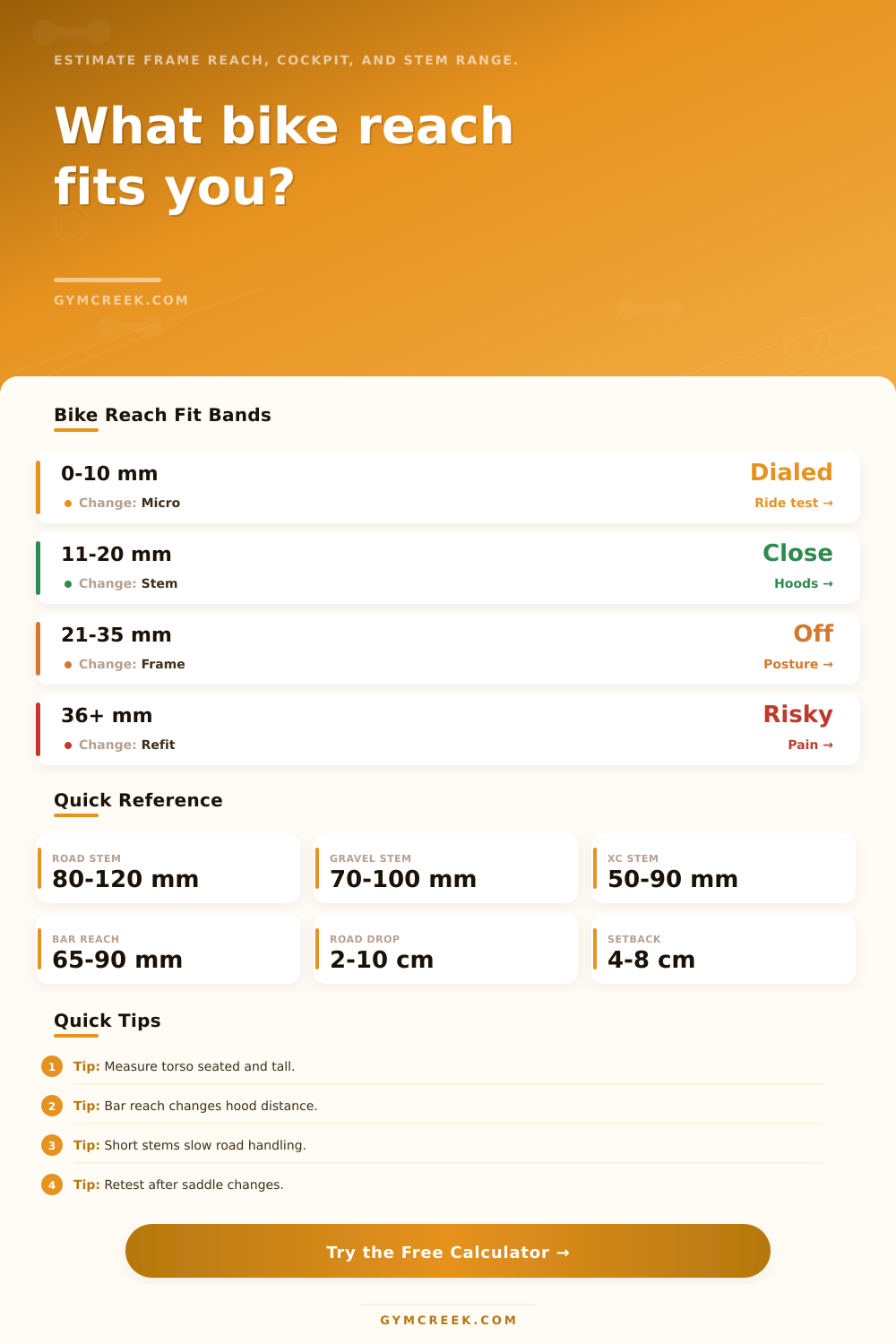
| 0-10 mm | Very close | Saddle or hood tweak | Usually clean |
| 11-20 mm | Usable but noticeable | Stem or bar reach | Hands or neck |
| 21-35 mm | Geometry mismatch | Size or cockpit rethink | Locked elbows |
| 36+ mm | High mismatch risk | Professional fit check | Pain or poor control |
| Measurement | How To Measure | Fit Role | Common Error |
|---|---|---|---|
| Torso length | Seat to sternal notch | Main reach driver | Slouching while seated |
| Arm length | Shoulder to fist center | Contact distance | Measuring to fingertips |
| Saddle setback | BB to saddle nose | Moves rider rearward | Ignoring saddle swap |
| Bar reach | Clamp to hood contact | Adds cockpit length | Using bar width instead |
| Formula | Variables | Output | Use |
|---|---|---|---|
| Cockpit target | Torso, arm, style | Saddle to hoods | Contact length estimate |
| Frame reach | Target, stem, bar | Geometry reach | Frame comparison |
| Stem band | Bike type, delta | Practical stem | Handling guardrail |
| Drop score | Inseam, drop, flex | Posture score | Comfort warning |
💡Fit Tips
Reach is how far you stretch out to grasp the handlebars. If it’s wrong, you can spends top dollar on an expensive carbon frame and still be uncomfortabley. At this stage in the game, it’s about geometry, not power or speed. You’ll know it when you try to ride and find you’re straining your back.
A little math, using a formula for your body and your bike’s details, will help you finds the right spot. That’s where the calculator up top come in. Torso length is distance from your butt bone (your sit bones) to the notch in front of your sternum, measured while sitting up straight. A slouched posture will give you a number which results in all frames feeling too long. Your arm length doesn’t matter as much as most people believe (although it do add more distance from your shoulders to your hands). Together they creates a baseline for how far forward you naturaly sit.
How to Find the Right Bike Fit
The tool then calculates a target saddle-to-hoods distance to achieve balance under your weight. Manufacturers publish their frames’ static frame reach numbers, but each time you swap out a part, that’s not how long your cockpits is anymore. A bar with more reach? You’ll move forward further. You’ll move up further. Longer stem? Same deal. Your hips shifts back and forth when you change your saddle setback, which basically adjusts your reach by a few millimeters.
The calculator takes all of that into account (what you’ve got bolted on)… And lets you know whether your frame is really the issue or if it’s simply the parts you’re using. Compare the distance between your bike and your target. Is it less than ten millimeters? Probably okay; a few adjustments here and there in hood position or saddle position should of do it. Is it larger then twenty? You’ll likely notice it on your neck/back on longer outings. Over thirty-five millimeters? This probably indicates that you’re riding the wrong size frame altogether. No amount of stem modification will help here without compromising handling.
The Drop posture score indicate whether you have matched your flexibility to your drop. If you’re really flexible, you can get away with being really low and still not strain your hamstrings. Being stiff means you either need a shorter reach or a bar that is too high to protect your joints. That’s where we often see two riders who are the same size but one excels on an aggressive-geometry race bike and the other prefers an endurance frame that’s kinder to his/her body.
Long stems feels stable, but can strain shoulders if you’re too far stretched out. Short stems look cool, but may cause twitchy steering behavior when riding fast on highway. This feature uses the type of bike you ride to find a range of good stem lengths to keep handling safe. Road racers should use slightly longer stems, which is more stable/stiff at high speeds and more aerodynamic. Mountain bikers should go short; it’s easier to quickly shift weight. It is basically a tradeoff between comfort and control so you has to find what works best for you.
Read the reference tables that come with the tool. They detail average stem length for different disciplines, as well as symptoms of common fit errors. If your hands gets numb, you’re probably too far back or too long. Pain in your neck? You’re too far forward. Diagnosing problems early helps you avoid wasting money on new hardware.
Anytime you make a significant change retest your fit. You might be moving forward or back a couple of inches depending on which saddle you choose. Changing out handlebars will impact how wide and how far away they are from you. Try to have consistency in everything you set up. You want to feel like you are in a good fit where it’s not extreme but rather a neutral feel so you can concentrate on what’s coming down the road instead of wrestling with yourself for control.
Use correct measurements as a starting point and let the numbers lead you. Tweak things gradually and pay attention to how your body feels while riding. If you hurt somewhere it’s not right. Your reach depends on finding a position that allows you to ride for as long as you do.