Barbell Loading Calculator
Calculate exact side loading from a target total, bar weight, collars, plate inventory, unit conversion, competition increments, and the nearest load you can actually build.
📌Presets
Each preset loads a bar, collar setting, plate stock, and target so you can test exact loading or see the closest possible substitute.
⚙Calculator
📦Plate Inventory
Inventory counts are total plates available in the gym, not plates per side. The calculator only uses plates you actually list.
Barbell loading result
Enter your target total and equipment to calculate plates per side.
📊Loading Metrics
📋Side Loading
| Side | Plate stack | Side weight | Notes |
|---|---|---|---|
| Calculate to build your loading plan. | |||
📑Reference Tables
| Equipment | Metric | Imperial | Use |
|---|---|---|---|
| Men's Olympic bar | 20 kg | 44.1 lb | Most meets |
| US power bar | 20.4 kg | 45 lb | Many gyms |
| Women's Olympic bar | 15 kg | 33.1 lb | Weightlifting |
| Competition collars | 5 kg pair | 11 lb pair | Meet loading |
| Setting | Increment | Typical use | Example |
|---|---|---|---|
| IPF attempt | 2.5 kg | Standard total | 140 to 142.5 |
| Record attempt | 0.5-1 kg | Small jump | 200 to 201 |
| US gym | 5 lb | Plate pairs | 225 to 230 |
| Microload | 1-2.5 lb | Press jumps | 100 to 102.5 |
| Check | Why it matters | What to verify | Fix |
|---|---|---|---|
| Bar included | Total accuracy | Bar weight known | Weigh or label it |
| Collars included | Meet totals | Both collars counted | Add collar total |
| Matched sides | Balanced lift | Same stack each side | Recount plates |
| Inventory limit | Load possible | Enough plate pairs | Use nearest load |
| Rule | Example | Best for | Note |
|---|---|---|---|
| Largest first | 45,25,10 | Stable load | Inside out |
| Pairs first | Both sides | Balance | Match sleeves |
| Small outside | 5,2.5 | Fast changes | Easy swaps |
| Collars last | Clamp outside | Safety | Secure plates |
💡Tips
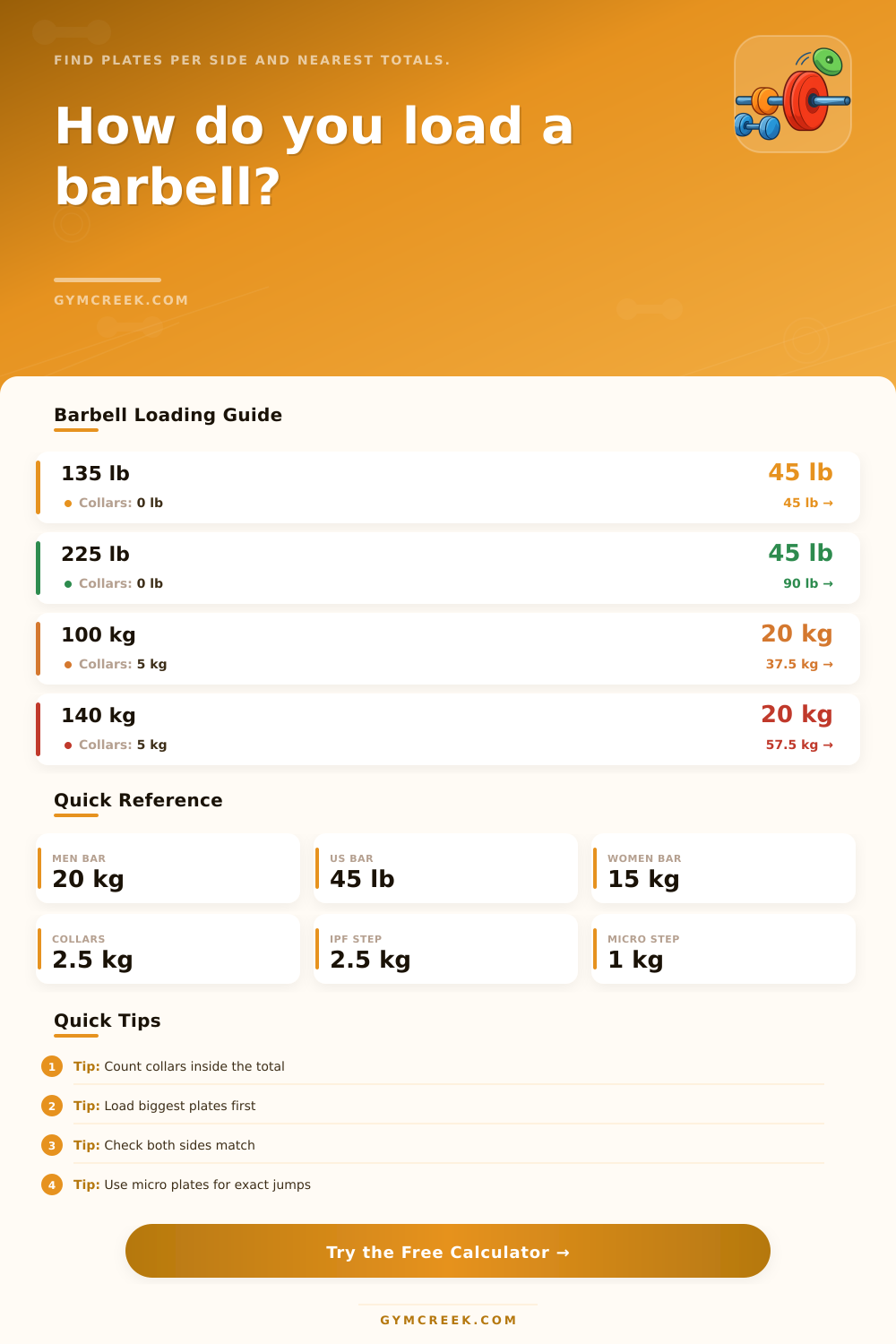
Barbell loading involve accuracy because inaccurate loading can cause error in calculating the weight. To accurate load a barbell, you need to know the exact weight of the barbell and the collar. Barbell weight are generally twenty kilograms, though they may weigh forty-five pounds depending on the gym.
Collars add to the weight of the barbell; competition collars generaly weigh five kilogram, and you must account for their weight in the total weight of the barbell. The calculator will help you determine the weights of the bar and the collars. Input the target weight, the weight of the barbell, and the collars.
How to Load a Barbell Correctly
The calculator will find the weights for you. You can choose how the calculator will find the weight. You can choose the exact weight, a weight lower than the target weight, or a weight higher than the target weight.
For instance, you may want a lower weight when performing a warm up set for the barbell. Another factor to consider when loading a barbell is your plate inventory. Most gym purchase many large plate but dont purchase as many small plates.
Input your available plates into the calculator to account for them. The calculator will find the closest weight to your target weight using the plates you have available. It is important to know the closest weight so you can determine the difference in weight between your target and barbell weights.
Many weightlifting competitions uses specific rules for the weights of the barbell plates. Many competitions use twenty and a half kilogram increments for the weight added to the barbell. Some competitions use one kilogram increments for those who have micro plates.
You can enter these into the calculator to find the right weight for the barbell. This rule apply to pounds, as it is possible that the competition may use five pound increments or two and a half pound increments. You must ensure that the weights on each side of the barbell are the same.
The barbell will not be level if the weights is not balanced. The calculator will default to this selection for loading the barbell, but you can choose the option to load the weight on only one side of the barbell. Choose this option in the case that you have an irregular inventory of barbell plate or if one side of the barbell has more room than the other side.
There are two reference tables that contain information regarding the weights of the barbells and collars. These tables can tell you the weights of the plates you may use for your barbell. These tables save you the trouble of remembering the weights of the barbells and the collars.
You can also use these tables to remember whether or not you should include the weight of the collars in the total weight of the barbell. Finally, there are a couple of physical variable of the barbell that this calculator will not account for. The wear on the plates will change their weights over time.
Additionally, the length of the sleeve of the barbells will change how many barbell plate can be loaded on a barbell. Even with the calculator, you must still look at the barbells to ensure they are as close to the target weights as possible. The best way of determining the weights to load on the barbell is to choose a target weight and use the barbell calculator to determine what weight will work best with the equipment you have available for barbell loading.
If the target weight cannot be achieved, you should of accept the next best weight possible to continue with your training session.