Vitamin D For Athletes Calculator
Estimate an athlete vitamin D intake range from current 25(OH)D status, body weight, sun exposure, latitude and season, skin coverage, indoor or outdoor training, diet, and supplement cap.
📌Athlete Vitamin D Presets
Presets load realistic training and sun-exposure profiles. Adjust the inputs to match your bloodwork, season, clothing, and actual diet.
⚙Calculator Inputs
Vitamin D athlete snapshot
Your estimated intake range, sun factor, maintenance dose, recheck cue, and caution flag update as inputs change.
📊Metrics Grid
📑Vitamin D Rules and Reference Tables
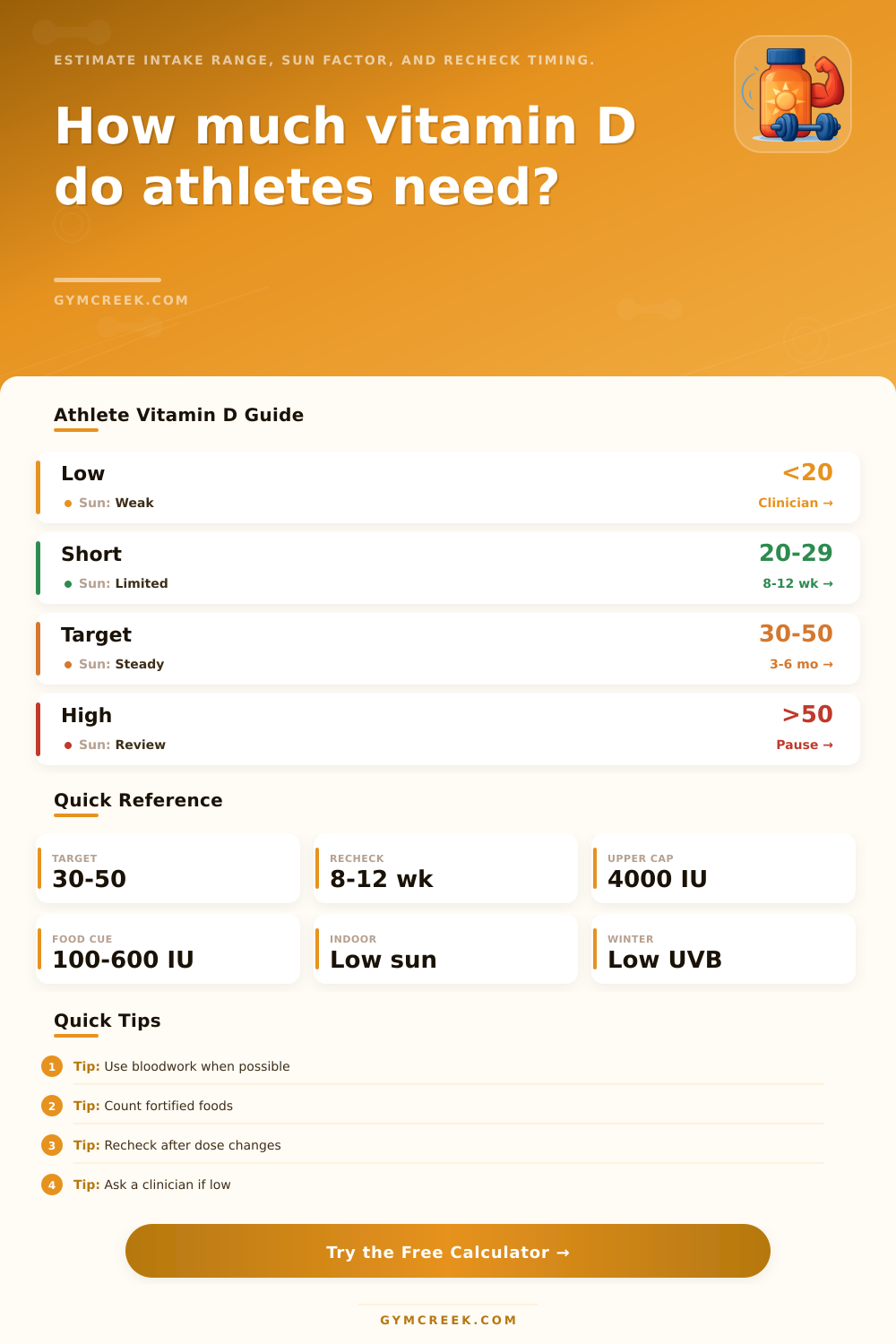
| Blood level | Status label | Calculator response | Recheck cue |
|---|---|---|---|
| Under 20 ng/mL | Low | Raises intake range and caution flag. | Clinician review; often 8 to 12 weeks after a supervised change. |
| 20 to 29 ng/mL | Short of target | Adds a moderate correction planning band. | Recheck in 8 to 12 weeks after changing intake. |
| 30 to 50 ng/mL | Common target | Focuses on maintenance, sun, and diet consistency. | Recheck in 3 to 6 months if stable. |
| 51 to 80 ng/mL | High-normal review | Limits dose to maintenance or below cap. | Recheck sooner if supplementing. |
| Over 80 ng/mL | High caution | Flags pause-and-review caution. | Use clinician guidance before continuing supplements. |
| Input | Low factor | Higher factor | Planning meaning |
|---|---|---|---|
| Latitude and season | High latitude winter or mid latitude winter | Low or mid latitude summer | UVB availability sets the ceiling for skin production. |
| Minutes and days | Under 10 minutes or 0 to 1 days | 15 to 30 minutes on several days | Repeated useful exposure raises the sun factor. |
| Skin coverage | Long sleeves, full kit, shade, heavy sunscreen | Arms and legs exposed | Coverage reduces the effective exposure score. |
| Training setting | Indoor, evening, covered outdoor sessions | Midday outdoor sessions | Outdoor training helps only when UVB reaches skin. |
| Pattern | Food estimate | Supplement cap meaning | Calculator note |
|---|---|---|---|
| Low vitamin D diet | About 100 IU/day | More of the gap must come from sun or supplement. | Track fortified foods, dairy alternatives, eggs, and fish. |
| Mixed diet | About 250 IU/day | Often leaves room for a modest supplement if needed. | Use labels because food values vary widely. |
| High vitamin D diet | About 450 IU/day | Diet contributes meaningfully to maintenance. | Fatty fish and fortified foods are the main drivers. |
| Excellent food pattern | About 600 IU/day | Supplement need may be lower when levels are stable. | Bloodwork still matters if performance or health concerns exist. |
| Step | Rule | Inputs used | Output |
|---|---|---|---|
| Weight conversion | Metric uses kg; imperial lb is divided by 2.20462. | Body weight, unit toggle | Body weight in kg |
| Base maintenance | Body weight kg x 15 IU/kg, with a 600 IU/day floor. | Body weight | Maintenance baseline |
| Sun factor | Minutes x days is scaled by latitude, season, coverage, and training setting. | Sun, season, coverage, training | 0.00 to 1.00 factor |
| Sun credit | Sun factor x 1000 IU/day planning credit. | Sun factor | Estimated sun contribution |
| Diet credit | Diet pattern assigns 100, 250, 450, or 600 IU/day. | Diet selection | Food contribution |
| Level correction | Known 25(OH)D below target adds 50 IU/day per missing ng/mL, capped at 1200 IU/day. | Known level | Correction band |
| Intake range | Maintenance plus correction minus sun and diet credits, then capped by user cap and general caution bands. | All inputs | IU/day range |
| Recheck timing | Low or changed plans cue 8 to 12 weeks; stable target levels cue 3 to 6 months. | Level and caution | Timing cue |
💡Athlete Vitamin D Tips
Vitamin D is an nutrient that has an impact upon the recovery, bone health, and immune health of the body. While many athlete may experience changes in their energy or in the way that they experience injuries to there body, the athletes may not be aware of the potential cause of these effects: their level of vitamin D in there systems. Without the use of data to determine these levels, athletes can utilize the calculator to determine their requirement of vitamin D for their bodies.
Such a calculator asks athletes for information regarding their training pattern, their exposure to the sun, their body weight, their dietary habits, and their current lab results for the calculation of their vitamin D needs. As a result, the calculator provide athletes with information regarding their vitamin D range, their sun factor, the amount of vitamin D that they should consume for maintenance of there levels, and at what point they should again provide a laboratory test of their vitamin D levels. Exposure to the sun is one of the main factor in the bodys production of vitamin D. The time during which an athlete is exposed to the sun is, therefore, an important factor in this process.
Vitamin D Calculator for Athletes
For instance, although athletes may run in the mornings or the evenings, their exposure to the sun during these times is very limiting. The calculator accounts for these variable in the questions regarding the number of minutes that the athlete spends exposed to the sun during the middle of the day, and how many days each week that the athlete is exposed to such sunlight. Additionally, the latitude at which the athlete lives, and the time of year during which they live, can impact the amount of vitamin D that their body can produce.
The amount of the athlete’s body that is exposed to the sun while wear clothing can also impact vitamin D production. The weight of the athlete is another variable in the calculation of their vitamin D needs. Athletes with higher weights requires a higher baseline level of vitamin D in their systems.
The calculator accounts for this by calculating the athlete’s vitamin D needs on a per-kilogram basis of their body weight, ensuring that the needs of the athlete are met even if the athlete weighs little. That baseline is further adjust according to the amount of vitamin D that they consume through their diet. For instance, athletes who consume diets with fatty fish will contain more vitamin D in their systems than athletes with little consumption of fish high in vitamin D. Such information can be entered into the calculator to allow the calculator to recalculate the athlete’s vitamin D needs based off their diet.
An athlete’s current levels of vitamin D in their blood can also alter the answers that the calculator provides. For instance, if the athlete’s levels of vitamin D are below the common target levels, the calculator will adjust for this by introducing a band in which the calculator will increase the amount of vitamin D that must be provide to the athlete. The size of this band will shrink as the athlete’s levels of vitamin D increase, and the amount of vitamin D that the athlete should consume will be capped at levels that are recognize as safe for the athlete.
Should the athlete have high levels of vitamin D in their systems, the calculator will adjust the calculator to suggest the amount of vitamin D that should be consumed for maintenance of those high levels, and will indicate at what point the athlete should again provide a blood test to measure their vitamin D levels. Should the athlete not know there levels of vitamin D, the calculator will provide a range of vitamin D level without specifying the amount of vitamin D that they should consume. In addition to calculating an athlete’s needs for vitamin D, the calculator can provide suggestions regarding at what point the athlete should provide another blood test to determine there levels of vitamin D. The vitamin D levels should be measured every eight to twelve weeks after the athlete has made any change in the amount of vitamin D that they consume or the amount of sunlight to which they are exposed.
This waiting period allows for the athlete’s vitamin D marker in the blood to stabilize within there systems. Such suggestions are incorporate into the calculator. In determining the needs of athletes for vitamin D, the calculator considers vitamin D as just one of the many variable that must be considered in managing the health of the athletes bodies.
Along with providing the athlete with information regarding vitamin D levels from their diet, their sunlight exposure, and their blood tests, the calculator also makes it more easier for the athlete to understand what changes in those three factors will best ensure that the athlete receives the amount of vitamin D that their bodies require.