Sodium Intake for Athletes Calculator
Build a sodium plan from sweat rate, sweat sodium category, duration, heat, body weight, drink volume, acclimation, and race or training goal.
🏃Athlete Sodium Presets
Use a preset to start, then replace the assumptions with your own sweat test, environment, planned drink rate, and event goal.
⚙Calculator Inputs
Sodium plan snapshot
Enter sweat, heat, drink, and goal details to estimate a practical sodium range.
📊Sodium Metrics Grid
📑Reference Tables
| Category | Calculator value | Common clues | Planning note |
|---|---|---|---|
| Low | 450 mg/L | Few salt marks, lower salty taste | Often needs a lighter sodium plan unless duration is long. |
| Average | 700 mg/L | Typical endurance range | Good default when no test is available. |
| Moderate salty | 900 mg/L | Visible salt on kit after long sessions | Usually benefits from a deliberate hourly target. |
| High salty | 1200 mg/L | Heavy salt stains or gritty skin | Split sodium across drink, food, or capsules. |
| Very high | 1500 mg/L | Lab or patch result confirms high loss | Practice high-dose plans before racing. |
| Context | Starting range | Best fit | Watch point |
|---|---|---|---|
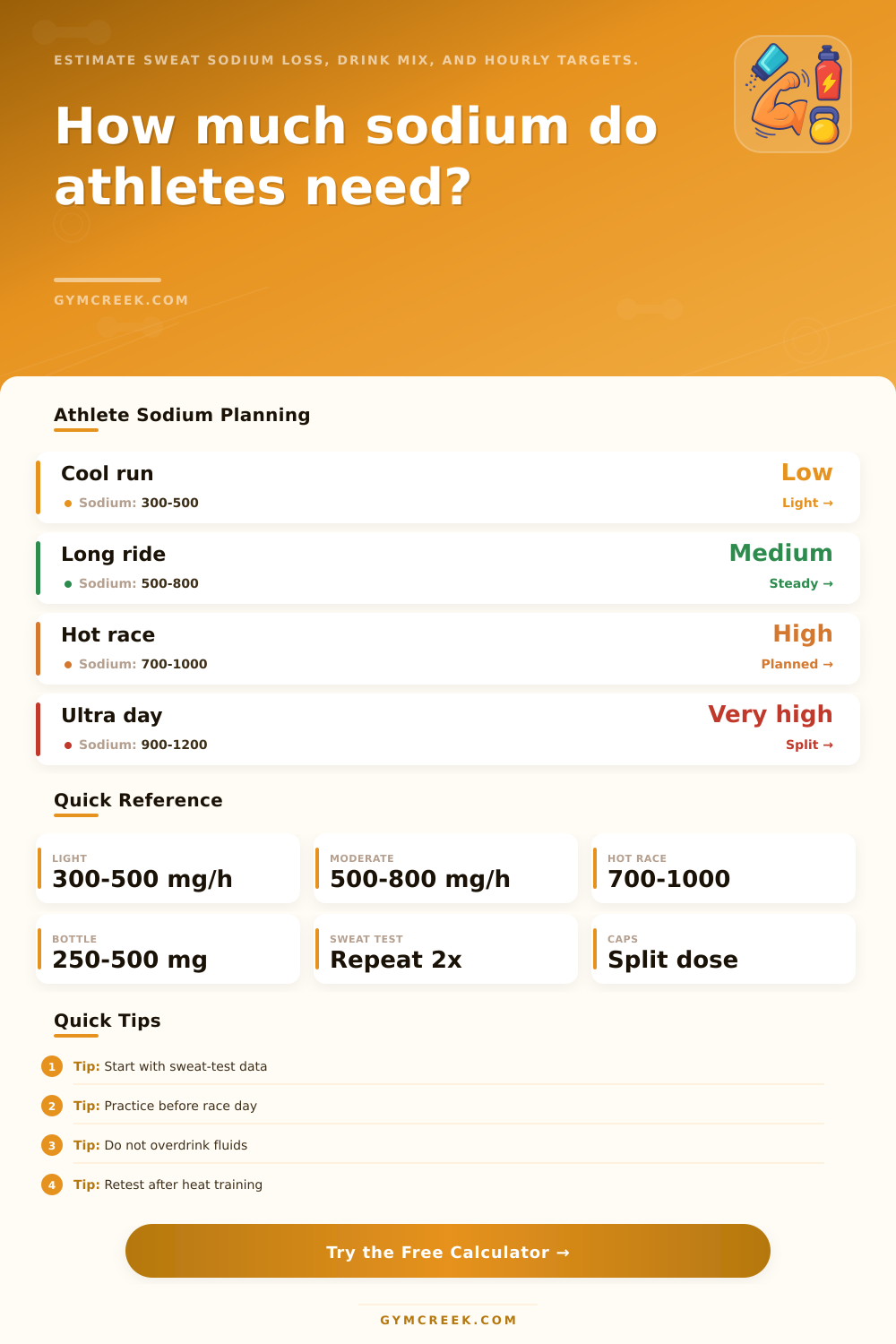
| Cool training under 90 min | 0 to 400 mg/hour | Easy sessions with normal meals nearby | Do not add sodium just to chase a number. |
| Long moderate sessions | 400 to 800 mg/hour | Most endurance runs, rides, and team sessions | Adjust by sweat sodium and drink tolerance. |
| Hot racing | 700 to 1000 mg/hour | Warm marathons, long rides, and hard field play | Use a tested plan, not a new race-day experiment. |
| Ultra or heavy salty sweater | 900 to 1200 mg/hour | All-day heat, high sweat rate, high sodium loss | Often easier when split across several sources. |
| Format | Strength | Best use | Practical cue |
|---|---|---|---|
| Bottles or vest | Controlled | Runs, rides, and races with known carry volume | Set each 500 mL bottle to a repeatable sodium amount. |
| Aid stations | Variable | Races where cups and refills are spaced out | Convert hourly sodium into aid-station chunks. |
| Capsules plus water | Flexible | High sodium needs or low drink concentration | Keep water intake separate from sodium timing. |
| Mixed drink and food | Moderate | Ultras, hikes, and long team tournaments | Count salty foods so the hourly total is not doubled. |
| Limited carry capacity | Concentrated | Minimalist racing or sparse aid | A concentrated bottle may need plain water with it. |
| Step | Formula | Input used | Output |
|---|---|---|---|
| Sweat volume | Sweat rate x hours | L/hour and duration | Total fluid loss estimate |
| Sodium loss | Sweat volume x mg/L | Sweat sodium category | Total sodium lost in sweat |
| Replacement target | Loss x replacement percent | Heat, goal, acclimation | Sodium target during session |
| Drink contribution | Drink L/hour x drink mg/L | Drink volume and label | Sodium already supplied |
| Add-on sodium | Target minus drink sodium | Target and current drink | Capsule, food, or mix gap |
💡Planning Tips
Sodium replacement are a process that requires individuals to consume the same amount of sodium as they lose through their sweat. The amount of sodium that is contained in an individual’s sweat can vary from persons to person. Some individuals will lose a high amount of sodium in there sweat while others will lose a low amount.
If individuals does not replace the sodium that the body loses through sweat, they could experience cramp or a loss of energy from their body. On the other hand, if they consume too much sodium, they may experience different physiologically problems. The sodium calculator will show an individual what amount of sodium they should consume each hour based off several different input field.
How to Replace Sodium Lost in Sweat
Individual must input fields for their body weight, length of the activity, their sweat rate, and a category for their sodium level in there sweat. These variables are used to calculate for an individual what amount of sodium they should be consuming. For instance, if an individual typically loses a high amount of sodium in their sweat while running in hot weather, they will have a different sodium target then an individual who loses a low amount of sodium in cooler weather.
Furthermore, the program calculates the amount of sodium that is contained in the drinks that an individual consume to ensure that the individual does not consume too much sodium from the drinks that they consume. Sweating and sodium replacement can be influenced by several different factor. One of these factors is the environmental temperature and humidity levels in the areas where an individual is performing the activity.
Hot weather and high humidity can increase an individual’s rate of sweating and the sodium concentration in the sweat. Acclimation to these temperatures are a process that allows the body to conserve sodium so that less sodium is lost in the sweat. As such, the sodium calculator accounts for an individual’s level of acclimation so that the sodium target is adjusted according.
An individual’s sodium requirement during a race can be different than their requirement during the training season. Another decision that must be made is how to consume the sodium. While the calculator will provide an indication of how much sodium an individual should consume per hour, they must also decide how to deliver that sodium to their body.
For instance, individuals may choose to consume sodium in drinks that contain a high amount of sodium, or they may choose to split their sodium intake between different drink, capsules, and foods. The fueling format option allow an individual to choose how they intend to consume the sodium that they calculate the sodium calculator to require for the individual. There are several mistakes that can be made in relation to sodium consumption.
One mistake is to completely ignore the need for sodium replacement, or to only consume sodium after an individual begins to experience cramps. Another mistake is to consume too much sodium without calculating their sodium losses. The best way to avoid these mistakes is to test the sodium plan that an individual calculates during training runs that are similar to those that will be performed during the race.
Weighing an individual before and after the run will help to calculate the amount of fluids that is lost during the run. Performing this test at different temperatures will help to establish an individual’s baseline for how much sodium that they require during their races. In addition to sodium consumption, individuals must also maintain a balance in the amount of fluid that their body lose.
An individual does not need to increase their fluid intake to replace sodium losses. If an individual consumes too much fluid, they may dilute the amount of sodium that is contained in their blood. The sodium calculator will calculate the amount of fluid deficit that must be consumed so that an individual does not dilute the sodium level in their blood.
The tables located on the sodium calculator provide additional information to the individual regarding the different categories of sodium levels and the options for consuming sodium. While these tables provide a guide for consuming sodium, they are not rules that an individual must follow. The best sodium plan is one that an individual can remember and follow for the length of an event.
The sodium plan may not be perfect but it should be the easiest to follow. A sodium plan should of been reviewed in response to changes in training or weather. Changes in the weather will alter an individual’s sweat rate and the sodium concentration in their sweat.