
It looks like one of those ellipticals with grips for your hands but it isn’t like any elliptical I’ve used. It doesn’t glide smoothly around like the SmoothMotion machine you find at most gyms. Instead, it grabs you, working out your core and making you focus on your posture.
It’s not so much floating as it is stepping on a trampoline while climbing a steep hill. Why does this matter? Your body adapt to whatever you ask of it.
So if you treat the Arc Trainer like a fancy elliptical you risk missing out on strength benefits hidden within that resistance curve. Or maybe you purchase one thinking you’re getting a low-impact jog, only to be annoyed when it asks more from your hamstring and glutes. Knowing the mechanical distinction help you choose the right tool for what you want to accomplish.
Arc Trainer Versus Elliptical Key Differences
Mechanical Differences and Pivot Design
That’s the key, the pivot point. On most typical ellipticals, your foot pedals spins around a stationary axis. In doing so, they describes a fixed oval in space.
The Arc Trainer use a distinct pattern of movement. Instead of a central axle connecting the foot plates to the front of unit, there’s a pivoting arm. Because of this, when you step on the foot plate they travel back and forth in a longer, more flat arc.
Muscle Engagement and Natural Gait
This result in a more natural walking gait then the circular stride found on traditional ellipticals. Where you do the work shifts as well, that flatter trajectory. When you’re on a traditional elliptical, most of the work are done by your quadriceps when you push.
With the Arc Trainer, your hips extend farther. Your glutes engage deeply and you feel it in the back of your thighs. This slight difference in movement mean a noticeable difference in how muscles is used.
Legs aren’t simply pushing air. They’re powering through the back of your body. This is exaggerated by handlebar position.
Handlebar Resistance and Body Synchronization
Elliptical handles is often immovable or move only a few inches. Most machines, such as the Arc Trainer, have movable handles which you push and pull. What happens?
It synchronizes the entire body. When you drive your foot back, you pull the handle toward you. The resistance is always there for the whole range of motion.
You never hit a dead zone where it just lets go. That maintain constant muscle tension and raises your heart rate. Finally, the two devices differs greatly in their stride length.
Stride Length and Workout Intensity
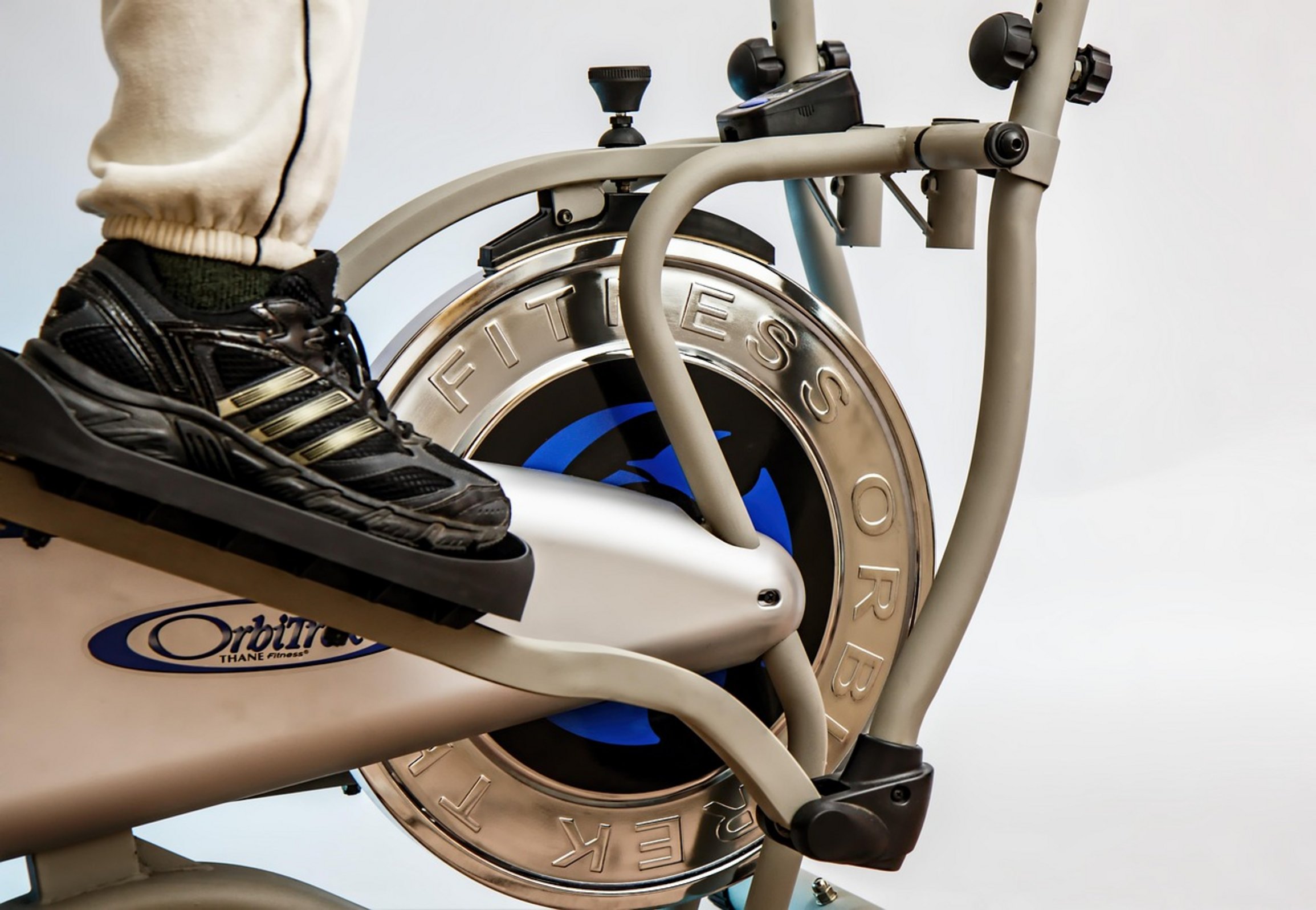
In general, elliptical machines has shorter, faster strides. These allow you to move your legs faster, making them perfect for fast-paced cardio bursts or high intensity intervals. The Arc Trainer generally have a longer stride.
This makes you slow down and pay attention to your form. There’s no cheating it, you can’t take short, quick little steps. It needs balance and coordination and a longer range of motion.
It make an easy cardio workout a stability workout. For those concerned with intensity: The Arc Trainer engage more muscle, which can cause you to tire quicker then you would on an elliptical. Not a bad thing.
A good thing. An elliptical is perhaps better if you are looking for straight endurance without much muscular fatigue. But if you’re looking for a way to torch calories while developing functional strength, the Arc Trainer offer a hybrid workout based off cardio and resistance exercise.
Joint Impact and Knee Safety
Joint Impact Both pieces of equipment is low on the joint impact front. Both do not involve running (which would pound joints). For some, however, the Arc Trainer can be kinder to the knees due to it’s alignment.
The movement are linear and the foot plate remain relatively flat so that there is less rotational force placed through the knee joint. This is a consideration if you’ve had issues with other ellipticals’ lateral forces. Ultimately, it’s a matter of preference.
Choosing the Right Machine for Your Goals
Are you a big-time weight lifter? Then the extra muscle work of the Arc Trainer may be too much on top of your cardio workout. Continue using the elliptical to help recovery during those sessions.
However, if you’re looking for an all-in-one option capable of providing both strength retention and conditioning, the Arc Trainer are a more complete system. In the end, each of these two machines has its time and place in a home gym. Neither one is objectively superior to the other.
Each one is a different tool for a differrent job. Understanding how they’re mechanicaly different helps align what you expect from them so you can work with the machine rather than against it. And once you get past that, the workout clicks into place.
You should of tried one before deciding.
