
There’s a very special niche in the world of exercise equipment: low-impact cardio machines. For decades, that role has been filled by elliptical machine, but Arc Trainer has become an increasing strong competitor. While both claim to allow you to get your sweat on without wrecking your joints, experience beneath your feet feels quite different.
Choosing one isn’t just about picking a piece of equipment; it is about deciding how you want to move your body and what kind of fatigue you are willing to handle. Everyone thinks they’re all the same. They aren’t.
Each design put a different kind of stress on your connective tissues and muscles. One replicate running. One is a combination of lifting weights + walking.
It turns an arbitrary “cardio” workout into a focused weapon for achieving your desired results. You won’t wonder which one you should purchase; rather, you’ll select the right engine for your body.
Comparing Arc Trainer And Elliptical Machines
Understanding Foot Path and Motion
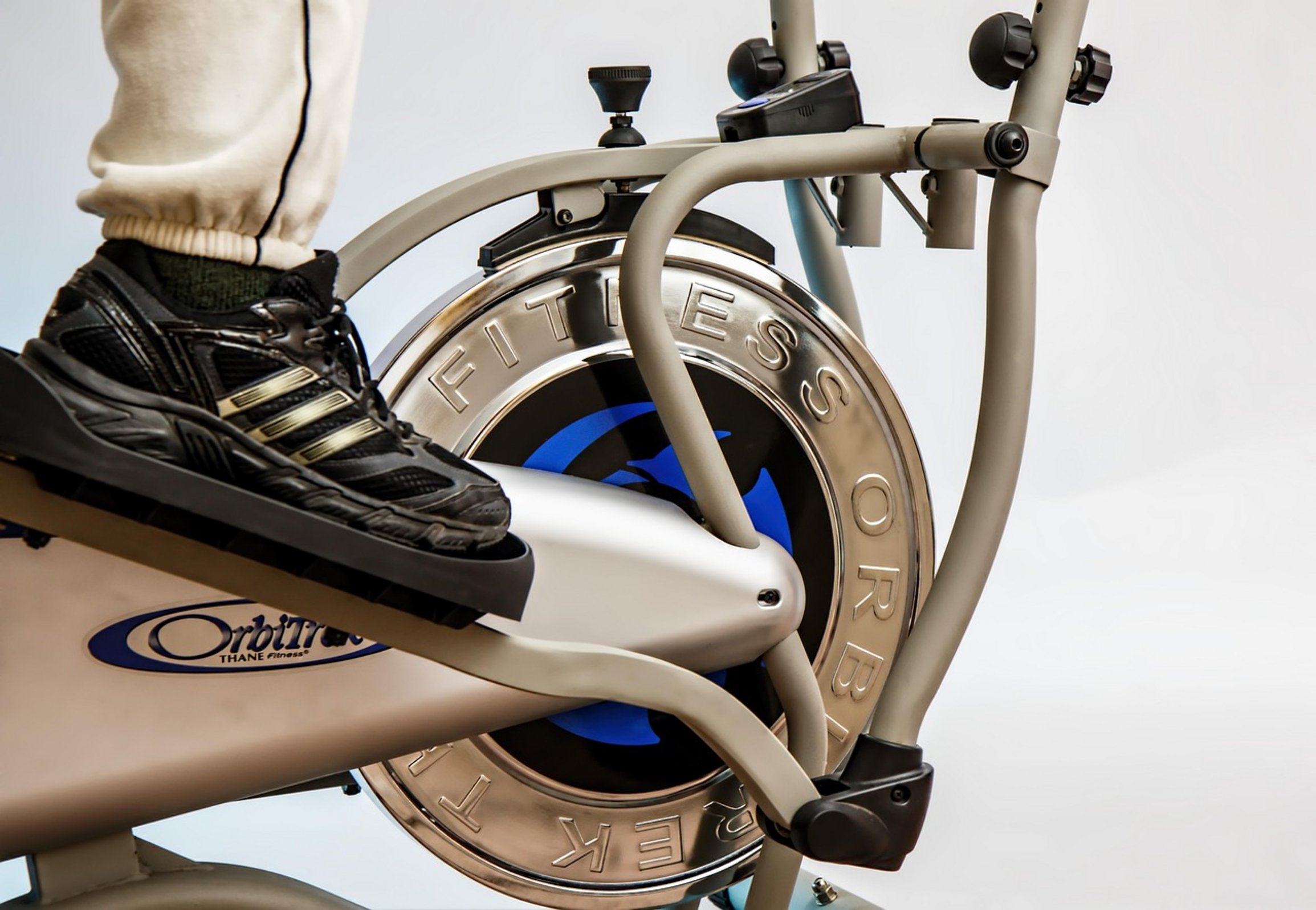
The key distinction here is foot path: On an elliptical, the pedal travels in one continuous oval loop (it’s like a fixed bike).
Your ankles is kept neutral, and your feet remains flat. Because it removes impact of landing, this design is easy on the joints. But if you’re someone who likes to take long strides or has longer legs, it can feel unnaturaly.
It’s smooth motion, but it’s rigid motion too. You’re working with machine’s rhythm, not leading machine. That’s fine for steady-state cardio, but it doesn’t allow you to really generate power.
Precision Fitness was the first to develop the Arc Trainer, which feature a linear arc instead of an oval loop. Now, most of us see machine made by Sole and other brands, including Life Fitness. On this device, pedals goes back and forth on a track while mimicking a more natural leg extension.
Muscle Engagement and Core Stability
Your heel drop a bit when you push off, because the pedals has some angle. That’s what makes the legs engage the hamstrings and glutes more deeply than the typical elliptical do. It feels almost as though you’re taking a really powerful walk, rather than skates.
Balance requires more core stabilization, however. This means you need a bit more stability in your core to stay upright during movement. Why does it feel harder at the same perceived effort?
It is because of vertical displacement. Yes, you’re not impacting when you land, but you are lifting your body weight off the ground a little bit with every step. The Arc Trainer climbs, whereas the elliptical just glides.
Depending on what you’re looking for (pure cardiovascular endurance with minimal muscular fatigue), maybe the elliptical win. If you’re looking to raise your heart rate AND build leg strength, you gets more out of the Arc Trainer. That’s why I think of the Arc Trainer as combining strength training and cardio, something the elliptical can’t quite do.
Space Requirements and Noise Levels
Practical considerations like size and noise frequently decide the buy. Ellipticals is bulky by design. Long arm handles and the flywheel mechanism consume lots of floor space.
They can also be louder, particularly if they’re old and the bearings is wearing out. Arc Trainers are often more compact. The linear drive system provide a tighter footprint.
Less lateral swing create less vibration/structural noise and means it’s also quieter. If you live in an apartment or have a small home gym, the Arc Trainer typically accommodates more easy without compromising on performance.
Upper Body Workout Options
In addition, both machines uses different types of upper body engagement.
On an elliptical, handles are usually mobile and move in conjunction with your feet. While this offers a full-body experience, it’s usually very light resistance. Primarily, it’s about keeping those arms pumping, no need to push against much resistance.
In contrast, the handles on an Arc Trainer are frequently fixed and equipped with magnetic resistance or integrated weight stacks, so you can use it to work just your upper body strength while your lower body drive the cardio component. You can pedal lightly while pulling hard, or vice versa. This makes the Arc Trainer a better option if you want to add a machine to your fitness routine that requires coordinating lower- and upper-body strength.
Choosing the Right Machine for You
To summarize. So which to choose? Well, what do you have in mind.
What are you looking to build/fix? The elliptical has the smoothest joint glide (hands down). And if you’re coming back from an injury, there’s nothing safer on the market.
The elliptical is safest bet when rehabbing. For a stronger, more rigorous cardio workout, the Arc provide a deeper push. It challenge both your power and balance at once.
One isn’t better than the other; one is right for you. Pay attention to what feels good. Pay attention to what you need.
You should of choose the machine that moves with your body, not just around it.
