Apple Carb Calculator
Estimate total carbs, fiber, net carbs, sugar, skin effect, variety shift, dried concentration, and serving fit from apple size, edible weight, and carb target.
📌Apple Carb Presets
Presets use edible apple weight after core removal. Skin status mainly changes fiber, while variety and prep form shift sugar density and total carb concentration.
⚙Calculator Inputs
Apple carb snapshot
Enter apple size, edible weight, skin status, variety, prep form, and targets to estimate your serving.
📊Apple Carb Metrics
📑Reference Tables
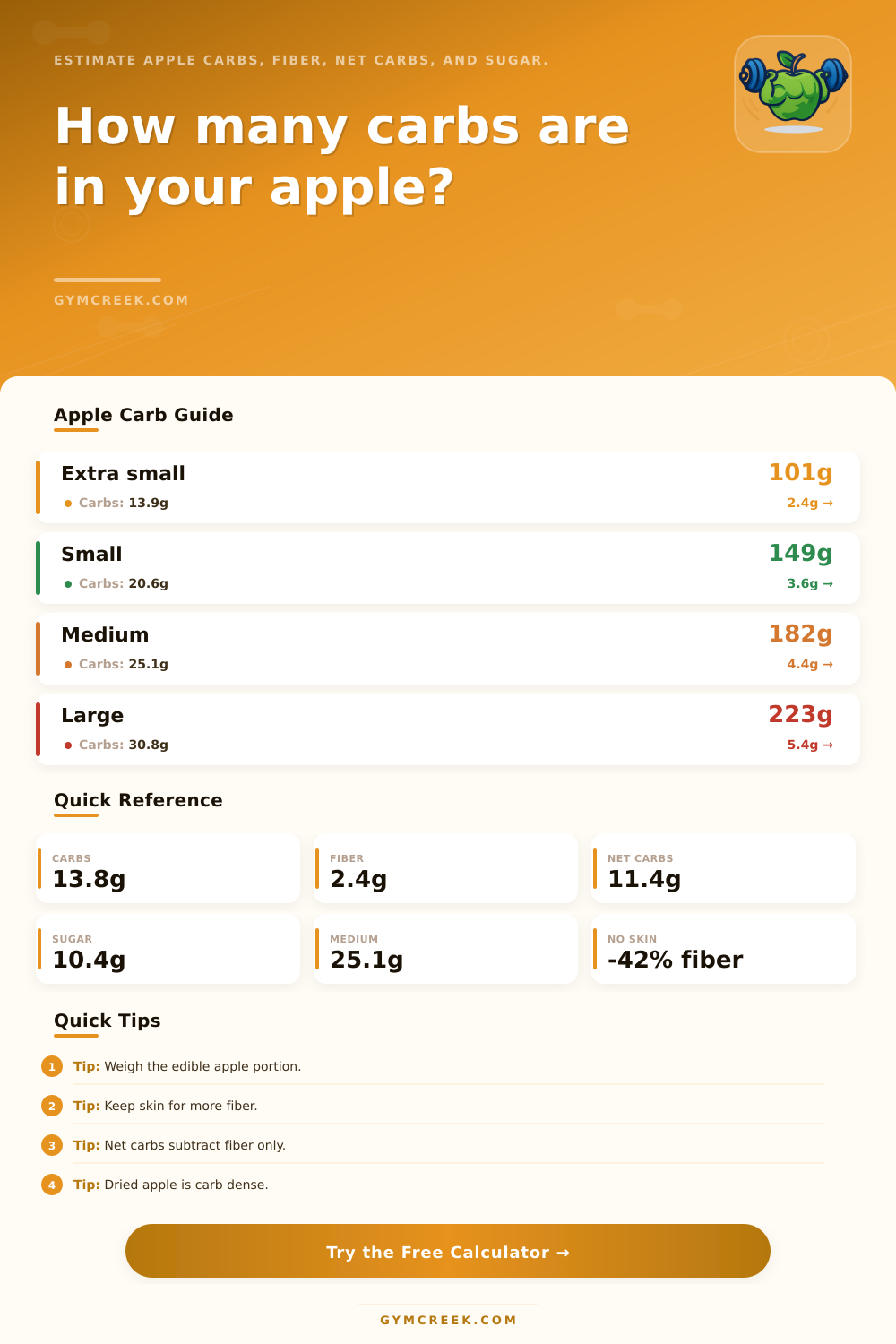
| Apple Size | Edible Weight | Total Carbs | Net Carbs |
|---|---|---|---|
| Extra small | 101 g | 13.9 g | 11.5 g |
| Small | 149 g | 20.6 g | 17.0 g |
| Medium | 182 g | 25.1 g | 20.8 g |
| Large | 223 g | 30.8 g | 25.4 g |
| One cup slices | 109 g | 15.1 g | 12.4 g |
| Variety | Carb Shift | Sugar Cue | Best Use |
|---|---|---|---|
| Granny Smith | Lower | Less sweet | Net-carb check |
| Honeycrisp | Slightly higher | Crisp sweet | Snack estimate |
| Fuji | Higher | Very sweet | Training fuel |
| Gala | Average | Mild sweet | General snack |
| Pink Lady | Average | Tart sweet | Fiber pairing |
| Skin Status | Fiber Effect | Carb Effect | Accuracy Note |
|---|---|---|---|
| With skin | Full fiber | Baseline | Best for raw apples |
| Partly peeled | Moderate fiber | Small change | Estimate removed skin |
| Peeled | Lower fiber | Slight change | Net carbs rise |
| Whole weight | Core removed | 88% edible | Use when uncut |
| Prep Form | Carb Factor | Best Entry | Watch Point |
|---|---|---|---|
| Raw fresh | 1.00 | Edible grams | Baseline |
| Sliced raw | 1.00 | Slice grams | Same apple mass |
| Baked apple | 1.08 | Cooked grams | Water loss |
| Applesauce | 0.85 | Sauce grams | Use unsweetened |
| Dried apple | 4.60 | Dried grams | Very dense |
💡Tips
With a handful of Fuji apples, standing before fruit bowl, you are confronted by conflicting information on nutrition. Yes, apples is good for you, except when you’re counting carbs, whether it’s for metabolic health reasons or because you want to perform at your best. That red apple skin conceals something far more moddern than it seems: there is a distinct difference in sugar content between sweet Honeycrisp and a tart Granny Smith. And that difference mean the net carb content changes, which leads to different response from your body when you eat this snack.
Variety, size, and preparation all result in big differences in fiber and total carbohydrate content among apples… yet most people believes they’re all the same in nutritional value. To account for differences between types of apples, all you need to do is enter your own into calculator up top, it will do the rest of the math for you, without you having to guess at factors like conversion numbers.
How to Track Apple Nutrition
To begin with, we measures the edible weight, as this is where most people make mistakes when tracking. When you sink your teeth into an apple, core doesn’t vanish. It becomes waste, devoid of nutritional value, yet contributes to skewing your results if you weigh entire apple prior to eating. By measuring just what goes into mouth, you get a result that’s both accurate (reproducible) and representative.
Next comes skin status, which matter a lot. While peeling an apple doesn’t eliminate much of the sugar, it does removes a significant amount of its fiber content, which is concentrated in the peel. This creates a trade-off: Your fiber intake goes down while your sugar stays mostly unchanged. On paper, overall carb count remains comparable, but your net carbs increase, causing the apple to hit your bloodstream faster.
But the softer, longer game here is still variety. Because certain apples was chosen for their sweetness (like the Fuji), they has more sugar than something like a Green Delicious. Again: the calculator factors in those slight variations in makeup and density. Though you don’t need to know exactly what results each type of apple gives when used, you should of know that swapping one kind for another has an effect.
That’s where that reference table on page comes in. It visually explains how switching from a tart to a sweet apple can increase its sugar share different than a different weight of a different kind. If your objective is spot-on fueling for your workouts or eating slow-burning snacks throughout the day, then yes, that makes a difference. Maybe a slightly sweeter apple would make sense as fast fuel pre-run? But maybe not, if you’re aiming for stable blood sugar all afternoon in the office.
But even then, many trackers fails to account for one more level of complication: how it’s prepared. Fresh isn’t always equal to dried. Because water is extracted, they’re little bags of concentrated carb. A tiny handful of dried apple slices could easily be same as a big fresh one. This can get you in trouble if you are sizing them up based off volume. So the tool highlights this density change, allowing you to visualize actual consequences of your actions.
And yes, applesauce and baked apples differs too, with different fiber patterns or added moisture that may alter how fast they digest. When you know the difference, what was once a vague health food becomes a clear nutrition weapon.
And most folks just count total carbs. That’s helpful but net carbs are far more useful for day-to-day livig. Simple sugars spikes your blood sugar and don’t make you feel full. Fiber does neither of those things. It slows down absorption and makes you feel full. So when you subtract fiber from total carbs, you’ll have a better sense of how it will affect your metabolism. That is why people talk about keeping the skin on (it maintains that buffer of slow-absorbing fiber).
Don’t go crazy trying to track each individual gram, but understand distinction between gross carbs and net carbs, it’ll help you choose smarter during the day. In short, it’s not just about satisfying a void when you eat an apple. It’s about feeling confident about what you’re feeding your body. From there, you’ll know the ins and outs of prep, variety, weight and skin, which will take you beyond broad nutritional recommendations to nutrition made just for you.
Because you’ve factored in the variables that realy impact your intake, you’re able to feel certain about what you’re putting in your body. And that certainty transforms a simple piece of fruit into a reliable part of your health plan. The secret is largely learning what we’re measuring… Not simply reaching for whatever dissapears appealing in the bowl.