Amino Acid Requirement Calculator
Estimate daily essential amino acid, leucine, BCAA, lysine, and per-meal threshold targets from bodyweight, protein target, training type, goal, digestibility, age, meal count, and amino acid emphasis.
📌Amino Target Presets
Presets change assumptions only. The calculator estimates amino acid targets and threshold coverage; it does not recommend supplements, foods, brands, or meal plans.
⚙Calculator Inputs
Amino acid requirement snapshot
Enter bodyweight, target, training, meals, and digestibility to estimate amino targets.
📊Amino Metrics Grid
📑Amino Acid Reference Tables
| Goal | Protein range | EAA estimate | Leucine cue |
|---|---|---|---|
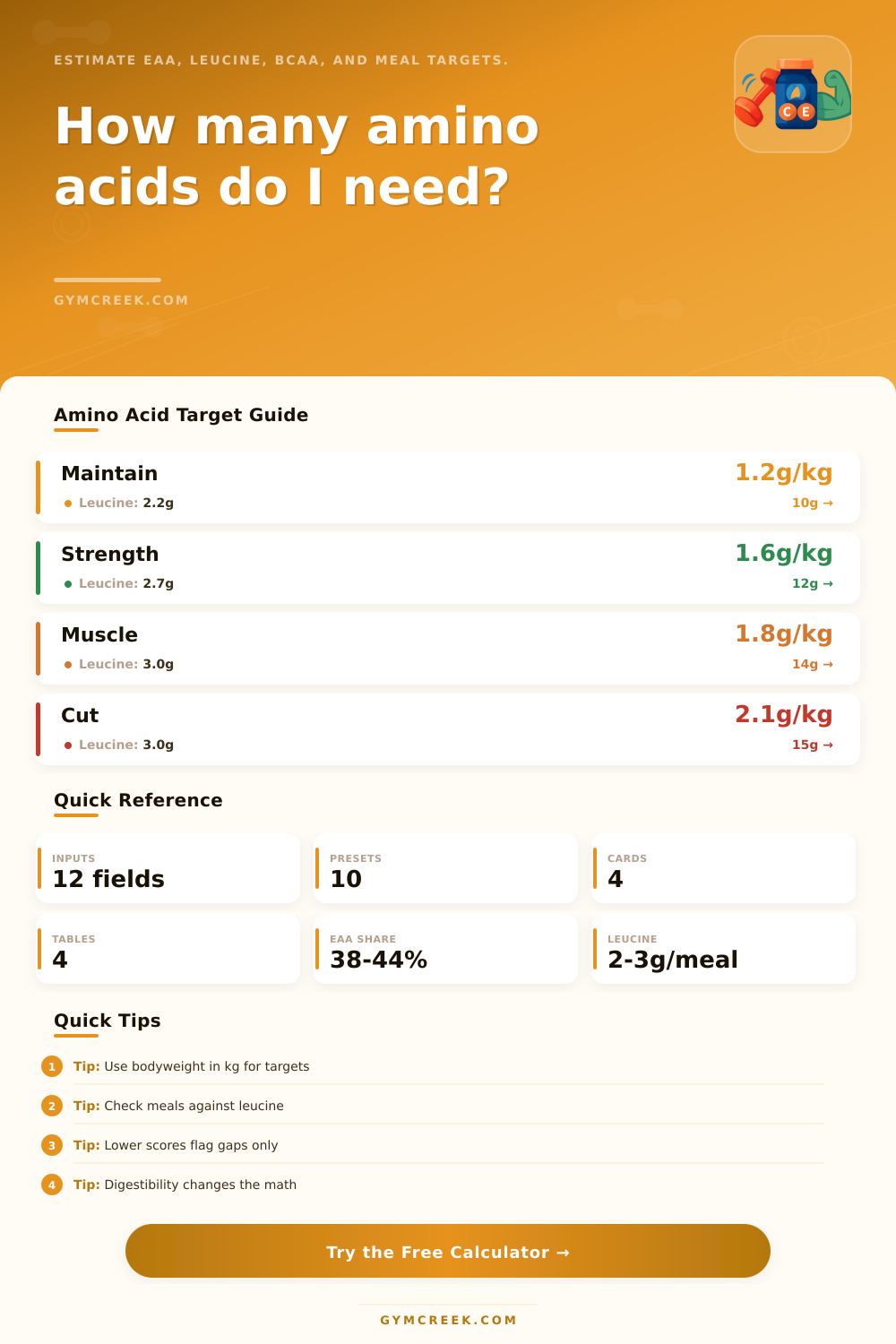
| Maintenance fitness | 1.2 to 1.6 g/kg | About 38% of protein | 2.0 to 2.5 g per meal |
| Strength performance | 1.6 to 2.2 g/kg | About 40% of protein | 2.5 to 3.0 g per meal |
| Muscle gain | 1.6 to 2.2 g/kg | About 41% of protein | 2.7 to 3.2 g per meal |
| Fat loss retention | 1.8 to 2.4 g/kg | About 42% of protein | 2.7 to 3.2 g per meal |
| Endurance support | 1.2 to 1.8 g/kg | About 39% of protein | 2.2 to 2.8 g per meal |
| Amino group | Share of protein | Daily role in output | Per-meal role |
|---|---|---|---|
| Essential amino acids | 38% to 44% | Main daily requirement estimate | Compared with EAA threshold input |
| Leucine | 7.0% to 9.5% | Primary trigger-style threshold metric | Compared with leucine target input |
| BCAA total | 17% to 21% | Leucine plus isoleucine plus valine | Shown as tracking context |
| Lysine | 6.0% to 7.5% | Adequacy marker for mixed profiles | Highlights plant-forward gaps |
| Sulfur amino acids | 3.2% to 4.2% | Methionine plus cysteine estimate | Reference only, not a diagnosis |
| Profile | Factor | Meaning | Calculator effect |
|---|---|---|---|
| High digestibility | 0.96 | Complete profile with high availability | Smaller correction needed |
| Mixed diet | 0.90 | Typical varied intake pattern | Baseline correction |
| Plant-forward | 0.82 | More variable amino profile | Raises gap awareness |
| Lower digestibility | 0.74 | Lower availability assumption | Creates larger target gap |
| Step | Formula | Variables | Result role |
|---|---|---|---|
| Protein target | Bodyweight kg x goal g/kg | Weight, goal, custom mode | Daily protein baseline |
| Available protein | Protein x digestibility factor | Protein, digestibility | Adjusted amino acid pool |
| EAA estimate | Available protein x EAA share | Goal and training type | Primary daily card |
| Leucine estimate | Available protein x leucine share | Age, training, digestibility | Threshold coverage card |
| Meal coverage | Per-meal estimate / threshold | Meal count, leucine, EAA | Adequacy score input |
| Gap score | 100 minus density, digestibility, and threshold penalties | All inputs | Practical output score |
💡Amino Acid Notes
Getting the correct amounts of amino acids isnt just about reaching the total number of amino acids that is recommended for an athlete, but it is also about making sure that each meal that an athlete consume contains the appropriate amount of those amino acids for there bodys need. While the total protein that an athlete consumes is important, it is not the only factor to consider in determining the proper amount of protein that an athlete should consume each day. Along with considering the total protein that an athlete should consume each day, it is also necessary to consider the quality of that protein that is consumed.
The quality of the protein determine how the body will utilize the protein that is consumed. One way to recognize the importance of the protein quality is to consider the way an athlete change their training loads or diets. For instance, an athlete that performs heavy lifting one day may require a different protein quality or quantity then an athlete that performs no physical activities at all on that same day.
Protein for Athletes: How Much, What Kind, and When to Eat
Similarly, an athlete that includes more plant-based foods into their diets may require a different protein quality than an athlete whose diets contains more animal protein source. The calculator considers these different factor in order to determine the amount of protein that the athlete should consume each day. For instance, an athlete’s bodyweight will contribute to the baseline for calculating the athletes protein needs, the athlete’s goal and type of training will contribute to the athlete’s emphasis setting, and the protein digestibility will contribute to the calculation of the amount of protein that will become amino acid within the athletes body.
Another factor that contribute to the calculations is the athlete’s age. An older athlete, for instance, may require a more high threshold of leucine to activate the bodys growth processes than an athlete of a younger age. The number of meal that an athlete consumes each day can factor into this calculation, as can the length of the gap between meals.
The athlete’s training goals and dietary goals can adjust the emphasis setting within the protein calculator. For instance, emphasis on leucine will help an athlete that is performing heavy training, emphasis on lysine will help an athlete that is increasing there plant-based foods in their diets. Within these reference tables are the essential amino acid counts for various protein sources.
These reference tables also display the impact that digestibility will have upon the amount of protein that the body can utilize. These tables dont contain recommendations for the specific food that an athlete should consume each day. Rather, they allow an athlete to understand how various diet can lead to differences in the amount of available amino acids within their bodies.
The calculation that is performed with these variables will apply the athletes specific inputs into the mathematics to provide recommendations for the athlete each day. Common mistake with the protein calculator include treating all protein sources as the same, and ignoring the impact that spacing of meals can have upon the bodys ability to utilize that protein. An athlete that consumes all of their protein in a single large meal will experience different impact upon their body than an athlete that consumes their protein in smaller meal throughout the day.
Another common mistake is to believe that increasing the total amount of protein that an athlete consumes will automatically fix any issue regarding the amount of available amino acids. This isnt true if the digestibility or amino acid profile of that protein are poor. The protein calculator allows an athlete to recognize these issues without having to calculate the various variables of protein utilization manual.
The protein calculator provides an athlete an idea of the protein that the athlete should consume each day. A high score suggest that the athlete is achieving their goals each day, while a low score suggest that adjustments to the athletes diet should be made. The variables within the calculator, such as meal count and protein source can be adjusted to see how the body will respond to these change.
This allows an athlete to view the effects of potential adjustment to the diet without making any adjustment to there actual diet. The ultimate goal for athletes using the protein calculator is to be consistent in their diet. The calculator allows for athletes to recognize how well their current diet is working for their bodies, and to make adjustment as necessary.