Air Force Body Fat Calculator
Estimate Air Force waist-to-height ratio, legacy tape body fat percentage, BMI, lean mass, fat mass, and measurement risk from body circumference data.
📌Presets
Presets load realistic body measurement profiles and recalculate WHtR, tape body fat, lean mass, risk band, and supporting fitness metrics.
⚙Calculator
Air Force body composition estimate
Enter height, waist, neck, hip, and weight to estimate WHtR and tape body fat.
📊Fitness Metrics
📑Reference Tables
| WHtR result | Band | Meaning | Next check |
|---|---|---|---|
| 0.55 or below | Low risk | Generally favorable abdominal size for height | Track trend |
| 0.56 to 0.59 | Moderate risk | Closer review of waist measurement trend | Retape carefully |
| 0.60 or above | High risk | Elevated body composition risk signal | Use official guidance |
| Any sharp change | Recheck | Measurement or posture may be inconsistent | Repeat same day |
| Category | Men | Women | Use in this calculator |
|---|---|---|---|
| Athletic | 6-13% | 14-20% | Lean performance context |
| Fitness | 14-17% | 21-24% | Common trained range |
| Average | 18-24% | 25-31% | General comparison range |
| Higher | 25%+ | 32%+ | Review waist trend and health context |
| Metric | Formula | Inputs | Notes |
|---|---|---|---|
| WHtR | Waist / height | Waist, height | Current Air Force body composition signal |
| Male tape BF% | Log waist-neck | Waist, neck, height | Legacy circumference estimate |
| Female tape BF% | Log waist+hip-neck | Waist, hip, neck, height | Legacy circumference estimate |
| BMI | kg / m² | Weight, height | Context only, not body fat |
| Measurement | How to take it | Common issue | Better practice |
|---|---|---|---|
| Height | Stand tall without shoes | Rounding too far | Use nearest 0.5 inch or 1 cm |
| Waist | Level tape after normal exhale | Sucking in or slouching | Repeat two or three times |
| Neck | Below larynx, relaxed shoulders | Flexing or flaring neck | Keep head neutral |
| Hips | Largest hip circumference | Tape not level | Check side view |
| Profile | WHtR signal | Tape BF signal | Best interpretation |
|---|---|---|---|
| Lean tall airman | Low | Low to fitness | Maintain measurement routine |
| Muscular build | May be low | Can vary by neck size | Use multiple indicators |
| Retest prep | Moderate | Trend matters | Retape consistently |
| High waist ratio | High | Often elevated | Use official and health guidance |
💡Tips
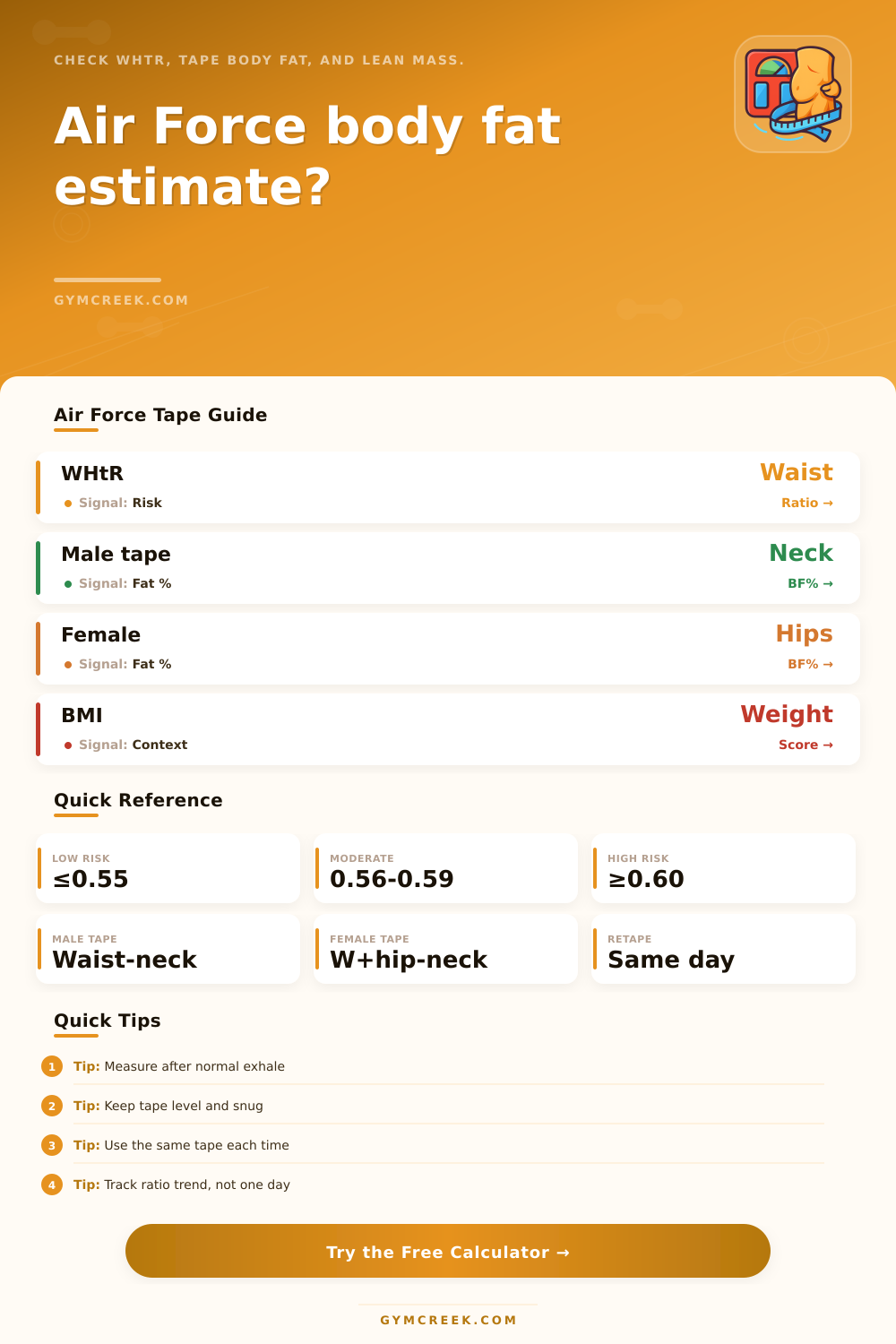
That’s why this measuring tape is used (not as a decision itself), but as a way to assess. The Air Force use specific metrics to assess body composition as a way to define readiness. Weight matter most to most servicemen, yet when that number isn’t viewed alongside muscle and frame size, it’s a partial picture. Moddern evaluations increasingly recognize waist-to-height ratio as one important telltale sign. If you set aside other factors like bone structure, you can focus directly on abdominal fat, because where fat settles is a better measure of metabolic health then total weight.
First off: Where does the tape go? Women: Neck, waist, hips. Men: Neck, waist. Why’s that? Because if you’ve got a bigger neck, you tend to have a wider bone structure and more muscle mass… Something you don’t want to penalize as extra fat. Not taking this measurement (or getting it wrong) results in a wildly inaccurate estimation of your body fat percentage. And it can cause you to believe that you’re out of shape when you’re realy in decent shape.
How to Use the Measuring Tape Correctly
But you don’t need to memorize military regulations about circumference math; the calculator above take care of those complicated log equations for you. It’ll take your raw inches and translate them into a clear cut risk band so you know whether your numbers put you in a low-, moderate- or high-risk category based off established health guidelines.
Technique matters, much more so then most people think. Time of day matters too. After a big meal? Frustration follows as your stomach gets all bloaty from food and adds inches that don’t show your actual bodyfat levels. Measure in a normal breathing position (after a normal exhale), with the tape snug but not digging into skin, and level. Sounds easy. But by far the biggest cause of numbers jumping up and down is inconsistent tension when measuring.
Take it at the same time of day each week if you want to track results over time. Use the same tape. That way you’re looking at a trend line that’s meaningful. An isolated poor measurement is noise. A steady decline indicate a trend worth responding to.
There’s been a lot of finger-pointing at Body Mass Index (BMI) for giving inaccurate readings. When used properly, though, it is still useful. Because BMI doesn’t differentiate between fat and muscle, muscular airmen is sometimes flagged as overweight. But combined with data on their waist circumference, it offers a helpful frame of reference for understanding your overall size compared to your height. If you’re staying within a healthy range for waist-to-height ratio, then don’t freak out too much about your BMI.
Keep in mind, this is all about creating habits that allow you to maintain lean mass over time while limiting excess visceral fat. Diet matters significantly here, especially how many liquid calories you consume and how much protein you eat. Sleep and stress management are factors too, as they affect how much cortisol you make which may contribute to your body storing more or less fat.
Included with the tool is several reference tables, which provide some basic standards as to what various ratios mean in real life. These allow you to determine if a little uptick is still within healthy limits, or if it’s time to adjust your approach. Don’t freak out at minor fluctuations; instead keep an eye out for how things trend up (or down) across the board.
When it comes to military fitness standards, they’re intended to keep people fit enough to do their jobs while avoiding unnecessary fatigue. And passing them isn’t so much about reaching a magic number as it is maintaining a body capable of working well during high-stress situations. Remember: consistency trumps intensity. Small changes you can sustain will lead to better long-term results different than dramatic changes that burn you out within a month. This isn’t about chasing a snapshot; this is about building a system. You should of focused on the trend.
When you see the measuring tape, remember that while it might feel like a verdict waiting to be read, it’s realy just reflecting what you choose each day. View the data as feedback, not failure. Adjust accordingly.