🏃 Garmin VO2 Max Calculator
Estimate your cardiorespiratory fitness level using Garmin-style metrics — based on age, gender, resting heart rate, and run performance.
| Age Group | Poor | Below Avg | Average | Above Avg | Excellent | Superior |
|---|---|---|---|---|---|---|
| 13–19 | <35 | 35–37 | 38–44 | 45–50 | 51–55 | >55 |
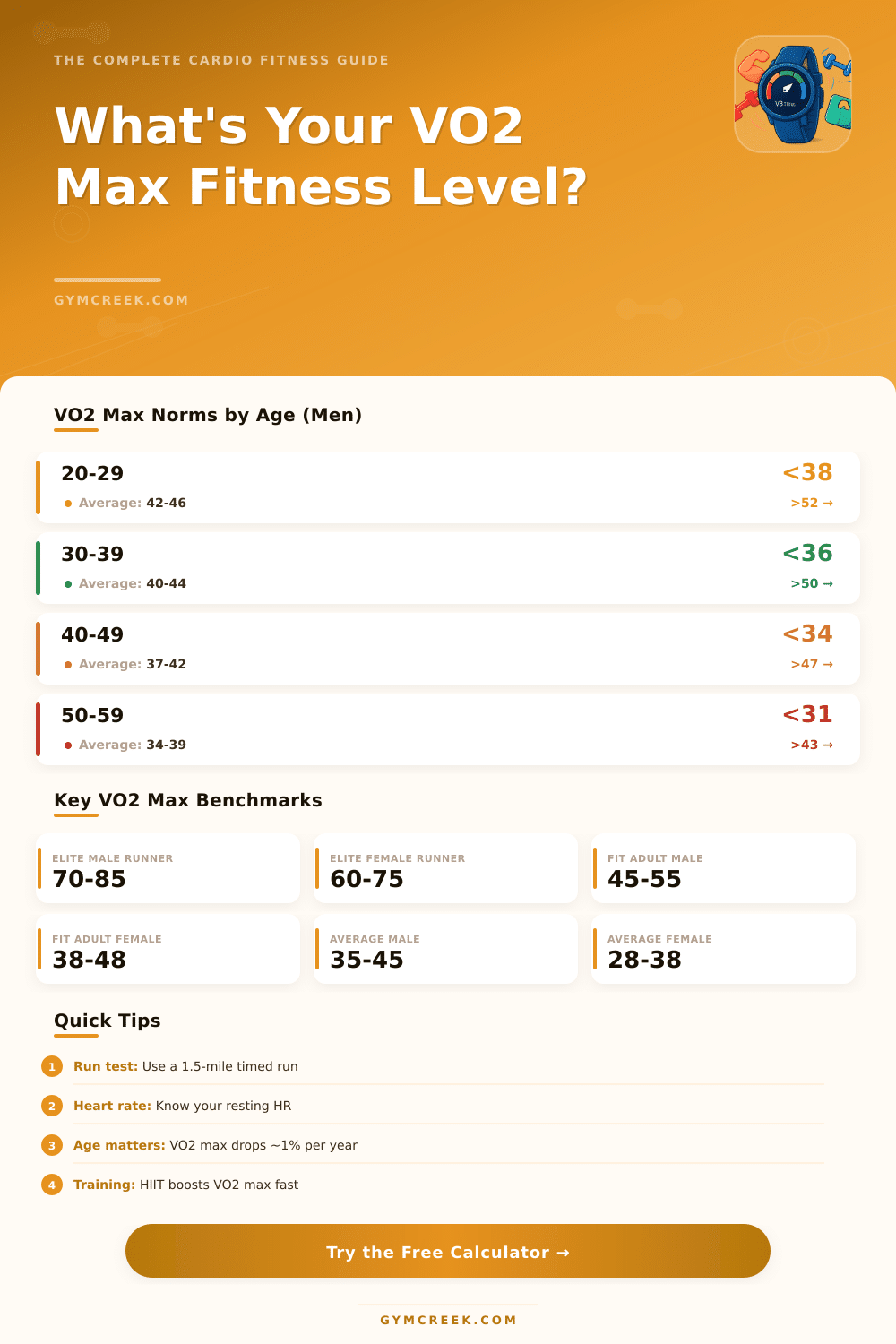
| 20–29 | <38 | 38–41 | 42–46 | 47–51 | 52–56 | >56 |
| 30–39 | <36 | 36–39 | 40–44 | 45–49 | 50–54 | >54 |
| 40–49 | <34 | 34–37 | 38–42 | 43–47 | 48–52 | >52 |
| 50–59 | <31 | 31–34 | 35–39 | 40–43 | 44–48 | >48 |
| 60–69 | <28 | 28–31 | 32–36 | 37–40 | 41–45 | >45 |
| 70+ | <25 | 25–27 | 28–32 | 33–36 | 37–41 | >41 |
| Age Group | Poor | Below Avg | Average | Above Avg | Excellent | Superior |
|---|---|---|---|---|---|---|
| 13–19 | <28 | 28–32 | 33–37 | 38–41 | 42–46 | >46 |
| 20–29 | <28 | 28–31 | 32–36 | 37–41 | 42–46 | >46 |
| 30–39 | <27 | 27–30 | 31–35 | 36–39 | 40–44 | >44 |
| 40–49 | <25 | 25–28 | 29–33 | 34–37 | 38–41 | >41 |
| 50–59 | <22 | 22–25 | 26–30 | 31–34 | 35–39 | >39 |
| 60–69 | <20 | 20–22 | 23–27 | 28–31 | 32–35 | >35 |
| 70+ | <17 | 17–19 | 20–23 | 24–27 | 28–31 | >31 |
| Sport | Elite Male | Elite Female | Recreational Male | Recreational Female |
|---|---|---|---|---|
| Marathon Running | 70–85 | 60–75 | 45–55 | 38–48 |
| Cross-Country Skiing | 75–90 | 65–78 | 48–58 | 38–50 |
| Cycling / Triathlon | 70–85 | 58–72 | 44–54 | 36–46 |
| Rowing | 65–80 | 55–70 | 42–52 | 34–44 |
| Swimming | 60–75 | 55–68 | 42–52 | 35–45 |
| Soccer / Football | 58–72 | 48–62 | 40–52 | 32–42 |
| Basketball | 48–62 | 40–55 | 38–48 | 30–40 |
| Weight Training Only | 40–50 | 32–42 | 32–42 | 26–36 |
| Zone | Name | % Max HR | Intensity | Primary Benefit |
|---|---|---|---|---|
| Zone 1 | Recovery | 50–60% | Very Easy | Active recovery, fat burn |
| Zone 2 | Aerobic Base | 60–70% | Easy | Aerobic base, VO2 development |
| Zone 3 | Aerobic / Tempo | 70–80% | Moderate | Endurance, cardiovascular fitness |
| Zone 4 | Lactate Threshold | 80–90% | Hard | Speed, performance, VO2 max gains |
| Zone 5 | VO2 Max / Anaerobic | 90–100% | Max | Peak power, speed, VO2 max stimulus |
| VO2 Max Range | Garmin Fitness Age (General) | Category | Training Suggestion |
|---|---|---|---|
| <20 | 70+ | Poor | Start slow: daily walks, low-impact cardio |
| 20–29 | 55–70 | Below Average | 3x/week brisk walking or light jog |
| 30–39 | 40–55 | Average | Mix Zone 2 runs with interval training |
| 40–49 | 30–40 | Above Average | Add tempo runs, long slow distance |
| 50–59 | 20–30 | Good | Structured intervals, 10K – half marathon training |
| 60–69 | 10–20 | Excellent | Race-pace workouts, polarized training |
| 70+ | <10 | Superior / Elite | High-volume periodized training |
Knowing your level of cardiorespiratory fitness is one of the most valuable insights you can gain about your health. VO2 max is a measurement of how efficient your body utilizes oxygen during intense exercise, and is considered to be one of the best indicators of your longevity and health. While you can get this measurement through a medical laboratory, devices like Garmin watches makes it possible to estimate your VO2 max based off your daily activities and runs.
Many runners and fitness enthusiasts use various online tools to calculate their VO2 max. One of those tools is the Garmin VO2 max calculator above. This calculator use research in exercise physiology to calculate your VO2 max based upon your age, resting heart rate, and the number of your runs.
Garmin VO2 Max Calculator
What Exactly Is VO2 Max and Why Does It Matter?
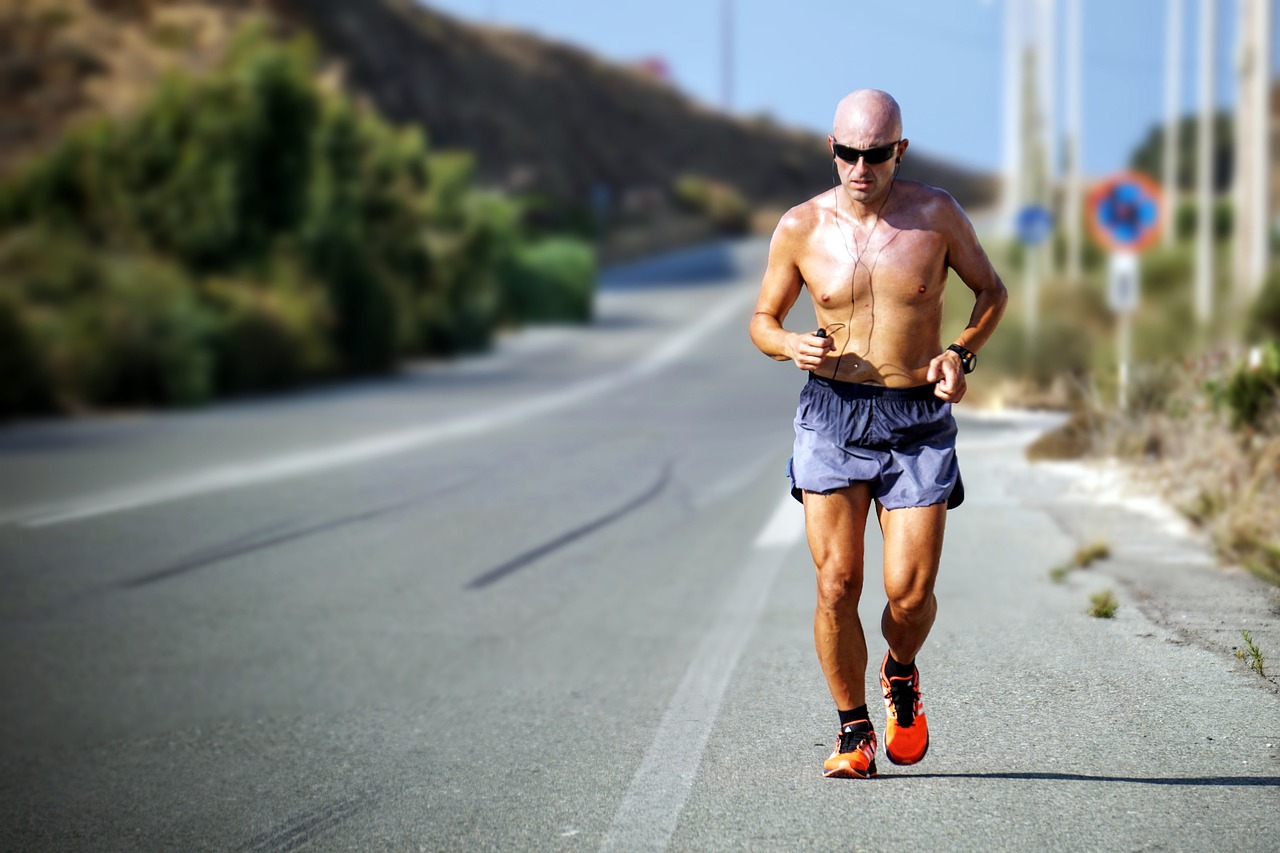
VO2 max is a measurement of the amount of oxygen your body can consumes per kilogram of body weight per minute while performing intense exercise. VO2 max measurements are expressed in ml/kg/min; elite runners can have measurements of 70 or higher, while the average adult has a VO2 max that range between 30 and 40. Higher VO2 max measurements indicate better cardiovascular health, endurance, and overall physical fitness.
Research has shown that VO2 max is one of the best indicators of all-cause mortality. Individuals with high VO2 max values exhibit better metabolic health, energy, and age-related resilience then those with lower measurements. As with most measurements of health and fitness, a high VO2 max indicates that the body is functioning optimal in relation to cardiovascular, respiratory, and physical strength indicators.
Garmin devices calculate VO2 max by analyzing variables like your pace and heart rate during your runs. As with most algorithms developed by consumer devices, the more data you feed into the device about your physiology, the more accurately the watch will perform the VO2 max calculation. Garmin calculates your VO2 max with higher accuracy after several weeks of tracking your runs. The measurement may not be accurate with the initial few runs with the device. Additionally, factors like dehydration can alter your VO2 max measurement from your Garmin watch. However, monitoring the changes in your measurement is the best indicator of your improvements in cardiovascular fitness.
Tracking your VO2 max is a great source of motivation to maintain your fitness routine. Seeing your measurement increase after several months of following your routine will motivate you to continue to meet your fitness goals.
There are several ways to calculate your VO2 max without the use of a device like a Garmin watch. One of the most common formulas used is the Uth-Sørensen-Overgaard-Pedersen formula, which calculate VO2 max using the ratio between your maximum heart rate and resting heart rate. Additionally, you can use various field tests, such as the Cooper 12-minute run test or several different forms of racing tests. Non-exercise tests use variables like your age, gender, level of physical activity, and self-reported level of fitness to calculate your VO2 max.
While genetics and age is indicators of your maximum potential VO2 max measurement, your level of physical activity is the main determinant of where you are in relation to your genetic potential. If you increase your level of physical activity, your VO2 max can increase by as much as 15 to 20 percent. Even if you are a lifelong athlete, increasing your physical activity will increase your VO2 max. Given the proper stimuli, the body will adapt to those changes over time.
One of the best indicators used in calculating VO2 max is your resting heart rate. If your resting heart rate is low, your heart is strong; athletes often have resting heart rates between the low 40s and high 30s, while non-active adults have resting heart rates between 60 and 80 bpm. If you measure your resting heart rate while you are first thing in the morning before you get out of bed, the calculation will be most accurate for those calculations regarding your resting heart rate.
Knowing how your VO2 max compares with others in your age and gender groups is another valuable insight. A VO2 max measurement that may be mediocre for a young runner may be excellent for someone in their sixties. These tables provides insight into where you stand in comparison to others in the same age range and gender groups, allowing you to determine your goals for your health and fitness level.
To increase your VO2 max, incorporate both low-intensity and high-intensity running into your routine. Low-intensity running (or easy running) allows your body to build up endurance, while you use high-intensity running to allow your VO2 max to increase. Most experts recommend incorporating 80 percent of your running mileage at easy paces with 20 percent of your mileage performed at high intensity for the best results in increasing VO2 max. Additionally, allowing your body time to recover between performances of high-intensities will allow your VO2 max to continue to increase over time. The VO2 max calculation on your Garmin watch will change with time with the proper training and recovery of your body.

While VO2 max measurements are a valuable insight into your fitness, they are just one component of your general health. Other components of fitness are also critical to consider in your fitness program. The Garmin VO2 max calculator above or the VO2 max measurements on your watch can help to provide you with insight into your fitness level in relation to others, providing you and your fitness program with goals to strive towards improving your health and fitness.
Monitoring VO2 max can provide you with information about your fitness that other physical measurements cannot provide. The use of devices and calculators like the one above allows for the general public to gain access to information that was available only to professional athletes and exercise science researchers in the past. Start where you are in relation to your fitness level. Focus on creating healthy routines that adapt to the changes in your VO2 max as time progresses with your fitness program. VO2 max measurements can increase for most individual as they increase their level of activity, leading to an increase in that measurement and a decrease in their fitness age. Together, these two measures is indicators of an individual’s health and fitness, which typically translates to feeling better in their daily lives as well as during their exercise routines.