🔥 Gym Geek Calorie Deficit Calculator
Calculate your TDEE, ideal calorie deficit & macro targets for science-backed fat loss
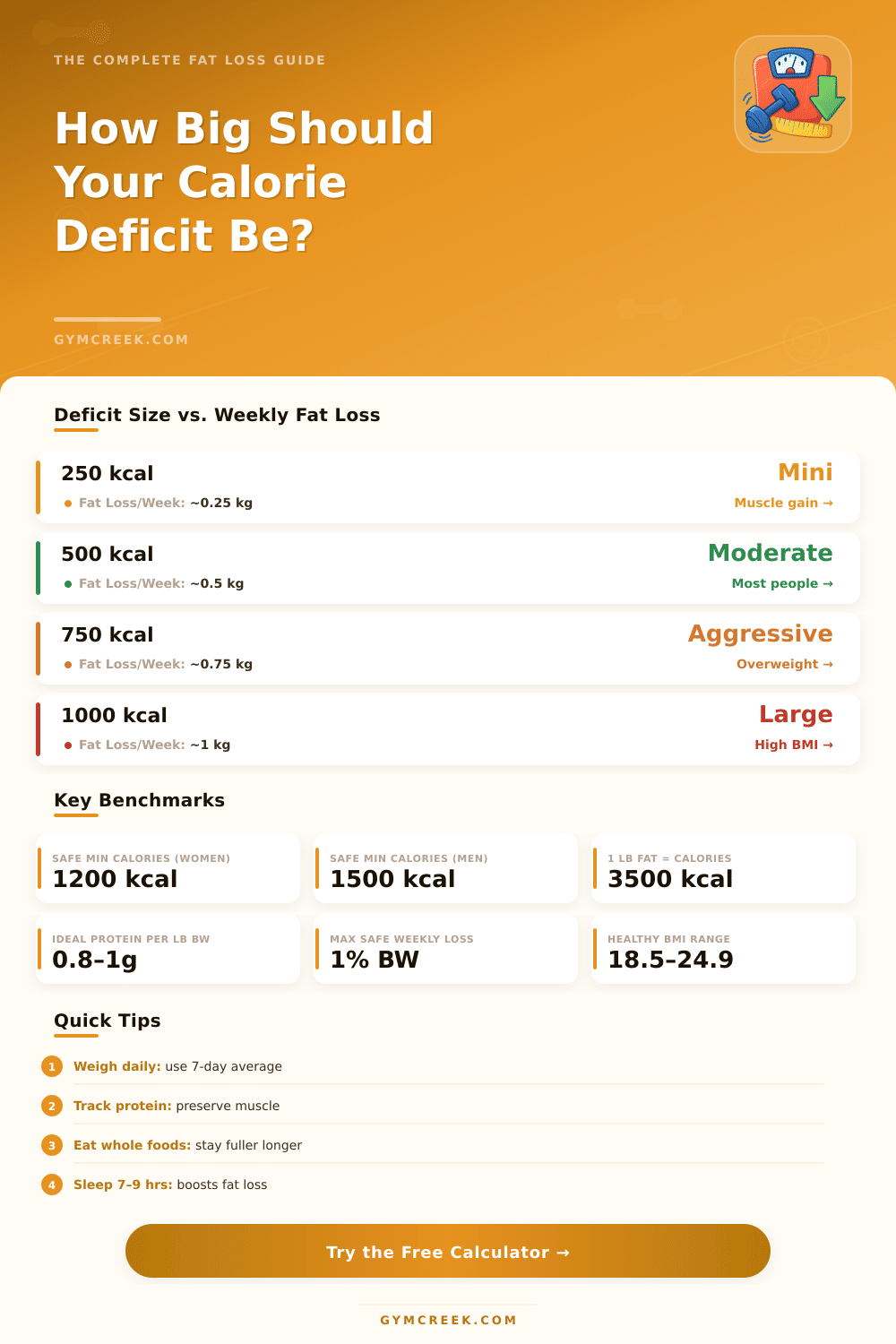
| Deficit Size | Type | Fat Loss / Week | Weekly Deficit | Best For |
|---|---|---|---|---|
| 100–200 kcal | Micro | ~0.1–0.2 kg / 0.25 lb | 700–1,400 kcal | Athletes, recomp, muscle gain |
| 250–350 kcal | Mini | ~0.25 kg / 0.5 lb | 1,750–2,450 kcal | Lean individuals, first cut |
| 400–600 kcal | Moderate | ~0.5 kg / 1 lb | 2,800–4,200 kcal | Most people — recommended |
| 700–900 kcal | Aggressive | ~0.75 kg / 1.5 lb | 4,900–6,300 kcal | Overweight, short-term |
| 1,000 kcal | Max | ~1 kg / 2 lb | 7,000 kcal | High BMI only, supervised |
| Activity Level | Multiplier | Description | Examples |
|---|---|---|---|
| Sedentary | 1.2 | Little to no exercise | Desk job, no gym |
| Lightly Active | 1.375 | Light exercise 1–3 days/week | Casual walks, yoga |
| Moderately Active | 1.55 | Moderate exercise 3–5 days/week | Gym 4x/week, cycling |
| Very Active | 1.725 | Hard exercise 6–7 days/week | Daily lifting, sport |
| Extra Active | 1.9 | Hard exercise + physical job | Construction + gym |
| BMI Range | Category | Health Risk | Action |
|---|---|---|---|
| Below 18.5 | Underweight | Moderate | Increase calories, see GP |
| 18.5–24.9 | Healthy Weight | Low | Maintain current habits |
| 25.0–29.9 | Overweight | Increased | Moderate deficit, exercise |
| 30.0–34.9 | Obese Class I | High | Structured plan, GP advice |
| 35.0+ | Obese Class II+ | Very High | Medical supervision |
| Goal | Protein | Carbs | Fat | Notes |
|---|---|---|---|---|
| Fat Loss (general) | 30–35% | 35–45% | 20–30% | High protein, moderate carbs |
| Fat Loss + Muscle Retain | 35–40% | 30–40% | 20–25% | Very high protein priority |
| Low Carb / Keto | 25–35% | 5–10% | 55–65% | Ketosis, strict tracking |
| Recomposition | 35–40% | 30–35% | 25–30% | Tiny deficit or maintenance |
| Endurance Athlete Cut | 25–30% | 45–55% | 15–25% | Performance maintained |
| Category | Men | Women | Description |
|---|---|---|---|
| Essential Fat | 2–5% | 10–13% | Minimum for organ function |
| Athletic | 6–13% | 14–20% | Competitive / lean physique |
| Fitness | 14–17% | 21–24% | Fit, healthy look |
| Acceptable | 18–24% | 25–31% | Average, some risk |
| Obese | 25%+ | 32%+ | Health risk zone |
A Calorie Deficit happens when the body spends more calories than it takes in. It is that simple. For all daily tasks the body needs energy, and if it does not get enough from food, then it uses its fat stores to make up the gap.
That leads to weight loss.
How to Make a Safe Calorie Deficit
The basic math is calories eaten minus calories burned. When someone needs 2 500 calories daily to keep their weight, but only eats 2 000, that creates a 500-calorie deficit. Over a week that adds up to around 3 500 calories, which equals about one pound of fat loss.

Even if someone sits the whole day, the body still burns calories. For women the resting rate is around 1 500 calories, while for men it reaches around 2 000. So if someone burns 2 000 calories and only eats 1 700, he or she already has a 300-calorie deficit, wihtout any exercise.
A daily deficit between 300 and 500 calories helps to reach steady and lasting weight loss. Going too far with big cuts to calorie intake does not help. Cutting too many calories can lead to loss of muscle mass, which is the most overlooked result.
Muscle tissue is the most active part of the body, it helps burn calories and helps you stay slim.

There are several ways to form a deficit. One option is simply eating fewer foods. Another way is burning calories through physical activity.
Combining both methods works well too. For instance, cutting intake by 250 calories and adding 250 burned through exercise gives a 500-calorie deficit for the day.
To start, figure out the exact numbers for your maintenance calories. It is the amount that the body uses daily to stay at the same wait. Websites with calculators can help with that.
Then lower your intake by 200 to 500 calories to form a typical deficit.
It really matters to track your food carefully. Weigh it on a scale in the kitchen and log everything in an app to improve accuracy. A spoonful of peanut butter does not always have the weight that the label shows.
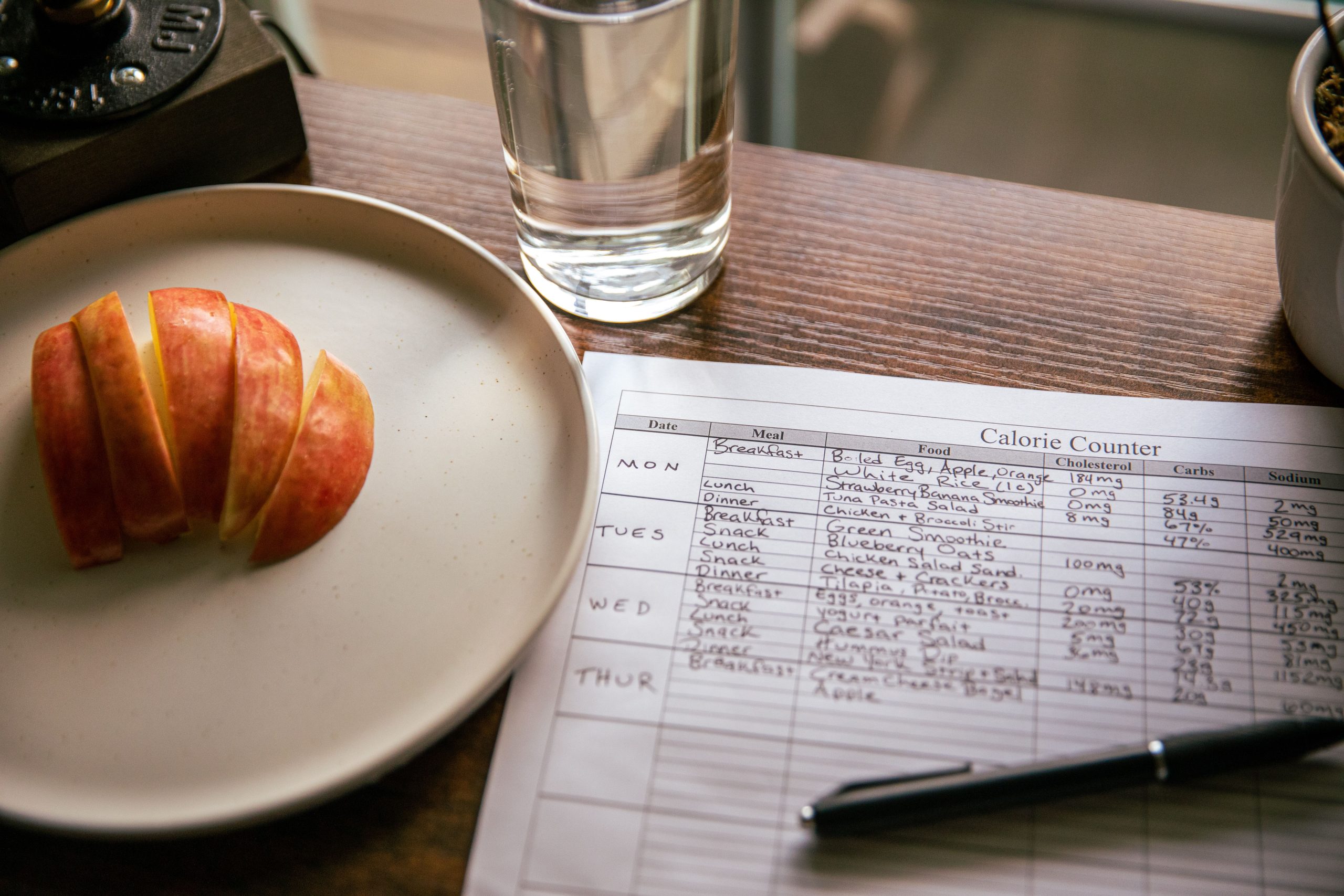
Tracking all drinks and cooking oils makes a big difference.
It is possible to reach a deficit without calorie counting, but knowing the energy content in foods makes things easier over time. Making a set of meals that meets your calorie and protein targets lets you mix and adjust during the day, while you stay in the limits.

Eating healthy and filling foods, like whole grains, lean proteins and healthy fats, helps you feel less hungry between meals. Drinking plenty of water also helps. Too big deficits or surpluses can hurt your metabolism, hormones and mood over time, so keeping things moderate is key.
When thebody shrinks, changes become needed, because fewer calories will be required over time.