Hiking Water Calculator
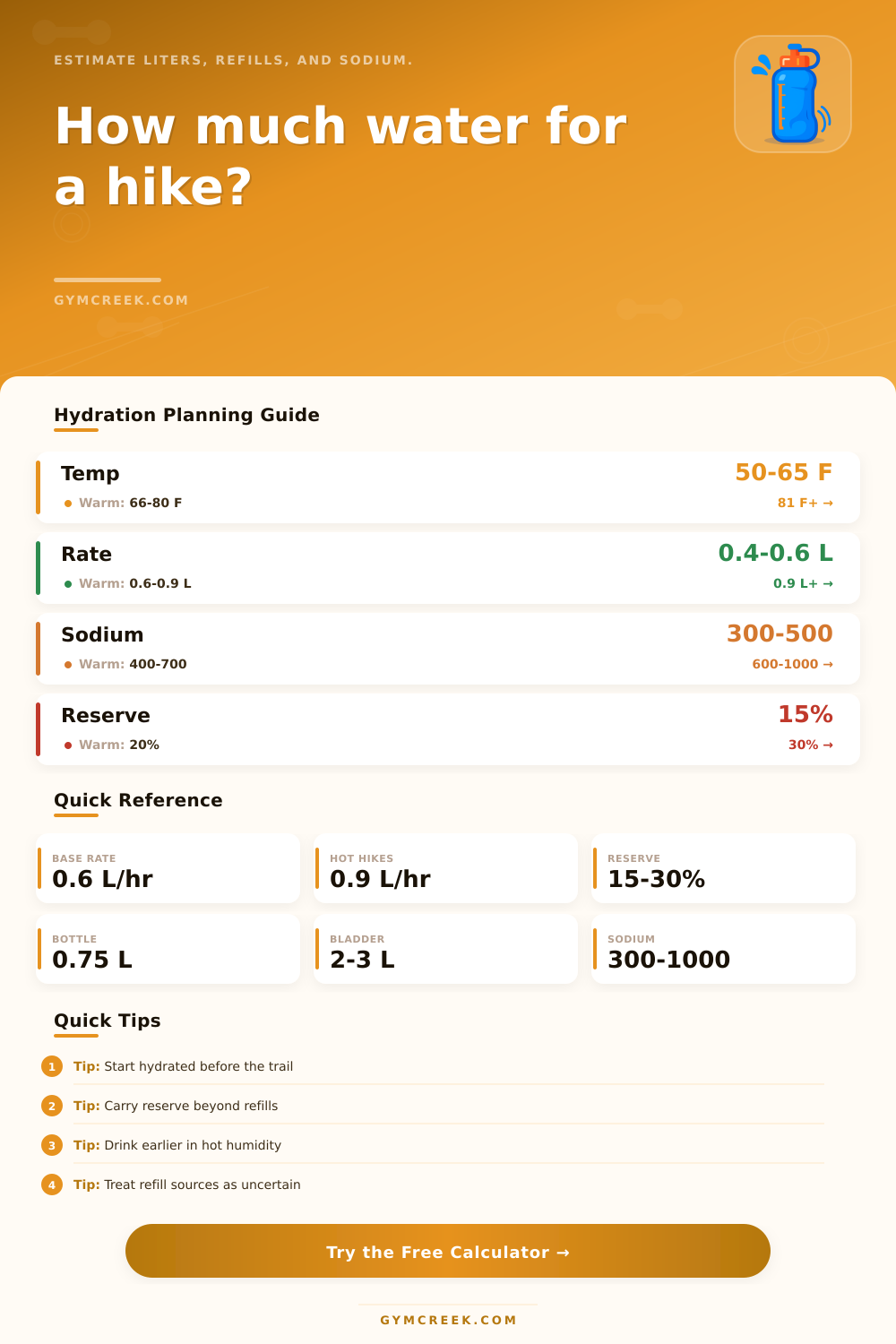
Estimate total liters needed, liters per hour, starting carry volume, bottle or bladder count, sodium range, and safety reserve from heat, humidity, body size, climb, pack load, effort, refill reliability, and sweat rate.
📌Hydration Presets
Presets fill realistic trail conditions. Adjust sweat rate if you know your personal rate from a weigh-in test or previous hikes.
⚙Calculator
Hydration estimate
Enter hike conditions to estimate fluid, carry volume, and sodium.
📊Hydration Metrics
📑Reference Tables
| Condition | Typical range | Use when | Planning note |
|---|---|---|---|
| Cool easy hiking | 0.35-0.55 L/hr | Shade, light pack, mild pace | Still carry reserve |
| Moderate hiking | 0.55-0.85 L/hr | Most day hikes | Matches many weekend plans |
| Hot or humid hiking | 0.85-1.20 L/hr | Heat, sun, heavy sweating | Plan sodium too |
| Very hot hard effort | 1.20 L/hr plus | Steep exposed climbs | Shorten route if carry is too high |
| Weather | Temperature | Humidity | Hydration effect |
|---|---|---|---|
| Cool dry | Under 60 F / 16 C | Under 40% | Lower thirst but steady loss |
| Mild | 60-75 F / 16-24 C | 40-60% | Baseline planning zone |
| Hot | 76-90 F / 24-32 C | Over 50% | Higher sweat rate |
| Extreme | Over 90 F / 32 C | Over 65% | High strain and slower cooling |
| Scenario | Hourly sodium | Best fit | Caution |
|---|---|---|---|
| Light sweater | 300-500 mg/hr | Short cool hikes | Avoid overdoing sodium |
| Average sweater | 400-700 mg/hr | Warm steady hikes | Pair with steady fluids |
| Salty sweater | 700-1000 mg/hr | Salt marks on clothing | Test before long trips |
| Long hot day | 600-1000 mg/hr | Heat plus multiple hours | Adjust for medical advice |
| Refill type | Start carry | Reserve target | Planning note |
|---|---|---|---|
| No refill sources | All water | 20-35% | Carry full need from start |
| Seasonal source | Most water | 25-40% | Verify flow before relying on it |
| One reliable refill | Half to two-thirds | 15-30% | Treat or filter before drinking |
| Frequent refills | Minimum segment | 10-25% | Carry enough for missed source |
💡Planning Tips
Having a plan for how much water to consume during a hike involve calculating the amount of water that a person need to consume during the hike. Carrying too little water can lead to dehydration, while carrying too much water will make for a heavy hike. It is important to carry enough water to satisfy the bodys demands for hydration even if the hike change during the hike.
Many peoples plan for their hiking trips with the intention of calculating the amount of water they will drink based on the distance of the hike that they plan to take or the number of hours that they will be on the trail. While distance and time is two of the main factors that must be considered in determining the amount of water that is needed for a hike, there are a variety of other factors, as well. For instance, the weather conditions that are encountered on the hike will impact the amount of water that the body loses, as will the level of physical exertion that is required of the hiker.
How Much Water to Bring on a Hike
For instance, hiking uphill in the sun will result in the loss of more water from the body than hiking in the shade. These variable can be entered into the calculator in order to determine the amount of water that will be required for the individual to satisfy their bodys needs for water under those specific conditions. In addition to the weather and physical exertion variables, another factor that influences the amount of water that is lost by the body is the size of the individual.
Those with a larger body will generate more heat from their physical exertion than those with a smaller body. In addition, those who have to move more mass when hiking uphill will lose more water from their bodies due to the exertion of more physical work by the body. The same is true for those who have to exert more physical work to carry a heavy pack.
Finally, another factor is the amount of elevation gain that the hiker is to experience; the more elevation that is gained, the more physical exertion will be required of the hiker. Each of these variables can be seen in the calculator and how each of these variables will impact the total amount of water that is required to satisfy the bodys needs. Another important factor to consider is the availability of refill sources.
These refill sources may not always be available, or the refill sources that is located on a map may contain no water or may be unsafe to drink from. Thus, through the use of the refill setting for the calculator, one can make an adjustment of the initial amount of water that the hiker will consume based on the availability of these refill sources. Carrying extra water at the beginning of a hike allows for the hike to include these refill sources, or allows for the body to have enough water in the case that the refill source is unavailable for some reason.
The same variables that affect the amount of water that an individual must consume will also impact the amount of sodium that should be consumed. Hotter temperatures will cause an individual to lose more sodium from their body through sweating. The amount of sodium that an individual requires ranges from low amounts to high amounts; some individuals lose more sodium from their body than others.
Therefore, testing their bodys sodium loss during shorter hikes is a better way to calculate the sodium needs for an individual. A third factor that must be included in the planning of water consumption for an individual on a hiking trip is the amount of extra water that is needed in case the hiking plans of the individual change. This third factor is referred to as the safety reserve.
As with all other factors, the safety reserve is not established to make an individuals hiking pack excessively heavy; however, it does provide for an extra supply of water that can be consumed in the event that the hike last longer then the individual had initially planned. Drinking water on a schedule throughout the hike is more effective than drinking water only in response to feeling thirsty. As a human body, when an individual feels thirsty, it indicates that their body is already experiencing dehydration.
Therefore, it is better for an individual to drink small amounts of water throughout the hike (rather than only when they feel thirsty) to maintain their bodys hydration. Ensuring that the body is properly hydrated prior to beginning a hike will allow for the body to maintain its hydration during the initial climb of the day. Another set of tables are provided on this page as a means of showing the range of water and sodium intake that is required for those of different body compositions and hiking conditions.
These tables are not rules that individuals are to memorize prior to beginning their hike, but they are additional tools that can be used to verify the calculations made by the calculator. Finally, while the calculator is a helpful tool that can provide an individual with a plan for the amount of water that should be consumed during a hike, the calculator is not a replacement for paying attention to the body during the hike. The calculator accounts for various measurable variables to create a plan for the individual for drinking water during their hike.
However, the body will provide signals to the individual of when additional water is needed; these signals cannot be accounted for in the calculator. Thus, while the calculator allows an individual to begin their hike with a plan, that plan will provide an individual with more confidence in adjusting their water consumption during the hike.