Cycling Size Calculator
Estimate bike frame size, saddle height, standover clearance, effective top tube, stack, reach, stem range, and handlebar drop from rider measurements and fit preferences.
📌Rider Presets
Presets load realistic body proportions, bike categories, flexibility, reach preference, posture, and shoe or cleat assumptions so you can compare how fit guidance changes.
⚙Calculator Inputs
Bike sizing snapshot
Enter rider measurements to estimate frame size, saddle height, stack, reach, and cockpit setup.
📊Fit Metrics
📑Reference Tables
| Bike type | Inseam multiplier | Output style | Fit note |
|---|---|---|---|
| Road endurance | 0.665 x inseam | cm frame | Slightly taller stack and steady handling. |
| Road race | 0.670 x inseam | cm frame | Lower front end and longer cockpit bias. |
| Gravel or all-road | 0.660 x inseam | cm frame | More clearance and stable reach. |
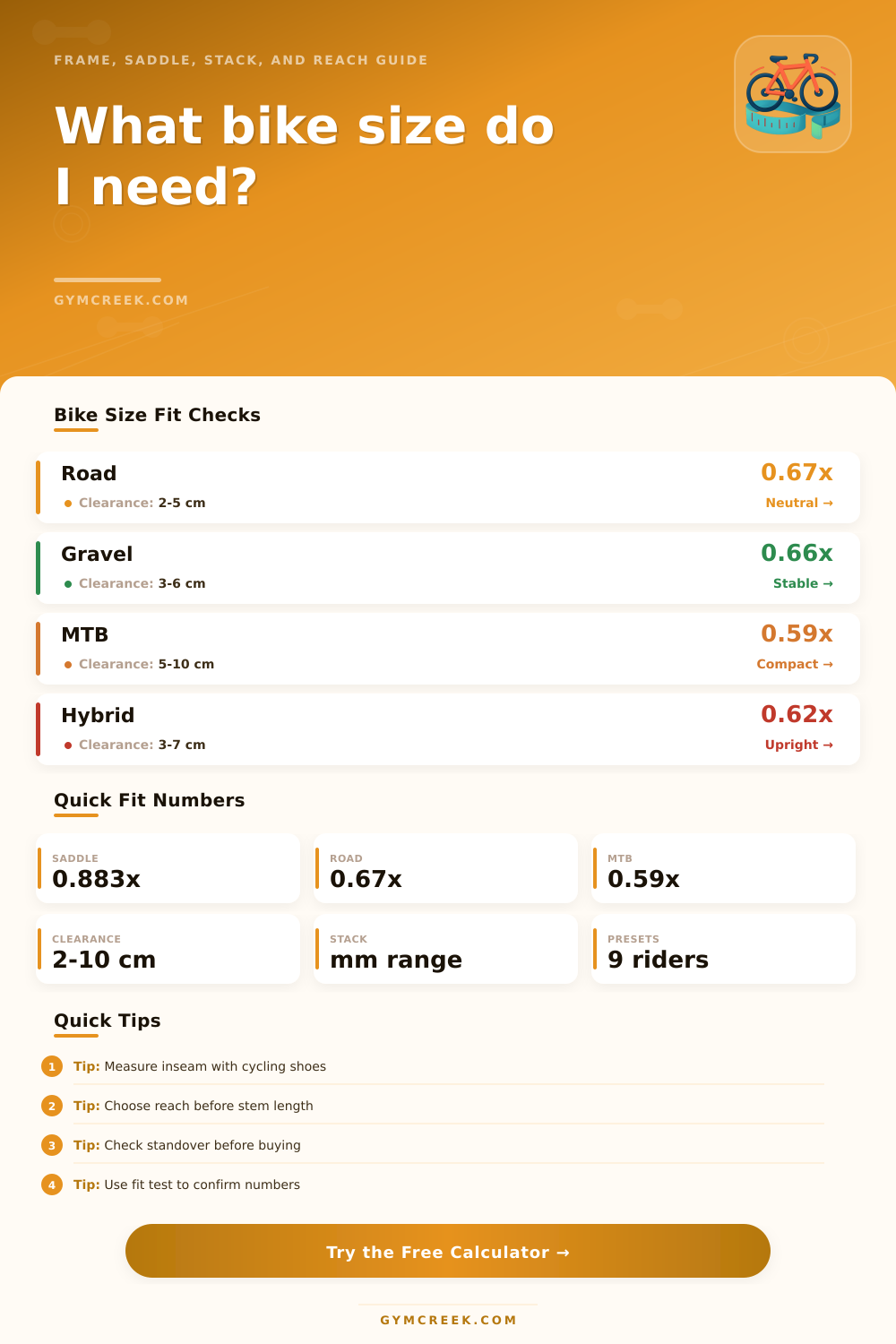
| Mountain bike | 0.590 x inseam | inch plus size | More standover and shorter cockpit feel. |
| Hybrid or fitness | 0.620 x inseam | inch plus size | Upright use and simple handling. |
| Triathlon or TT | 0.650 x inseam | cm frame | Aero position may size by stack first. |
| Bike type | Minimum clearance | Why it matters | When to size down |
|---|---|---|---|
| Road | 2 to 5 cm | Enough room for stops without oversizing. | Short inseam relative to height. |
| Gravel | 3 to 6 cm | Mixed terrain needs easier dismounts. | Large tires or sloped routes. |
| MTB | 5 to 10 cm | Trail riding needs movement over the bike. | Technical riding or dropper use. |
| Hybrid | 3 to 7 cm | Everyday stops should feel relaxed. | Urban starts and loaded bags. |
| Result | Lower number means | Higher number means | Adjustment path |
|---|---|---|---|
| Frame stack | Lower handlebar potential | More upright front end | Spacers, stem angle, or frame choice. |
| Frame reach | Shorter front-center feel | Longer cockpit potential | Stem length and bar reach fine tune. |
| Effective top tube | Compact seated room | Longer seated room | Useful when comparing older geometry charts. |
| Handlebar drop | Comfort and visibility | Aero and aggressive posture | Change gradually and test comfort. |
| Situation | Likely issue | Calculator cue | Fit response |
|---|---|---|---|
| Between two road sizes | Reach may decide | Compact reach preference | Choose smaller if standover is close. |
| Long legs, short torso | Seat tube can look large | Long-leg proportion flag | Prioritize reach and stack over seat tube. |
| Short legs, long torso | Standover can be tight | Long-torso proportion flag | Check top tube height before reach. |
| Low flexibility | Front end too low | High bar-drop warning | Look for more stack or fewer aggressive parts. |
💡Bike Fit Notes
Finding the correct bike size require understanding many different measurements. Finding the correct bike size is important because different bike geometries will give a bike a different feel when a person is riding on it. Many people feel that a person’s height will allow for finding of the correct bike size.
However, height is only one of many measurements that should be considered when finding the correct bike size. Many different measurements needs to be considered in order to find a correct bike size. A measurement such as inseam is important because the inseam will play a role in how high the saddle should be.
How to find the right bike size
Rider height can provide a good starting point for individuals measuring they inseam, but the inseam is more important for saddle height. Additionally, torso and arm length will play a role in how far forward or how far the rider should be able to reach the handlebars of their bike. Other measurements that should be considered are the rider’s shoulder width, flexibility, and posture.
The rider’s shoulder width will have a role in how wide the rider’s handlebars should be. A person’s flexibility and their posture will play a role in how low the handlebars should be for the individual in question. Many different moddern bike exist on the market, and each bike has different geometry because manufacturers manufacture the bikes for different purposes.
For example, endurance road bikes have a taller stack and a shorter reach than race road bikes. Additionally, gravel bikes will have more standover clearance than road bikes. Mountain bikes will have smaller frame sizes in comparison with a rider’s inseam because manufacturers manufacture mountain bikes for more movement.
Using only one measurement to find the size of a bicycle frame will not provide a correct number for a person’s desired bike size. Standover clearance is another measurement of importance to bikes. Standover clearance is the amount of space that is between the body of the rider and the top tube of the bike while the individual is standing over the top tube.
Many individuals believes that more standover clearance is always better. However, if a person has too much standover clearance, it can cause the saddle of their bike to be too high in comparison to the handlebars of their bike. A person should seek standover clearance such that they can comfortabley straddle the top tube of their bike while standing on the ground.
A person should not seek an oversized bike frame for the purpose of adding more standover clearance to their bike. If they do, they may experience issues with the reach of the handlebars of their bike. Saddle height involve many different factors.
One of the factors that will play a role in a person’s saddle height is their inseam measurements. A person can calculate their ideal saddle height by multiplying their inseam by the number 0.883. This number is merely a starting point for a person’s correct saddle height.
Additionally, a person’s cleat position will play a role in how low or how high the rider’s knee will be in relation to the pedals. For instance, a rider with long femurs may require more of a stem setback from the calculations made by the saddle height calculator. A calculator is one of the many tools that can help a person calculate these various factors and make the adjustments to their ideal saddle height.
The two most important measurements for a person’s bike that will affect how the bike feels while the rider is pedaling on the bike are the reach and the stack. The measurement of the reach will determine how far forward the handlebars of a bike are from the bottom of the bike. Additionally, the stack measurement will determine how high the handlebars are from the bottom of the bike.
A person with a long torso and short legs will require a different measure of height than someone with a short torso and long legs. For instance, two people of the same height will have different requirements for the height and reach of the handlebars of their bike, depending on the body measurements of the individuals. Therefore, a person should use their torso length, arm length, and flexibility in their calculations for the ideal reach and stack for their bikes.
The last two measurements to consider are the length of the stem that is attached to the bike’s handlebars and the width of the handlebars themselves. For example, if a stem is too long, it will force a rider into an aggressive position while they are riding on the bike. Additionally, if the handlebars are too wide, the rider will have more difficulty in turning the handlebars of their bikes.
A sizing tool will suggest the proper length for the stem and the width of the handlebars in comparison to the person’s shoulder width and the type of bike that they are using. These suggestions will ensure that the rider maintains good handling with their bike. The proportions of a person’s body will also affect the way that they will feel on a bike of any given size.
Proportions of the body are important for various reasons. For instance, a person with long legs and a short torso may have a large size for their seat tube, but their reach will be too short. Alternatively, a person with a longer torso and shorter legs may find that the standover clearance is the issue for them rather than the reach of the bike.
A proportion flag will highlight these potential issues with the rider’s body proportions. A person’s age and flexibility are also two different factors that should be considered when buying their bike. For example, older individuals or individuals who have limited mobility in their hips may benefit from purchasing a bike that has a higher stack or a lower handlebar drop on the handlebars of their bike.
Using a flexibility setting on a bike size calculator will allow a person to adjust the height and reach that the bikes will have. Using such a function will prevent discomfort while a person is on their bike. At this point, after calculating all of the measurements that are important for a person’s bikes, the individual should compare their calculations to the bikes that are available.
The specs of the bikes that one is considering should include information regarding both the stack and reach of their bikes. Additionally, the standover clearance will be important in that it should be checked against the inseam of the individual rider. If a person calculates their ideal reach and standover clearance for their bikes, they may find that it falls between two different sizes for bikes.
If this is the case, a person may have to use their reach preference to determine the better bike size for themselves. A person should take rides on the bikes that they are considering because no calculation will provide the exact way that a person’s bike will feel while they are on it. There are many factors that goes into the way that a bike will feel while a person is riding on it, such as the wheelbase and the head tube angle of their bikes.
Additionally, the offset of the forks that are attached to each bike will have a role in the way that that particular bike will feel while riding on it. A person’s bike size calculator will help to narrow the number of bikes that a person should consider, which will allow for more time to fine tune their riding position. Bike sizing tools will provide an individual with a picture of where they should start with their bikes.
However, a person should use real-world tests and fit sessions with professionals to find their ideal bike size.