Powerlifting Warm-Up Calculator
Plan squat, bench press, and deadlift warm-ups from current bests, opener percentages, attempt jumps, equipment, fatigue, rack commands, flight timing, and plate increments.
📌Meet Presets
Presets fill complete meet scenarios. Adjust the best lifts, percentages, equipment, or flight timing and calculate again.
⚙Calculator
Powerlifting warm-up plan
Enter your best lifts, attempts, equipment, and timing to build a platform-ready plan.
📊Meet Metrics
📋Attempt Selection
| Lift | Opener | Second | Third | Opener % | Command cue |
|---|---|---|---|---|---|
| Calculate to build attempts. | |||||
⏱Timing Plan
| Lift | Start warm-ups | Final warm-up | Platform ETA | Commands | Timing note |
|---|---|---|---|---|---|
| Calculate to build timing. | |||||
📝Warm-Up Sets
| Lift | Set | Load | Reps | % opener | Rest | Plates per side |
|---|---|---|---|---|---|---|
| Calculate to build warm-up sets. | ||||||
📑Reference Tables
| Lift | Typical opener | Final warm-up | Reason |
|---|---|---|---|
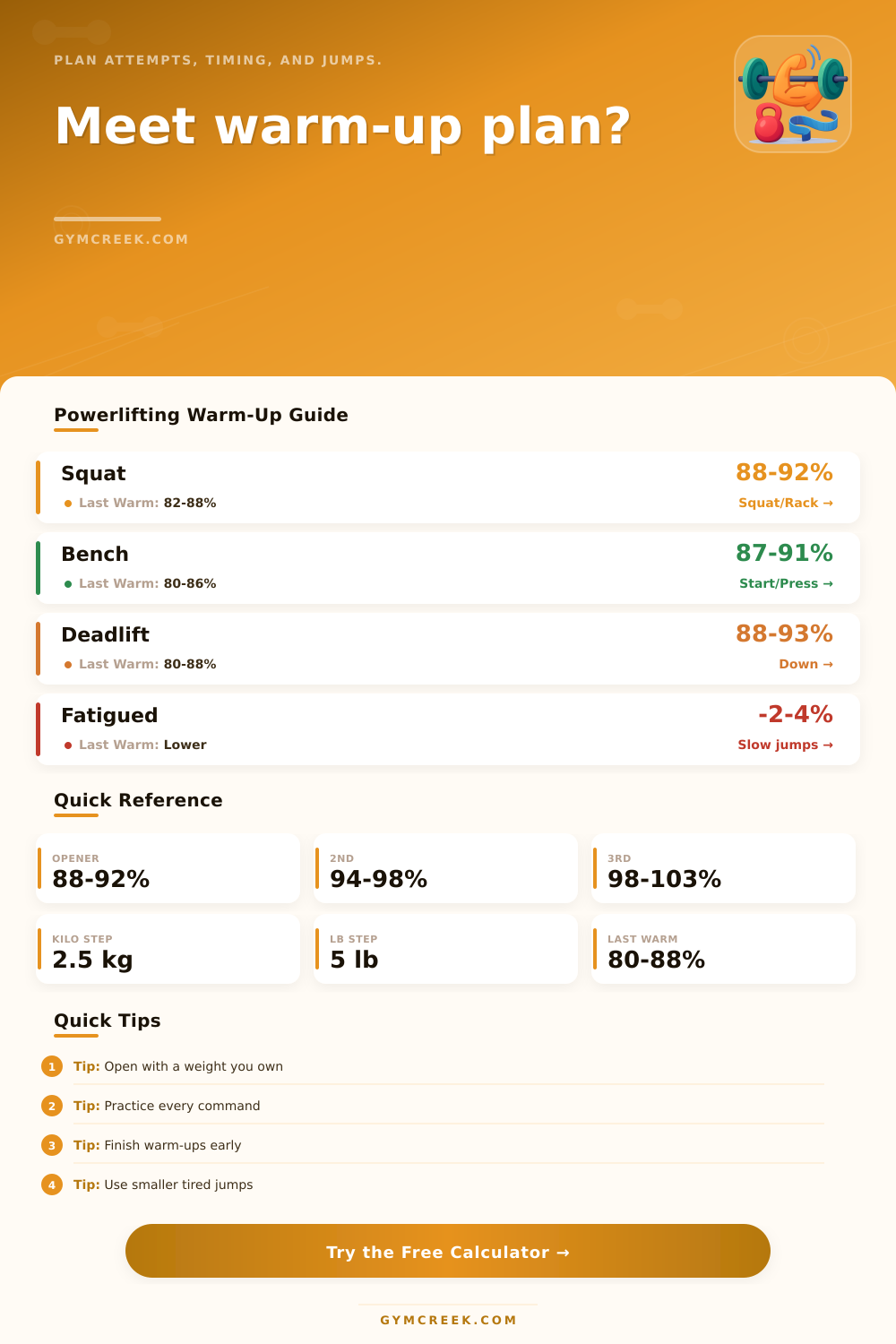
| Squat | 88-92% | 82-88% | Confidence and depth |
| Bench | 87-91% | 80-86% | Pause without fatigue |
| Deadlift | 88-93% | 80-88% | Grip and lockout check |
| After a cut | 84-89% | 76-84% | Lower risk early |
| Lift | Platform commands | Warm-up cue | Common miss |
|---|---|---|---|
| Squat | Squat, Rack | Hold lockout | Racking early |
| Bench | Start, Press, Rack | Pause every single | Beating press call |
| Deadlift | Down | Hold lockout | Dropping early |
| All lifts | Wait for calls | Practice stillness | Rushing commands |
| Equipment | Warm-up style | Final warm | Timing |
|---|---|---|---|
| Raw sleeves | Standard ramp | Moderate | Normal |
| Knee wraps | Extra wrap set | Closer | More setup time |
| Single-ply | Gear practice | Closer | Start earlier |
| Belt only | Fewer extras | Lower | Simple setup |
| Readiness | Opener change | Jump change | Use when |
|---|---|---|---|
| Fresh | 0% to +1% | Normal | Bar speed is high |
| Nervous | -1% | Smaller late | Need command reps |
| Post cut | -3% | Conservative | Rehydration unsure |
| Tired travel | -2% | Slower ramp | Warm-up feels heavy |
💡Tips
A powerlifting meet involve many variable, and there is a necessity of having a plan for the set, attempts, and the lifter’s timing within the meet. The lifter has to plan their warm-up prior to the start of the day, as the planned warm-up will help them to feel ready to begin their meet rather than feeling rushedly. Every powerlifting meet has a specific rhythm when the lifts occur, but the rhythm can change based on the size of the flight and the pacing of the platform.
Depending on the position that the lifter is performing in their flight, they will have to adjust the completion of their last warm-up to ensure that they are ready to begin the meet on time. The calculator establishes a baseline of the current best lift for each lift. The lifter will choose an opener percentage, but the lifter will have to adjust this based on the condition of the lifter and the equipment that will be used during the warm-up.
How to Plan Your Warm-Up for a Powerlifting Meet
The fatigue level of the lifter are important to adjust, as a lifter who just made weight will differ from a lifter who may have slept well the past couple of nights. The percentage chosen for the opener will have to be adjusted according to the physical condition of the lifter. The lifter will also have to adjust for the style in which they wish to warm up.
A minimal warm-up style will involve fewer sets. This warm-up style can be utilized if the warm-up area is crowded with other lifters or if the lifter wishes to conserve there energy for the actual lift. An extended warm-up style involve more sets during the warm-up phase, and this may change the focus of the warm-up to gear or command reps.
The extended warm-up is not focused on performing more warm-up sets for the purpose of performing more sets, but rather to match the number of warm-up repetitions to the level of comfort that the lifter feel with the commands that will be called on the powerlifting platform during the meet. The fatigue settings that is selected for the calculator will also reflect the physical state of the lifter. The fatigue settings are important because a lifter who traveled long distance to compete or who just competed in a weigh-in and lost their flight may feel tired.
The lifter will feel that the barbell is heavier at the same percentage of their lifts. In this case, the opener percentage should be lowered for the warm-up to allow for more comfort and to protect the attempt that matter the most. This adjustment to the opener percentage is not indicative of a weakness on the lifter’s part.
The calculator will automatically establish each of these shifts in the plan once the lifter select their level of readiness for the meet. The timing of the platform is another variable that the lifter should consider. The timing of the platform is based off the size of the flight and the position within that flight.
Based on these variables, the calculator can estimate when each lifter should begin to warm up and when the lifter should take their final warm-up set. Depending on the flight size, the lifter may have to begin warming up at different times within the flight. For instance, a flight that begins at 10:00 may allow for those in early positions to warm up and begin their sets earlier than those who are in later positions.
The same principle apply to a slow flight where there is more time between the last warm-up and the opener. This could pose a problem for the lifter if they become too warmed up for their effort. The equipment choices that a lifter may choose will also impact their warm-up plan.
For instance, if the lifter chooses to warm up in knee wraps or multi-ply gear, there will be more time for setting up the necessary equipment. The calculator can adjust the number of warm-up set that are required for the lifter and the timing of those sets according to the equipment choices of the lifter. A raw lifter will have a different warm-up plan than an equipped lifter.
These reference table will include information on the common ranges of the opener lifts, the landmark weights for the final warm-up, as well as the commands that may be called during the meet. These tables are not rules to the lifter, but they will demonstrate some of the pattern that have emerged from many powerlifting meets. These tables may assist the lifter in their establishment of a warm-up plan.
The calculator will produce a timeline that maps out all of the variables for the warm-up plan. The single timeline that will be produced for the warm-up will be useful to the lifter because the warm-up area is not a quiet place to think. This timeline will allow the lifter to map out when they will start to warm up, how many set they will perform, and how many minute they will need to rest between each set.
This will drastically reduce the number of decision that the lifter will need to make once they enter the warm-up area. Some of the most common mistake include a warm-up that does not adjust to the way the day is going for that particular lifter. Some lifters will warm up with too heavy of an opener to feel the weight of the barbell, while others will find themselves warming up too light with their last few set.
The fatigue setting will help to avoid these problem. Furthermore, the lifter may forget to adjust for the timing of their flight. They should plan their last warm-up to allow for some buffer within the flight in case of any delay.
While the warm-up plan will not guarantee the outcome of the meet, the warm-up plan will reduce the number of variable that the lifter must manage during the meet. Once the opener and the timing of each round has been mapped out, as well as the number of warm-up sets, the lifter will have to execute each of the planned lift. Reducing the mental load that the lifter must perform will allow for the best possible attempt to be executed by the lifter.