
The pelvic floor are a group of muscles located beneath the pelvis. These muscles is responsible for maintaining the organs within the pelvis, such as the bladder, bowel, and reproductive organ. When these muscle lack the strength to maintain those organs within the pelvis, the individual will experience the muscles failing during activities that place a strain upon those muscles.
As a result of the weakening of these muscles, individuals may experience both urine leak and a feeling that they are unable to reach a bathroom in time. While many believe that the aging of the body or pregnancy cause pelvic floor weakness, you can strengthen the muscles with proper exercise. One of the first steps in strengthening the pelvic floor is to find the muscles themselves.
How to Find and Strengthen Your Pelvic Floor Muscles
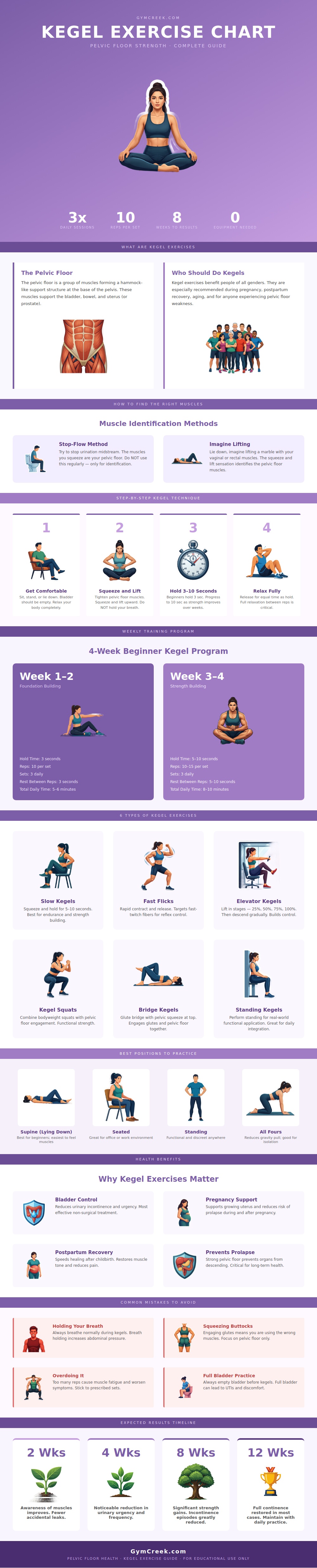
One way to find these muscles is to attempt to stop the flow of urine midstream. This should only be attempted as a test. Another way to find the muscles is to imagine lifting with the muscles around the vagina (in women) or the rectum.
Each of these method should allow an individual to feel the squeeze of the pelvic floor muscles; feeling these muscles enables an individual to recognize those muscles when contracting them. Once the individual locates the pelvic floor muscles, the individual should begin to exercise them. To exercise the pelvic floor muscles, the individual can either sit or lie in a position of comfort.
The individual should draw up the pelvic floor muscles without holding one’s breath. The muscles should be contracted for a period of time, then release completely. The release of the muscles is also important in allowing the muscles time to relax.
For beginners, the muscles should only be contracted for three second, but over time with the development of strength in those muscles, the length of time contracted can be increased. While each individual is different in there ability to strengthen their pelvic floor muscles, there is a general timeline for how strong each individual’s muscles become with time. Within the first two weeks after beginning to exercise the pelvic floor muscles, an individual will begin to be able to feel their muscles.
After one month of exercising the pelvic floor muscles, an individual will experience a decrease in the number of times they feel like they need to reach the bathroom. Eight weeks into exercise of the pelvic floor muscles, an individual will begin to feel the strength return to their muscles during physical activity. After three month of daily exercises of the pelvic floor muscles, an individual will experience the full restoration of their strength.
A number of different exercises can be used to gain the strength of the pelvic floor muscles. Slow holds of the muscles will build endurance in those muscles. Quick flicks will develop strength in the fast-twitch muscles of the pelvic floor.
The elevator exercise will allow for the development of control of the pelvic floor muscles. Additionally, an individual can also use squats or bridges in place of the pelvic floor exercise. Finally, an individual can also perform these exercises while standing.
The position in which an individual performs these exercises will impact the individual’s ability to feel the pelvic floor muscles. When lying down on the back, an individual will be able to find the muscles because gravity will be removed from the body. Sitting allows for the best results for individuals that sit for long periods at their desks.
When an individual stands, they can perform the exercises in their daily life. Additionally, performing the exercises on their hands and knees will also allow the individual to reduce the effect of gravity on the body. There are some mistakes that should be avoided when performing these exercises.
One mistake is to hold one’s breath when performing the pelvic floor muscle exercise. In addition, many individuals will unknowingly clench their buttocks during exercise. Both of these action will increase the pressure on the bladder.
An individual should also avoid performing these exercises with a full bladder. An individual with a full bladder will experience increased discomfort during the exercise, as well as an increased risk of infection. Finally, overtraining the pelvic floor muscles is another mistake to avoid.
Overtraining the muscles will lead to the same fatigue that the individual feels when first experiencing weakness of those muscles.
