
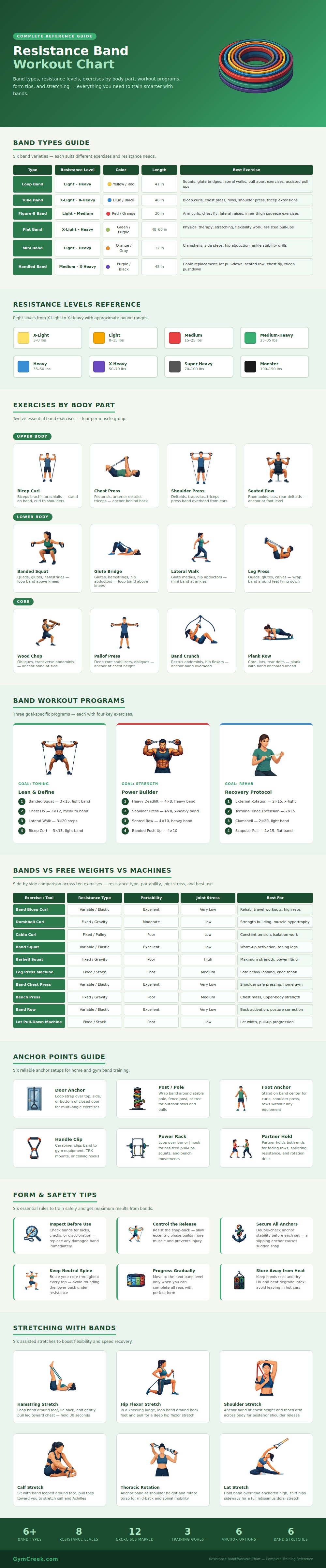
Resistance bands are tools that can be used for exercise. Resistance bands are very versatile as they can be used for strength training, warm-ups, and rehabilitation. Many peoples purchase resistance bands but do not use them effective.
This is likely due to the fact that many people dont understand how the different types of resistance bands behaves under tension. Understanding how the different types of resistance bands behave under tension allow for the appropriate type of resistance band to be matched to a specific movement. By matching the correct type of resistance band with the movements being performed, the resistance bands can work as a portable gym.
Choose the Right Resistance Band and Use It Safely
There are several varieties of resistance bands, each with a specific design that allow them to be used for different types of movements. For instance, loop bands is usually used for lower body exercises. Tube bands with handles are used for upper body exercises.
The individual must choose the correct type of resistance band for the movements to be able to focus on working the muscles. Using the incorrect type of resistance band can lead to the individual compromising their form or grip with the resistance bands. Many individuals opt for purchasing the hardest types of resistance bands.
However, using the hardest types of resistance bands will likely cause the individual to fight the bands rather than performing the exercises that will develop their movement. The amount of force that must be utilized to fully stretch the bands determines the resistance level for resistance bands. Resistance levels for resistance bands can range from extra light to monster bands, which represent the force that the bands will exert when stretched out to their full extent.
The tension for resistance bands is variable; they are more easy to stretch when the muscles are performing their range of motion rather than when the muscles are at the start of their movement range. The resistance bands can provide variable tension that contrasts with the strength of the weights provided by dumbbells. With resistance bands, individuals can develop their muscles by utilizing the lighter types of bands if they ensure that their muscles are under tension for longer period.
Although resistance bands can be very useful for specific purposes, there are limits to the use of resistance bands as a permanent substitute for other exercise equipment. Resistance bands are likely to be found in warm-ups, rehabilitation, travel, and strength training but have limitations for achieving maximum strength in the muscles. For example, resistance bands will never offer the same strength as a barbell squat but are a good alternative for warm-ups.
Instead of asking whether resistance bands are better than free weights, individuals should ask which type of exercise equipment will best suit the movement that they wish to perform. The type of anchor that the individual chooses for the resistance bands can have a significant impact on the individual’s exercise with those bands. Standing on a resistance band allows for curls and presses to be performed.
However, standing on a resistance band will alter the angle of the movements that are performed with the resistance bands. Using door anchors or a power rack will allow for horizontal pulls to be performed and pressed while the individual stands on the resistance bands. Furthermore, the individual must test the stability of the anchor before the beginning of each set with the resistance bands.
The recoil that the resistance bands can cause if they slip during the performance of an exercise can lead to injuries in the shoulders or wrists of the individual that performs the movements with the resistance bands. Form is important when using resistance bands as they do not provide the same guidance as exercise machines with resistance bands. When using resistance bands, the individual should maintain a neutral spine, prevent the snap-back of the resistance bands, and only add more resistance to the bands if the individual can perform the movement with the current resistance bands.
Additionally, the individual should always store the resistance bands in a bag or a drawer to prevent the degradation of the bands due to the heat and sunlight in the area where the resistance bands may be stored. Keeping resistance bands away from heat and sunlight will extend the life of the bands. Bands can be used for the recovery of muscles and to improve flexibility of the body.
For instance, an individual can loop the resistance band around one of their feet and stretch their hamstring. Furthermore, the bands can be used to hold the hip flexors in a stretched position. The positioning that can be achieved with resistance bands will allow an individual to reach positions within the body without the use of body weight alone.
These types of movements can reduce the tightness of the body after exercise. An individual can use resistance bands to follow specific training programs. For toning exercises, individuals can use lighter resistance bands for a higher number of repetitions.
For strength training, the individual can use heavier resistance bands for fewer repetitions. For rehabilitation exercises, the resistance bands will be very light and used to improve the control of the joints in the body. These types of training plans will provide structure to the individual rather than requiring them to decide on the types of bands that they will use for each exercise.
Resistance bands are just one exercise tool that can be used in the exercise routine of an individual. They may be used as an alternative exercise tool when an individual is on the road or when an individual does not have the space to store the other exercise tools. Using resistance bands will allow an individual to learn the proper form and positioning of their movements as the resistance bands are lighter and will make it easier for an individual to learn the form that they will use when using the other, more powerful exercise tools.
Using a guide will help the individual to decide which resistance bands and what type of anchor will be used for the exercise that they plan to perform.
