Zone Diet Calculator
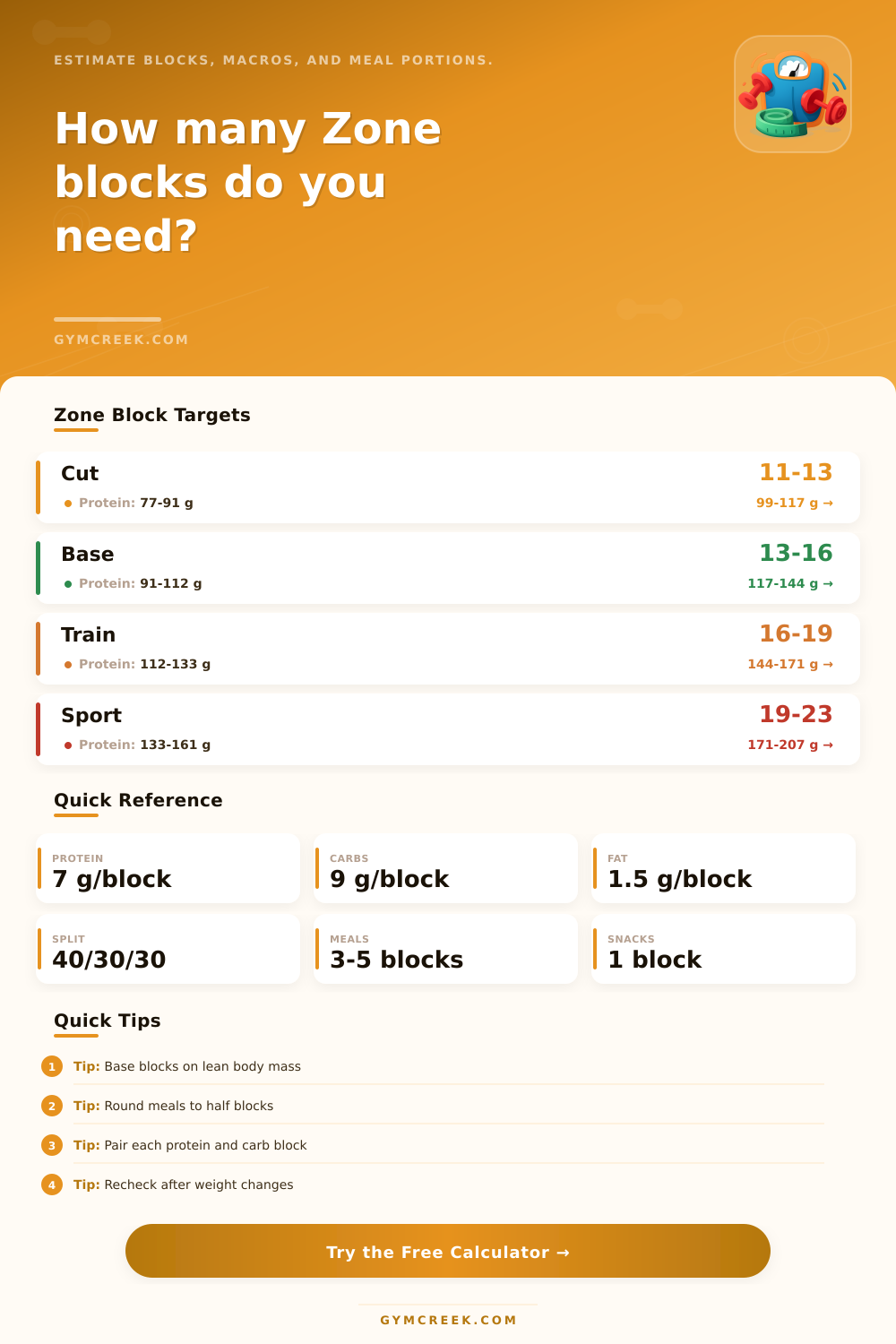
Estimate daily Zone blocks from lean body mass, activity, body fat, and training goal, then translate the result into macros, calories, and meal-by-meal block targets.
📌Zone Presets
Presets load varied body sizes, activity factors, block goals, feeding schedules, and protein sources so the output changes in realistic ways.
⚙Calculator
Zone block snapshot
Enter your stats and calculate daily blocks, macros, calories, and meal distribution.
📊Fitness Metrics
📑Reference Tables
| Step | Formula | Input | Output |
|---|---|---|---|
| Lean mass | Weight x (1 - body fat) | Weight and body fat % | Lean body mass |
| Protein need | LBM lb x activity factor | Lean mass and training load | g protein/day |
| Blocks | Protein grams / 7 | Zone protein target | Daily blocks |
| Macros | Blocks x 7 / 9 / 1.5 | Daily blocks | P / C / F grams |
| Calories | P4 + C4 + F9 | Zone macro grams | kcal/day |
| Activity | Factor | Best fit | Planning note |
|---|---|---|---|
| Sedentary | 0.50 g/lb LBM | Desk work, little training | Lowest block estimate |
| Light | 0.60 g/lb LBM | Easy training 2 to 3 days | Conservative base |
| Moderate | 0.70 g/lb LBM | Lift or cardio 3 to 5 days | Common active default |
| Hard | 0.80 g/lb LBM | Frequent hard sessions | Higher recovery need |
| Athlete | 0.90 g/lb LBM | Sport practice plus training | Performance support |
| Daily blocks | Breakfast | Lunch | Dinner plus snacks |
|---|---|---|---|
| 11 blocks | 3 blocks | 3 blocks | 3 dinner + 2 snack |
| 14 blocks | 4 blocks | 4 blocks | 4 dinner + 2 snack |
| 17 blocks | 5 blocks | 5 blocks | 5 dinner + 2 snack |
| 20 blocks | 5 blocks | 5 blocks | 6 dinner + 4 snack |
| Source | Protein / 100 g | Fat / 100 g | Portion note |
|---|---|---|---|
| Chicken breast | 31 g | 3.6 g | Cooked lean reference |
| Turkey breast | 29 g | 1.5 g | Very lean cooked source |
| Lean beef | 26 g | 10 g | Counts extra food fat |
| Salmon | 25 g | 13 g | Higher natural fat |
| Firm tofu | 12 g | 6 g | Larger portion needed |
💡Tips
The Zone approach to eating is based off an idea that all foods can be composed of building block that contain specific ratios of protein, carbohydrates, and fats. Many individuals struggles with nutrition in that they have to rely on diet plans that may not provide enough protein, carbohydrates, and fat for the individual. The Zone approach to eating solves these issues by ensuring that each food building block contain a specific and balance ratio of protein, carbohydrates, and fat.
Understanding how these blocks work and what they represent allow individuals to more easy plan there meals. The first step in using the Zone approach to eating is to determine how many food building block an individual needs each day. This number isnt random.
How to Use Zone Food Blocks
Instead, several physical factor of the individual determine the count of food building blocks that an individual need to consume each day. The factors that impact the count of food building blocks that an individual should consume each day include the lean body mass of the individual, the body fat percentage of the individual, the activity level of the individual, and the goal that the individual is setting for themself. Each of these factor can be used in teh calculator that is created for individuals to determine their food building block count.
Each food building block contains a specific ratio of protein, carbohydrates, and fat. Each building block contains 7 grams of protein, 9 grams of carbohydrates, and 1.5 grams of fat. This specific balance of macronutrients within each building block is used to help maintain the blood sugar of an individual.
Protein is the most important component of each food building block. Insufficient protein can lead to poor recovery of the body and increased feeling of hunger. Too much protein without enough carbohydrates can lead to reduced effectiveness of the workouts that the individual perform.
The structure of food building blocks guarantee that protein, carbohydrates, and fat are consumed together with each meal. It is impossible to consume the foods that an individual require in there diet and still meet the requirements of each food building block. Foods such as chicken breast contains very little fat.
If an individual consumes chicken breast as a meal, they will have to consume an extra portion of fat to ensure that they consume the proper amount of fat for their food building block. Salmon, on the other hand, contain more fat than chicken breast. In this case, the person will consume less fat with the salmon.
The food building block calculator allow an individual to select their protein source. The protein source will impact the count of fat blocks that the individual must consume. Carbohydrates will also have an impact upon the food building block.
Some carbohydrates contain more glycemic content than others. The food building block diet allow an individual to have a consistent intake of protein, carbohydrates, and fat with every meal. Food building blocks should be consumed throughout the day.
Many individuals find success in consuming three to five meal throughout the day that contain food building blocks. Protein and carbohydrates should be consumed with every meal. Consuming protein and carbohydrates allow the individual to feel satisfied after meals.
If an individual feels hungry with every meal, it is possible that their food building block count is too low for the activity level of their body. Other cause for hunger include stress and lack of sleep. Common mistakes with the Zone approach to eating include thinking that the food building block count is permanent for each individual.
The count can change based upon the lean mass and training of the individual. Another common mistake with the Zone diet is the addition of fat blocks to meals that contains proteins that already contain fat. Adding fat blocks to fatty proteins will increase the total calorie intake of an individual with meals.
While the Zone diet approach is flexible in the type of food that an individual consumes, there are still adjustment that can be made to ensure an individual receive all the nutrition that they require. The amount of carbohydrates that an individual consume can still be adjusted based upon the number of workouts that an individual perform. Food building blocks can also be adjusted according to the appetite of an individual.
Appetite levels range from high to low within each individual. The main value of the Zone diet is that it allow an individual to make food decisions with information rather than guesses. Youll find that a lot of people should of used the calculator earlier.