
Barbell training is a component of most strength programs because the barbell force the body into specific positions. When an individual stand under a barbell or picks up a barbell from the floor, each joint and each muscle group must be coordinated in moving the barbell. Coordination is the component that builds the strength that is needed in various aspects of an individual’s daily life and in there sports activities.
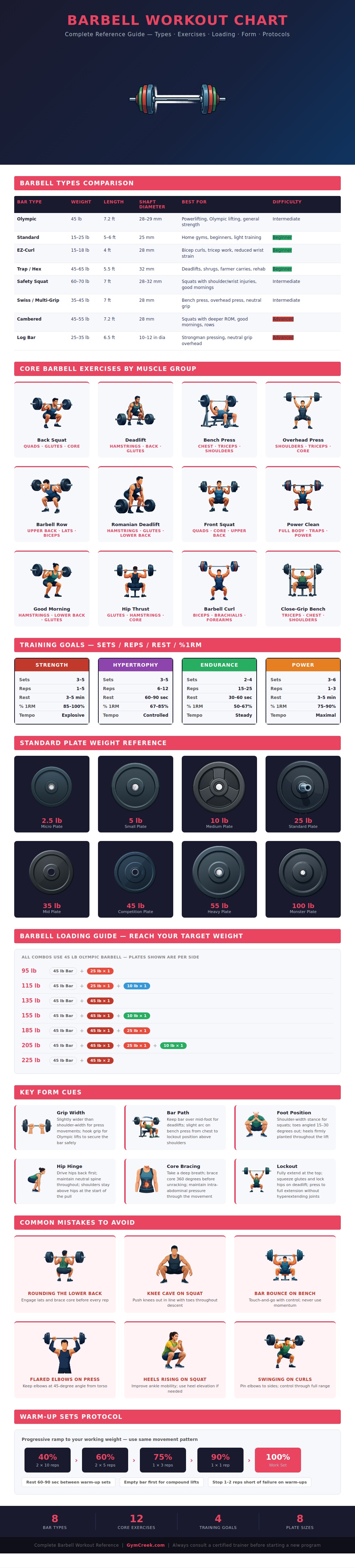
The chart organize the tools, movements, pitfalls, and loading patterns for barbells in one easy to read visual. By organizing barbell information into this table, an individual does not have to search for information regarding each component of barbell training. Different types of barbells will solve different problems for an individual’s training program.
Barbell Training Guide
Each type of barbell has a specific use in training that makes it more suitable than other for that individual. Most gyms use the most common Olympic barbells because the weight, length, and spin of the barbells make it ideal for most exercises. Trap bars allow for the shins to remain clear of the bar and allow for a neutral grip, which is more comfortable for most individuals during deadlifts and other carrying exercises.
EZ bars allows for the individual to reduce the strain on their wrists during arm exercises. Safety squat bars are used for individuals with limited shoulder mobility because it allow for the load on the barbells to be positioned forward from the individual’s body. The chart displays the different types of barbells and the goals they best achieve so that the individual can choose their best tool for their training program.
An individual must decide which movement to load with weights once they select their barbell. Compound lifts are the most important lifts for an individual’s training program because they allow an individual to move the most weight in their training program. Compound lifts include squats, deadlifts, presses, and rows because they all train the individual’s muscles in multiple joints at once.
Because these exercises train an individual’s muscles in different joints at once, more muscles is engaged in the exercise, and more work is completed in an individual’s training program. Isolation exercises are still an important part of a training program for those who struggle with a specific muscle groups. However, the chart targets the compound lifts to demonstrate the most important lifts for an individual’s program.
The labels next to each exercise indicate which muscle groups are trained in each exercise. The barbell lifts that an individual programs into their training program will depend on the goal that they establish for their training. Strength training requires an individual to perform a certain number of repetitions of a lift using a given amount of rest periods in between each set to allow their muscles to fully engage.
Hypertrophy use the middle range of repetitions for the muscles to be trained enough to increase in size. Endurance training with barbells requires an individual to perform more repetitions of the same lifts with shorter rest periods to allow the muscles to clear the metabolites that are produced during the exercise. Power work uses low repetitions but requires individuals to perform the lifts at the maximal speed for that individual.
The barbell charts shows the sets, the repetitions, the rest periods, and the intensity for each type of training goal. Loading the barbells with the appropriate amount of weight is a necessary step in the barbell training process. However, many individuals waste time loading their barbells with the proper amount of weight.
Adding plates to a barbell one at a time without plan often creates issue in loading the barbells with the proper amounts of weight. This loading guide for barbells allows an individual to set the weights without having to calculate the weights of the plates that will be added to the barbells. The loading guide on the chart creates the combinations of barbells that will provide the most common training weights while using the fewest number of plates possible.
An individual must use proper form when performing barbell exercises, otherwise, the weight will cause aches in the body. Maintaining proper form during a deadlift exercise allows an individual to maintain their spine in a neutral position for their lower back. For bench presses, maintaining a slight lean forward will allow for an individual’s shoulders to be in the proper position.
Ensuring that an individual’s core muscles are braced before unracking the barbell will ensure that the internal pressure allow an individual to maintain a proper body position during the lift. The cues listed in the chart will be short and easy to remember when performing the exercises with the heavy weights. Additionally, the chart lists the common mistakes for each exercise next to the cues to provide an individual with an understanding of proper exercise position.
An individual must warm up before performing exercises with heavy loads on the barbells. The percentages listed in the warm-up protocol will allow an individual’s joints and nervous system to be prepared for the loads on the barbells. An individual should start with empty barbells and then perform gradual jumps in the weight that they are to perform.
This initial warm-up will allow an individual to warm up without burning up the energy that they will need to perform their sets with strength. Many individuals will skip the warm-up or perform too many repetitions of the exercises at too high of a percentage. This can make individuals feel flat before they begin to perform their sets.
The value of the chart is that it provides an individual with all the information about barbell training in one visual. The information on the chart does not need to be memorized. An individual does not need to memorize the cues for each exercise.
However, they should know where to find the information on the chart if their form on any exercise appear to be incorrect or if they are planning their training program for the upcoming training period. The barbell is a simple implement that consists of a straight piece of metal with weights on each end. The only changes to a barbell training program are in the loading of the barbells, the positioning of the body under the barbells with the proper form, and the number of repetitions of the exercises to master each movement with the barbells.
