
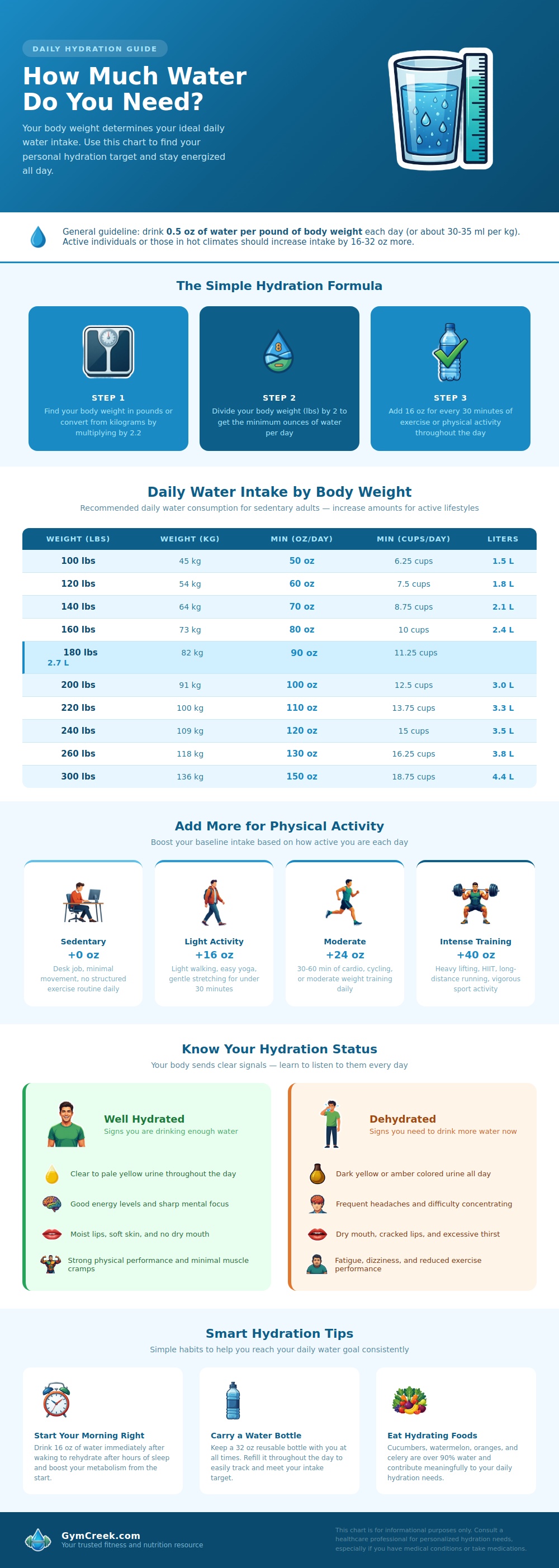
Determining how much water an individual needs can be done through a simple measurement. One way of finding a concreate measurement of the amount of water an individual needs is to use an individual’s body weight. Many individuals will find that vague advice regarding water intake can be challenging to follow.
To make the advice more specific, an individual can use a weight-based chart. A weight-based chart creates a connection between an individual’s weight in pounds and the amount of water in ounce that that individual should drink. Because this chart use body weight to determine the amount of water that an individual should drink, this chart helps to remove the guesswork regarding water intake; it provides an individual with a plan of how much water they should drink based on their body weight.
How Much Water to Drink by Your Weight
The basic rule for using a weight-based chart is for an individual to drink approximately half an ounce of water for each pound of their body weight. For instance, an individual that weighs 160 pounds should drink 80 ounce of water. An individual that weighs 220 pounds should drink 110 ounces of water.
A weight-based chart can display these measurements in the number of ounces that an individual should drink. Additionally, the chart can display the recommended number of cups of water or liters of water that an individual should drink to meet their bodys needs. By displaying the amount of water that an individual should drink in cups or liter, the recommendation becomes a visual representation of the water that an individual should drink.
The amount of water that a weight-based chart recommends is a baseline amount for each individual. However, the baseline amount may not be sufficient to meet the water needs of each individual. For instance, an individual that is sedentary can use the weight-based chart.
An individual that is more active than a sedentary individual may need to drink more water. For instance, an individual that performs a 30-minute workout may need to drink 16 to 24 ounces of water in addition to the baseline amount recommended by the weight-based chart. An individual that performs an intense workout or long run may need to drink 40 ounces of water in addition to the baseline amount recommended by that individuals weight-based chart.
Thus, any exercise that an individual performs should be accounted for in addition to the baseline amount recommended by their weight-based chart. In addition to the activity that an individual performs, there are other factors that may alter the amount of water that an individual should drink. For instance, an individual that lives in an area that is hot all day may need to drink more water than an individual that lives in an area that does not becomes hot during the day.
Additionally, an individual that lives at high altitudes may need to drink more water. An individual that drinks a large amount of caffeinated beverages or an individual that spends long periods at a heated indoor office may need to drink more water as well. While a weight-based chart may not take into account all of these factors, the weight-based chart provides an individual with a starting point.
Thus, a weight-based chart is a beneficial tool to adjust for these factors as well. Because water needs are based off an individual’s body weight and size, the weight-based approach is a beneficial tool to determine an individual’s water needs. For instance, an individual that weighs 120 pounds may need a different amount of water than an individual that weighs 240 pounds.
Many pieces of advice regarding water needs do not take into account the body weight of an individual; they treats all individuals the same. A weight-based chart allows the body weight of each individual to become the primary factor in determining the amount of water that an individual should drink. Thus, an individual becomes aware of the fact that water needs are a personal need that must be met to maintain the bodys functions.
An individual’s water needs can be met through the use of small systems and habits. For instance, keeping a water bottle in an easily accessible location in an individual’s home or office will lead to an increase in the amount of water that an individual drinks. Drinking a glass of water in the morning can help an individual to begin the day with the amount of water needed to meet the target that the weight-based chart establishes.
Additionally, eating foods that contain high amounts of water, such as watermelon or cucumbers, will add to the total amount of water that an individual consumes during the day. Each of these small changes can help an individual to reach the total amount of water that the weight-based chart suggest for that individual. An individual should monitor their body to ensure that they are drinking enough water.
A number of signs of dehydration include dark urine, feeling tired during the afternoon, and difficulty in remembering what items they have seen in their daily routine. An individual may not feel thirsty until they are becoming dehydrated, so relying upon thirst as a signal that an individual should drink water may not effectively help that individual meet their bodily needs. Therefore, checking the color of an individual’s urine can help to ensure that they are drinking enough water.
If their urine is darker than a pale yellow color, they should drink more water. By drinking more water, an individual may begin to feel more energetic and focused. It is important for an individual to ensure that their body regularly processes the water that they drink.
An individual that drinks a large amount of water at once will not experience the same benefits as an individual that regularly drinks water throughout the day. The kidneys of the body function more effectively when an individual drinks water throughout the day, rather than at once. Additionally, an individual that drinks water throughout the day will not experience a slump in their energy during the afternoon.
A weight-based chart is valuable in that it provides an individual with a target number of ounces of water that they should drink. By looking at an individual’s weight, they can refer to the weight-based chart to determine the number of ounces of water that they should drink. After determining this number, the individual can make adjustments to that number according to their bodys activities, the weather, and their personal habits.
Thus, a weight-based chart allows an individual to easily establish a target number of ounces of water that they should drink, and it provides an individual with a way to base their water needs on their bodys needs.
