
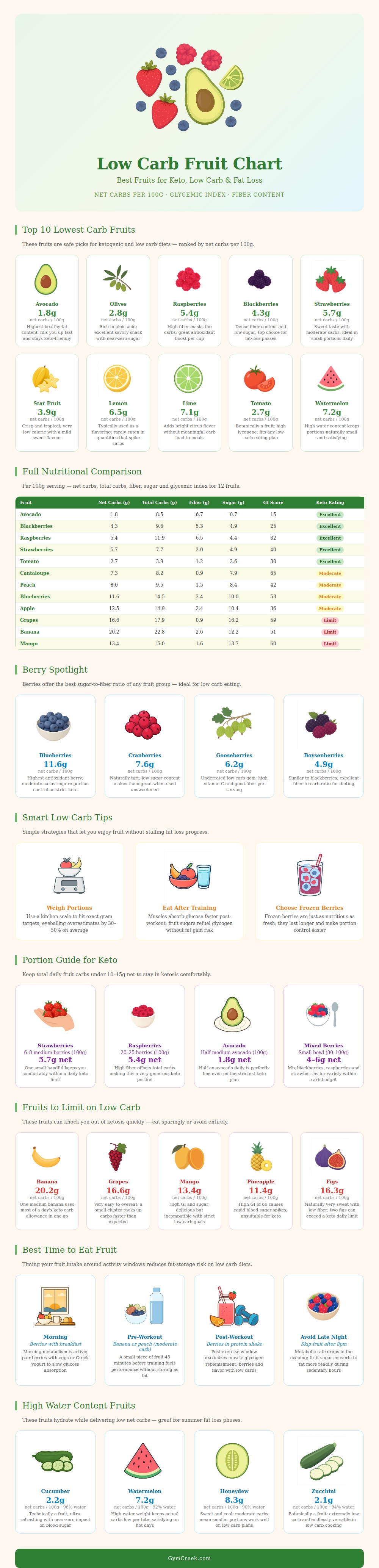
When you choose the fruit to include in your ketogenic diet, you need to understands the relationship between sugar and fibers in the body. The sugar in fruit can increases insulin levels in the body. Fiber can help to prevent insulin levels from spiking.
Because fiber slows the absorption of glucose in your system, this help to maintain ketosis. You can calculate the carbohydrate content of fruit by calculating its net carbohydrates. To calculate the net carbohydrates in a given fruit, simply subtract the fiber content from the total carbohydrate counts of that fruit.
How to Choose Fruits for a Keto Diet
The net carbohydrate count is the measurement that determines the effect that each type of fruit will have on your blood sugar. Many people treats fruit as if all types of fruit is the same. However, fruit contains carbohydrates in varying amount.
At one end of the fruit spectrum are fruits like avocados and olives, which are beneficial to the ketogenic diet due to their high healthy fat content and low carbohydrate content. You can easily incorporate these fruits into most meals. At the other end of the fruit spectrum are berries such as raspberries and blackberries, which contains high amounts of fiber.
The fiber in these berries slows the absorption of the sugar in the berries, allowing individuals to enjoy the sweetness without experiencing a crash in energy after consumption. In the middle of the fruit spectrum are fruits like peaches and apples. These fruits are best consumed in small amounts to maintain ketosis.
One large fruit can contain a high amount of carbohydrates. Many people dont control the portions of these fruits, often eating them as snacks, which consume the carbohydrate allowance for the remainder of the day. Some fruits to avoid on the ketogenic diet include bananas, mangoes, and figs.
These fruits has a high amount of sugar content, which makes it difficult for the body to remain in a fat-burning state. The timing that you consume the fruit is important. If the fruit that you consume have a high amount of sugar, it is best to consume it immediately before or after you perform a workout.
After a workout, your muscles requires glucose to refuel their glycogen stores. By consuming fruit with a high amount of sugar, the body can use that sugar to refuel the muscles, not store the sugar as fat. However, if you consume fruit with high amounts of sugar after the evening workout, the body is more likely to store that sugar as fat due to the drop in metabolic rate after the evening workout.
For individuals who requires a high amount of volume in their diet, fruits with a high amount of water content are best. Some fruits that contain a high amount of water are cucumbers and zucchini. Additionally, these vegetables are fruits and contain a high amount of water content.
Because of the high amount of water content in these plants, you can consume large amounts of these fruits while still keeping the carbohydrate content to a minimum. Watermelon also contains a high amount of water content by volume. To succeed in a ketogenic diet, individuals needs to move from guessing which fruits to eat to knowing based off the fiber and sugar content of each type of fruit.
By understanding the ratio of fiber to sugar in each type of fruit, individuals can make choices about which berries to eat to maintain ketosis and which fruits to avoid altogether.
