💓 Zone 4 Heart Rate Calculator
Calculate your lactate threshold Zone 4 heart rate range using age-based formulas and the Karvonen heart rate reserve method.
| Zone | % Max HR | Description | Recommended Duration | Benefit |
|---|---|---|---|---|
| Zone 1 | 50–60% | Active Recovery | 30–60 min | Warm-up, recovery |
| Zone 2 | 60–70% | Aerobic Base | 30–90 min | Fat burning, aerobic base |
| Zone 3 | 70–80% | Aerobic Power | 20–45 min | Cardiovascular efficiency |
| Zone 4 | 80–90% | Lactate Threshold | 20–60 min | Race pace, LT improvement |
| Zone 5 | 90–100% | VO2 Max / Anaerobic | 5–15 min max | Speed, VO2 max gains |
| Formula | Calculation | Age 30 | Age 40 | Age 50 |
|---|---|---|---|---|
| 220 – Age (Classic) | 220 – age | 190 | 180 | 170 |
| Tanaka (2001) | 208 – (0.7 × age) | 187 | 180 | 173 |
| Gellish (2007) | 207 – (0.7 × age) | 186 | 179 | 172 |
Zone 4 of Heart Rate is the place where exercises start feeling less controlled. Here you reach around 80-90% of your maximum Heart Rate because of what one calls it “threshold zone“. In scale of trouble, it stands firmly at 8 or 9 from 10.
That level of effort requires truly serious attention.
Zone 4: Hard Training at 80–90% of Your Maximum Heart Rate
At that intensity your body uses fuel entirely differently. Carbohydrates become the main energy source, while fats provide only about 10-45% of the fuel. Heart and muscles work much more than in the bottom zones.
Here happen the most interesting things: your heart no longer manages to pump enough oxygen for the needs of muscles, hence the body switches to anaerobic. Lactic acid starts building up, what causes that typical burn. The good part?
In Zone 4 only a controlled amount of lactic acid is made, so your body can remove it before it overloads everything.
Talk becomes almost impossible here. Maybe you sigh some words between breaths, but about long chatter forget. Your breathing becomes strong and clear, like so fast, that it almost hurts.
That zone gives some main advantages four training. Lungs and heart strengthen, what helps you push more long. Also the anaerobic endurance grows, likewise as the holding of pace.
Athletes like to work in Zone 4, because those explosive moves activate the fast muscle fibers and strengthen the speed. When you run in Zone 4 speed, you build aerobic skill while you aim for even faster times, for example the pace in 5K-run. It disciplines, but for shorter distances stays needed.
HIIT workouts reach Zone 4 regularly. Those sessions mix big efforts with rest periods, what exactly triggers the changes of the heart system. Training here strengthens your VO2 maximum and causes extra oxygen use after exercise, fancy word for the fact, that your body still burns calories much time after finish.
Most of Zone 4 intervals follow 3:1 or 4:1 ratio of work to rest, whether hills, fartlek or usual intervals. The sessions go from 30 minute efforts until longer with intervals until 10 minutes.
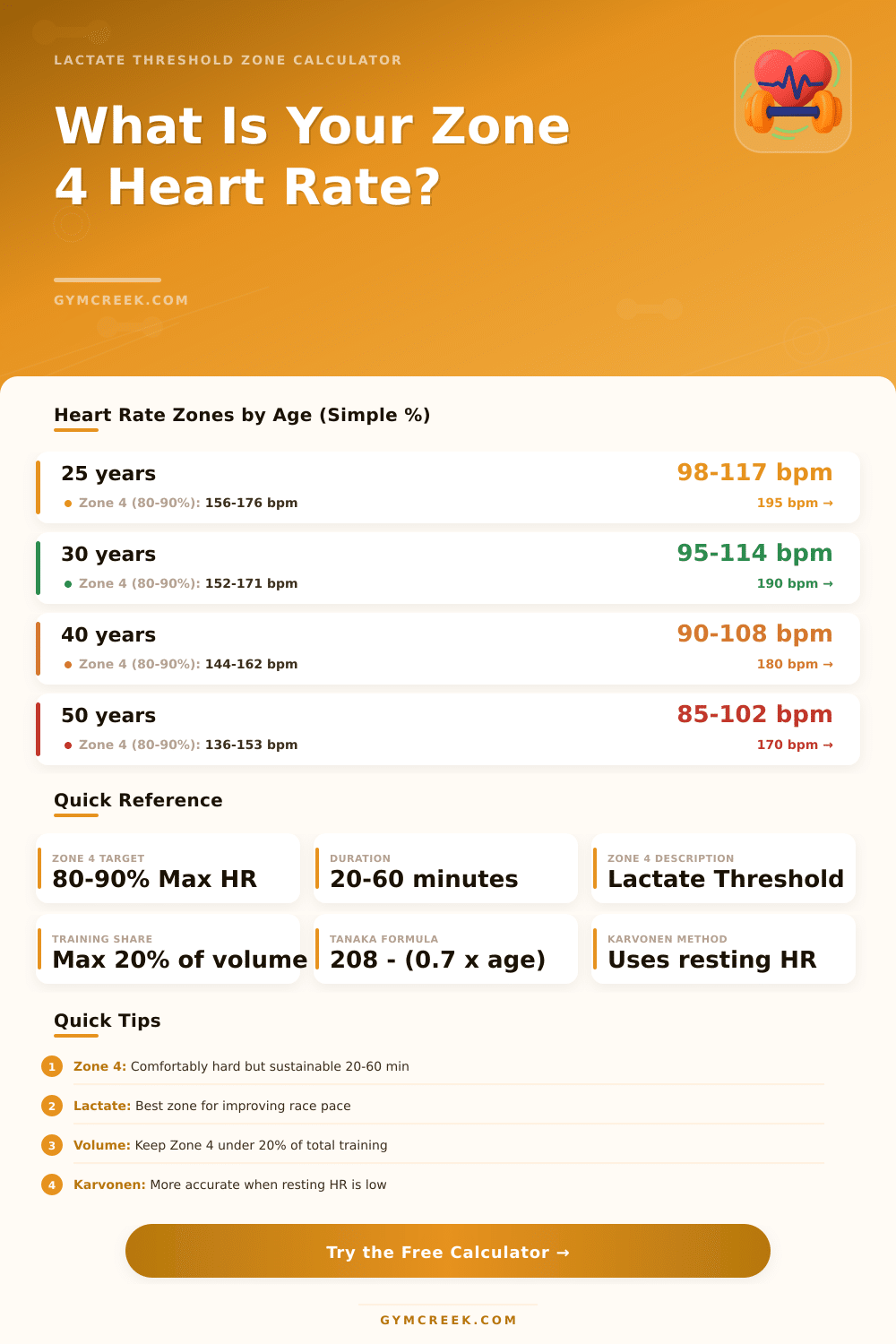
Consider a person with maximum Heart Rate of 180. His Zone 4 would sit between 144 and 162 beats per minute. The exact numbers depend on age, training level and personal body type, so there is not one solution for all.
A beginner could not safely reach Zone 4, but as aerobic base grows, that limit rises.
Garmin, Fitbit or Apple watches follow your heart in real time during exercise. Apps like Strava and Polar Flow help to check, what zones you reach, and look at your results later. Zone 4 gives bigimpacts in less time, but it does not work for newcomers.
First you must build aerobic base in bottom zones, that is the key for everything else.