🚴 FTP to VO2 Max Calculator
Estimate your VO2 max from Functional Threshold Power for cycling or running threshold pace.
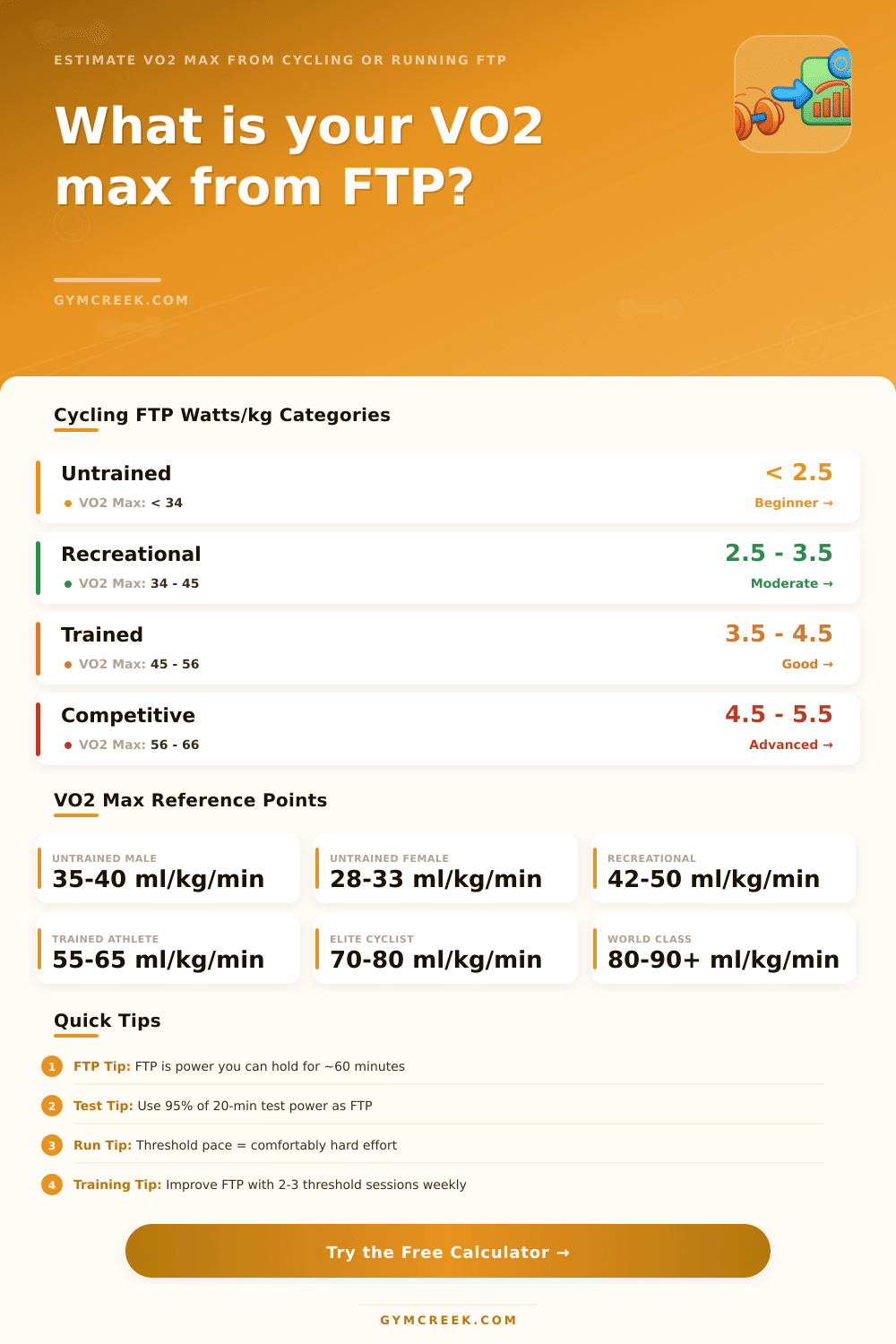
| Category | Watts / kg | Approx VO2 Max | Description |
|---|---|---|---|
| Untrained | < 2.5 | < 34 | New to cycling |
| Recreational | 2.5 – 3.5 | 34 – 45 | Regular exerciser |
| Trained | 3.5 – 4.5 | 45 – 56 | Serious amateur |
| Competitive | 4.5 – 5.5 | 56 – 66 | Category racer |
| Elite | 5.5 – 6.5 | 66 – 77 | Semi-professional |
| World Class | > 6.5 | > 77 | Professional / Tour de France |
| Level | Cycling VO2 Max | Running VO2 Max | General Fitness |
|---|---|---|---|
| Sedentary Male | 35 – 40 | 35 – 42 | 30 – 38 |
| Sedentary Female | 28 – 34 | 28 – 35 | 25 – 32 |
| Recreational Male | 42 – 52 | 44 – 55 | 40 – 50 |
| Recreational Female | 36 – 44 | 38 – 48 | 34 – 44 |
| Competitive Male | 56 – 70 | 58 – 72 | 54 – 68 |
| Elite Male | 72 – 84 | 75 – 88 | 68 – 80 |
Understanding your aerobic capacity is one of most valuable insights an endurance athlete can have. While VO2 max testing is the “gold standard” for measuring this value, most athlete find it difficult to access these testing facilities. As such, estimates based on measurements like FTP provide a valuable alternative method of evaluating aerobic capacity.
The relationship between FTP and VO2 max isnt perfect, but it is close enough to provide useful estimates of an athlete’s VO2 max, as well as to provide context for the athlete and there training data.
FTP to VO2 max calculator
What Is the Connection Between FTP and VO2 Max?
FTP, or Functional Threshold Power, is highest power value that can be sustained for approximately one hour. VO2 max, on the other hand, measures the maximum rate at which an athlete can utilize oxygen in relation to their performance of intense exercise, it is often referred to as their “ceiling” in relation to aerobic performance. FTP and VO2 max is related in that the threshold power/pace is often performed as a percentage of an athletes VO2 max. Typically between 80 and 90 percent.
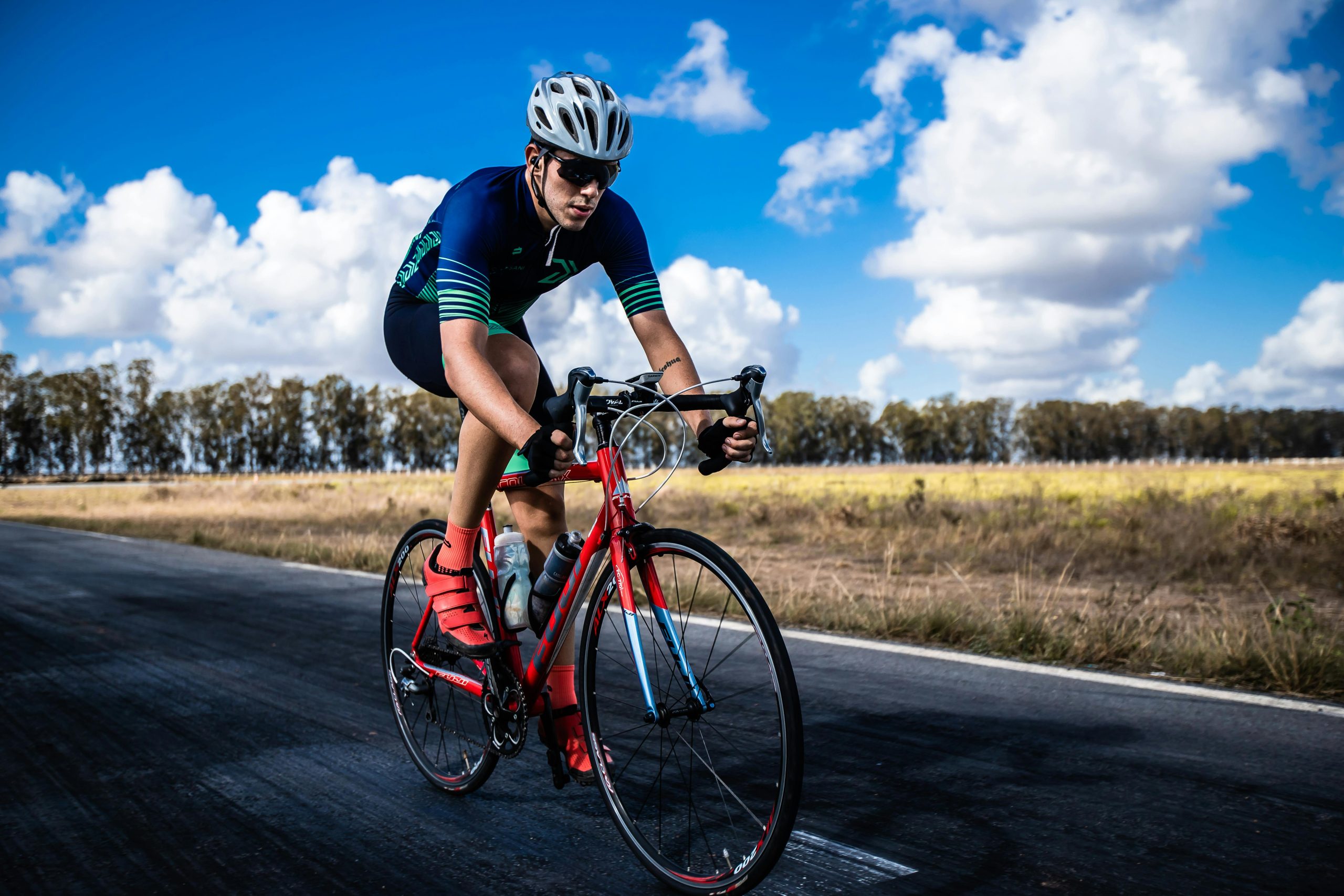
For cycling, training pioneer Andrew Coggan established the equation that can be used to determine VO2 max values. For runners, the threshold pace can be used in the equation established by American College of Sports Medicine (ACSM) in relation to their calculated VO2 max values. These equation provide estimates of an athlete’s VO2 max.
It is important to understand that the equations provide only estimates of an athlete’s VO2 max; no two athletes are alike in their physical make-up. Other variables, such as age, gender, and physical strength will influence an athlete’s VO2 max. Despite these variables, however, the FTP to VO2 max calculator can still provide an athlete an idea of their aerobic capacity over time.
One of the shockstandards in the world of endurance athletes is the understanding that an athlete’s FTP and VO2 max do not necessarily increase at the same rate. An athlete can significantly increase their FTP while maintaining the same VO2 max, or vice versa. These two metric are independent of one another in relation to endurance performance. Yet, understanding the shifts in these values can allow for an athlete to understand their performance and how to develop more intelligent training plans.

As displayed in the calculator above, shifts in FTP or threshold pace will correlate to shifts in an athlete’s estimated VO2 max. Shifts from values in the low 40s to those in the low 50s, for example, can separate an athlete with average aerobic performance from those with the potential to compete in more competitive event.
Context is everything when considering an athlete’s VO2 max. A VO2 max value of 55 is impressive for a 50-year-old but may be expected of an average 25-year-old runner. The best calculators will account for these variables in their estimates of VO2 max and classify those athletes performance as “recreational” athletes, “trained” athletes, “competitive” athletes, or even “elite” athletes in their classification of aerobic performance.
For cyclists, the measurement of FTP in watts per kilogram is a better indicator of aerobic performance than FTP alone. For instance, a cyclist that weighs 50 kg and has an FTP of 250 is similar in terms of aerobic performance to another cyclist that weighs 80 kg and have an FTP of 320. The calculation of watts per kilogram removes these variables and allow athletes to understand who possesses the best climbing performance.
For runners, however, the concept of converting threshold pace to VO2 max is more challenging due to greater differences in economy between runners. Still, these estimates are of value to an athlete to track their improvement in relation to their training over time.
The use of an FTP to VO2 max calculator allows athletes to develop more intelligent training zones. For instance, intervals that aim to increase an athlete’s VO2 max will be of shorter durations and performed at higher rate of effort. The athlete will perform threshold intervals at the athlete’s FTP. An athlete that understands these two metric has a better understanding of their training plan.
Additionally, the ability to track an athlete’s VO2 max and FTP over time allows athletes and coaches to understand their strengths and weaknesses. An athlete with high VO2 max and low FTP may benefit from increasing their threshold training. Athletes with high FTP and VO2 max may benefit from increasing their VO2 max to allow for improved threshold performance. Thus, understanding these two measurements prevents the athlete from performing the same type of training each year.

Perhaps the most important benefit of using an FTP to VO2 max calculator is the accessibility of this information to athletes without a degree in sports science. All athletes understand the concept of transitioning from “recreational” athletes to “trained” athletes. An increase in VO2 max will provide athletes with the motivation to continue to develop their aerobic performance.
Ultimately, no calculator can replace the ability that an athlete has to perform well on the course that they race on their local hills or on the track. An FTP to VO2 max calculator is just one of many tool that can aid endurance athletes as they compete in races of their choosing.
Yet, the most successful athletes use these calculators as a means of establishing training goals and plans. These parameters, along with the athletes performance in races of all types and difficulties, can allow athletes to establish a complete picture of their VO2 max and FTP values. When all of these values correlate, athletes can be confident in the effectiveness of their training program.

Regardless of an athlete’s age or experience with cycling or running, understanding the relationship between threshold power and VO2 max can add valuable insight to their performance. For these reasons, every athlete can access the FTP to VO2 max calculator to provide their window into one of the most important markers of aerobic performance.