🏋 Smith Machine Bench Press Calculator
Estimate your 1RM, free-weight equivalent, and strength level — instantly
| Bodyweight | Beginner | Novice | Intermediate | Advanced | Elite |
|---|---|---|---|---|---|
| 132 lb | 88 | 130 | 175 | 225 | 285 |
| 148 lb | 97 | 145 | 195 | 250 | 315 |
| 165 lb | 106 | 160 | 215 | 275 | 345 |
| 181 lb | 115 | 175 | 230 | 300 | 375 |
| 198 lb | 123 | 188 | 245 | 320 | 400 |
| 220 lb | 132 | 200 | 260 | 340 | 430 |
| 242 lb | 139 | 210 | 275 | 355 | 455 |
| Bodyweight | Beginner | Novice | Intermediate | Advanced | Elite |
|---|---|---|---|---|---|
| 97 lb | 44 | 65 | 90 | 120 | 155 |
| 114 lb | 51 | 76 | 104 | 138 | 178 |
| 132 lb | 58 | 87 | 118 | 158 | 202 |
| 148 lb | 64 | 96 | 130 | 174 | 222 |
| 165 lb | 70 | 104 | 141 | 188 | 240 |
| 181 lb | 75 | 112 | 151 | 201 | 257 |
| % of 1RM | Approx Reps | Training Goal | RPE |
|---|---|---|---|
| 100% | 1 | Max Strength Test | 10 |
| 95% | 2 | Max Strength | 9.5 |
| 90% | 3–4 | Strength | 9 |
| 85% | 5–6 | Strength / Power | 8.5 |
| 80% | 7–8 | Hypertrophy | 8 |
| 75% | 9–10 | Hypertrophy | 7.5 |
| 70% | 11–12 | Hypertrophy / Endurance | 7 |
| 65% | 13–15 | Muscular Endurance | 6.5 |
| 60% | 16–20 | Endurance / Warm-up | 6 |
| Factor | Smith Machine | Free Bar | Implication |
|---|---|---|---|
| Bar Path | Fixed vertical | Free arc | Smith feels easier |
| Stability demand | Low | High | Less stabilizer activation |
| Bar weight | 6–35 lb | 44–45 lb | Smith bar often lighter |
| Safety | Built-in hooks | Requires spotter | Smith safer solo |
| Typical 1RM diff. | +10–20 lb vs free | Baseline | Subtract 15 lb to compare |
| Muscle recruitment | Triceps dominant | Full chest + stabilizers | Free bar more complete |
The Smith machine bench press is a popular exercise that many individuals use when performing bench press workouts. Most individuals who have access to a Smith machine will find it to be much easier than performing bench press lifts with free weights. Because of this, it is essential to understand the relationship between Smith machine bench press strength and traditional bench pressing strength.
To calculate the strength an individual develops on a Smith machine, there are two factors to consider: the lighter bar weights used on Smith machines and the fact that most individuals can lift between 10 and 20 pounds more on a Smith machine than with a free barbell. A smith machine bench press calculator can help individuals to determine there bench press one-repetition max (1RM) based on their working sets with the machine.
Understanding the Smith Machine Bench Press
The Smith machine bench press exercise is one of the most common exercises performed in commercial gyms around the world. The Smith machine features a vertical steel rail along which the barbell move. This eliminates the need for the lifter to perform a slight arc movement with the barbell that typically occurs when performing bench press lifts with a free barbell. As a result, most individuals find that they can lift significant more weight on a Smith machine.
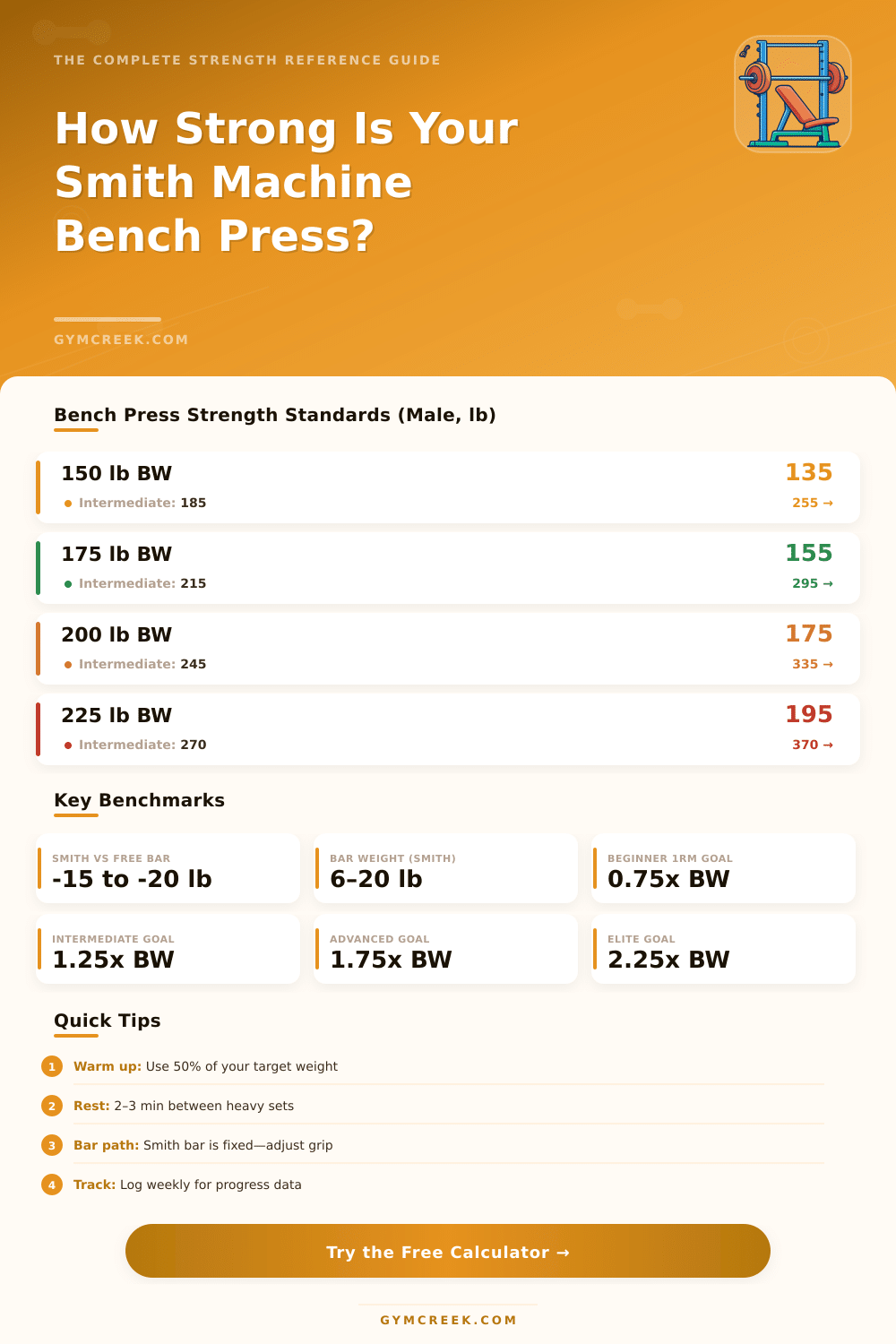
One of the most important factor to consider when utilizing the Smith machine is the actual weight of the barbell. Standard barbells used for bench press exercises weigh 45 pounds. However, the bar weights on Smith machines have a counterbalance system to the varying degrees. Most commercial Smith machines feature bar weights between 6 and 20 pounds. In some older gym machines, or those without a counterbalance system, the bar might weigh as much as 35 pounds.
The next most important factor to consider with Smith machines is the offset factor. Most individuals can lift around 15 pounds more on a Smith machine than they can lift with a free barbell. This number will vary from individual to individual, but it can be a helpful starting point to adjust an individuals Smith machine bench press lifts when comparing them to their free-weight bench press strength.
Another important factor to consider is the lifting experience of the individual using the Smith machine. Beginners find it to be a helpful exercise as the barbell is less of a challenge to balance. More experienced lifters tend to use the Smith machine for alternative exercises or to develop more confidence in there bench press lifts. However, it is possible to develop muscle imbalances if the individual uses the Smith machine as the only exercise for bench press lifts.
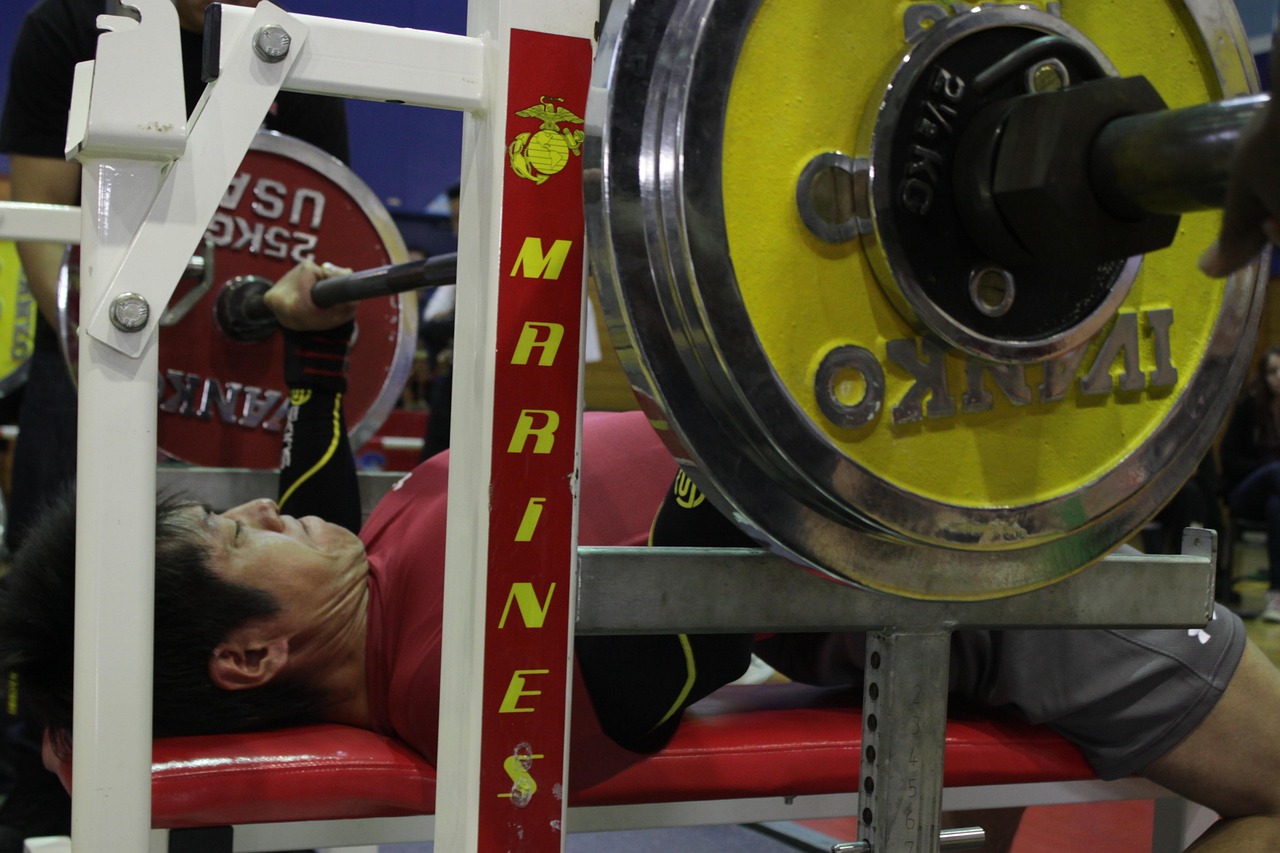
Smith machine bench press lifts are most beneficial for those who are performing hypertrophy training for their chest muscle. As the barbell cannot fall off the Smith machine, lifters can perform more sets to the failure point with the same weight. This makes it a beneficial exercise for those who may not have a training partner available to perform bench press lift with.
The strength developed on a Smith machine will not necessarily relate to the same number of pounds as the strength developed with a free barbell. Some individuals may have exceptional strength in their shoulders such that there is little difference between the two lift. Others may develop more strength when performing bench press lifts with a Smith machine. A Smith machine bench press calculator help individuals to understand their relative strength with Smith machine lifts and free-weight lifts.
The lifts with a Smith machine can utilize different rep ranges to target specific goals for the chest muscles. Lifts with fewer repetitions (3-6 sets) will develop the strength of the lifter. Bench press lifts with a rep range of 8-12 sets are ideal for hypertrophy training to increase the size of the chest muscles. Lifts with a higher rep range (15 or more repetitions) will develop the muscular endurance of the chest muscles. The smith machine bench press calculator displayed above can help individuals to understand the one-repetition max for their bench press lifts with the Smith machine.
The strength developed with Smith machine lifts can be influenced by the bodyweight of the lifter. For instance, a lifter who weighs 150 pounds can develop a bench press strength of 200 pounds, whereas an athlete who weighs 220 pounds could develop the same bench press strength with 200 pounds of lift. Strength standards account for the differences in bodyweight. Therefore, you can compare the strength of individuals to others with similar body measurement.

Form is important during Smith machine bench press lifts as with all bench press exercises. The lifter should aim to have their shoulder blade retracted to their spine and their back flat and even with the floor. The lifter should lift the bar with control and should not bounce off the chest. Any bouncing of the bar can strain the shoulder of the lifter.
The Smith machine bench press exercise is a great exercise to incorporate into a well-rounded strength training program. Whether utilizing the Smith machine for physical rehab exercises for the shoulders, to train without a spotter, or to simply add some variety into the exercise routine, understanding the relationship between Smith machine bench press strength and free-weight bench press strength enable lifters of all experience levels to make the best decisions for their strength training programs.
All of the calculations that a Smith machine bench press calculator can perform are an estimation of the relative strength of the lifter. There are various factors other than the Smith machine that can influence the strength developed by an individual on a specific day. These numbers are estimates and guidelines only and should be used as such.
To gain the best benefits from both Smith machine bench press and free-weight bench press lifts, lifters should incorporate both types of exercises into their training program. This type of training will allow lifters to develop the strength and size of their chest muscles while also developing the stabilizers of their shoulder.